Through the Eyes of the Chinese
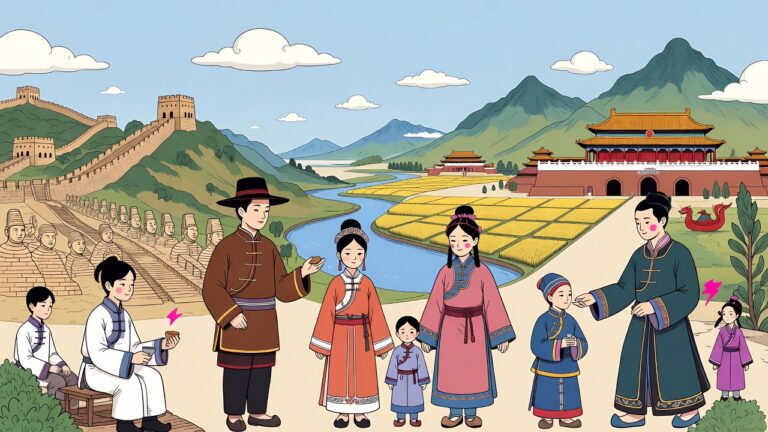
In the vast plains where the Yellow River winds like an ancient dragon through the land, where the Great Wall guards the horizon for centuries and rice fields stretch like green oceans, our story begins in a time of harmony and greatness. Long before storms from outside came, we lived as the heart of the Celestial Empire: the dynasties of Xia, Shang, Zhou, Qin, Han, Tang, Song, Ming, Qing – each era a bloom of culture, science, and unity. Our ancestors built the Terracotta Army, the Forbidden City, the Silk Road that connected the world. Confucius taught us respect and balance, Laozi the way of nature, Buddha compassion. We grew rice and tea in terraces that made mountains bloom, wove silk that shone like the moon, painted landscapes with ink and brush that touched the soul. The emperors ruled with the Mandate of Heaven, craftsmen made porcelain that traveled the world, scholars wrote books that guarded knowledge. Every family knew the spring festivals with dragon boats, the Mid-Autumn with moon cakes, respect for ancestors and unity in diversity – Han, Mongol, Tibetan, Uyghur, Zhuang, all part of the same great family portrait. That was our golden time: a civilization that shaped the world, a people seeking harmony in all things, rich in wisdom and beauty.
But then came the wave from outside, like a storm rising from the sea. The Opium Wars in the 19th century, the humiliation of unequal treaties, colonial powers carving us open like a melon. The Taiping Rebellion cost millions of lives, the Boxer Rebellion ended in more humiliation. In the 20th century followed the Japanese invasion, the War of Resistance, the civil war. Every family knew the loss: a grandfather who fought, a mother who starved, a child who fled. The Great Leap Forward brought hunger and millions dead, the Cultural Revolution tore families and memories. The outside world watched – sometimes plundered, sometimes silent – while our land bled.
From that depth comes a pride that is deep and resilient. The Great Wall still stands, the Yangtze keeps flowing, technology changes the world, the Belt and Road builds bridges. We have risen: from ruins to cities of glass and light, from poverty to the second economy on earth. Our traditions live on: Chinese New Year with red lanterns, dragon boats, tea slowly sipped. We are a people that learns, that builds, that forgives but never forgets.
But the truth colors magenta like a sunset over the Yellow River. The scars remain: memories of hunger, the loneliness of many in cities, the pressure of progress that sometimes breaks silence, differences between city and countryside, between Han and minorities. The outside world often looks with suspicion – they see power and growth, not the pain that shaped us, not the harmony we still seek.
Yet we remember in silence: around the table during Spring Festival, at temples where incense rises, on October 1 when we celebrate the founding – never forgetting who we were. We tell our children of Confucius and the Great Wall, of rice fields and dragons, so they know: we were great and harmonious before we were broken.
And yet… the Yangtze flows through the valleys, wide and strong after the storm, turquoise like the sky above the Forbidden City. That is our secret: we suffered under humiliation, wars, and revolutions, but we were first an empire of wisdom and unity. For our children we fold no walls, but a question: how do we bring back that old harmony, how do we let the river sing again for everyone, how does China become again a home of balance and hope?
January 2026
Manna Ori
36. Through the Eyes of the Chinese
通过中国人的眼睛
在广阔的平原上,黄河流淌如一条古老的龙穿过大地,长城几个世纪以来守护着地平线,稻田如绿色海洋般延伸,我们的故事始于和谐与伟大的时代。在外来风暴来临之前,我们作为天朝上国的核心而生活:夏、商、周、秦、汉、唐、宋、明、清各朝代——每一个时代都是文化、科学与统一的绽放。我们祖先建造了兵马俑、紫禁城、连接世界的丝绸之路。孔子教导我们尊重与平衡,老子教导自然之道,佛陀教导慈悲。我们在让山峦绽放的梯田中种植水稻与茶叶,织出如月光般闪耀的丝绸,用墨与笔描绘触及灵魂的山水。皇帝以天命统治,工匠制作传遍世界的瓷器,学者书写守护知识的书籍。每一家人都知道春天的龙舟节、中秋的月饼、对祖先的敬重,以及在多样性中的统一——汉、蒙古、藏、维吾尔、壮,都属于同一个伟大的家庭画像。那是我们黄金时代:一个塑造世界的文明,一个在万物中寻求和谐的民族,富于智慧与美丽。
但后来外来的浪潮如从海上升起的风暴而来。19世纪的鸦片战争、不平等条约的屈辱,殖民列强将我们如切瓜般剖开。太平天国起义夺去数百万生命,义和团运动以更多屈辱结束。20世纪接着是日本入侵、抗战、内战。每一家人都知道丧失:一位祖父战斗,一位母亲饥饿,一个孩子逃亡。大跃进带来饥荒与数百万人死亡,文化大革命撕裂家庭与记忆。外界观看——有时掠夺,有时沉默——而我们的土地在流血。
从那深处升起一种深刻而坚韧的骄傲。长城依然屹立,长江继续流淌,科技改变世界,“一带一路”搭建桥梁。我们崛起:从废墟到玻璃与光芒的城市,从贫困到世界第二大经济体。我们的传统继续活着:春节的红灯笼、龙舟、中秋慢慢品茶。我们是一个学习、建设、宽恕却永不忘记的民族。
但真相染上品红,如黄昏映照黄河。伤疤仍在:饥饿的记忆、城市中许多人的孤独、进步的压力有时打破宁静、城乡差异、汉族与少数民族之间的差距。外界常常以怀疑的目光看待——他们看到力量与增长,却看不到塑造我们的痛苦,看不到我们仍在寻求的和谐。
然而我们默默纪念:在春节的饭桌旁,在香烟升起的寺庙里,在10月1日庆祝建国日时——永不忘记我们曾经是谁。我们向孩子们讲述孔子与长城、稻田与龙,让他们知道:我们曾伟大而和谐,在被打破之前。
而然而……长江流过山谷,宽广而强大,经风暴后依旧,青绿色如紫禁城上空的天空。那是我们的秘密:我们遭受屈辱、战争与革命,但我们首先是一个智慧与统一的帝国。为我们的孩子,我们不折叠枷锁,而是一个问题:如何带回那古老的和谐,如何让河流再次为所有人歌唱,如何让中国再次成为平衡与希望的家园?
2026年1月
Manna Ori
36. 通过中国人的眼睛