
Through the Eyes of the Ecuadorian
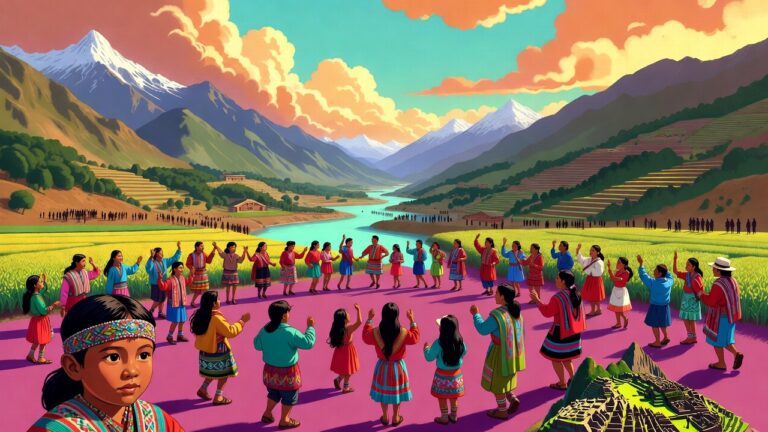
A panflute sounds softly through the high valleys of the Andes, mingled with the distant tinkling of llama bells and the scent of eucalyptus rising from the misty forests. That melodious sound carries our story back to a time of high mountains and deep roots, when we lived as the peoples of the Inca in this land we called Tawantinsuyu, "four regions" or "four winds". Our ancestors built Machu Picchu and the roads that connected the Andes, terraces that made the mountains bloom with quinoa and maize, cities of stone that seemed to touch the sky. The queen of Quito ruled with wisdom, the curacas led their communities, the shamans spoke with the spirits of the mountains and rivers. Every family knew the Inti Raymi – the festival of the sun – where everyone gathered in colorful ponchos, the stories of Viracocha, the gratitude to Pachamama who gave everything. That was our golden time: a land of four winds, where people lived in harmony with the mountains as father and the earth as mother, connected by roads and rituals.
But then came the wave from outside, like a cold wind rising from the sea. The Spaniards arrived in 1532 with Pizarro, and within years the Inca empire had fallen. They took our gold, our people as mita slaves in the mines of Potosí, our temples as pagan. Every family knew the loss: an ancestor who disappeared in the mines, a language that had to survive in secret, a culture that mixed to endure. Independence in 1822 brought Simón Bolívar, but also centuries of unrest: dictatorships, revolutions, the "black flower" of the banana plantations in the 20th century where workers were exploited. Every family knew the fear, the strikes, the silence in the streets of Quito.
From that depth comes a pride that is high and warm. The panflute that still sounds in the Andes, the quinoa that feeds the world, the Galápagos that show life as Darwin saw it. Our pasillo music that touches the soul, our chocolate from the Amazon, our people who laugh through pain. We have found our voice again: the 2008 constitution that gives rights to nature, the indigenous peoples who rise up, the young people who dream of a better country. We are a people of mix – indigenous, African, European – that always rises again.
Yet the truth colors magenta like a sunset over Chimborazo. The scars remain: the poverty in the Sierra, the oil that threatens the Amazon, the emigration of young people, the corruption that sometimes returns. The outside world buys our bananas and flowers, but often does not see the pain of the indigenous peoples, not the struggle for justice.
Still, we remember in silence: on the high markets where quinoa is traded, during Independence Day on August 10 when we raise our flag, in the mountains where the spirits still speak – never forgetting who we were. We tell our children of the Inca and of Rumiñahui, of the mountains and the rivers, so they know: we were connected and rich before we were challenged.
And yet… the panflute keeps going, high and clear, like a promise floating over the Andes. That is our secret: we have suffered under colonization, exploitation, and unrest, but first we were a land of four winds and high mountains. For our children we build no walls, but terraces where everyone can bloom. How do we let that panflute bring freedom again for everyone, how does Ecuador remain a home of height and hope?
January 2026
Manna Ori
A través de los ojos del ecuatoriano
Una zampoña suena suavemente por los altos valles de los Andes, mezclada con el lejano tintineo de campanitas de llamas y el aroma de eucalipto que asciende desde los bosques brumosos. Ese sonido melódico lleva nuestra historia de vuelta a un tiempo de altas montañas y raíces profundas, cuando vivíamos como los pueblos del Inca en esta tierra que llamábamos Tawantinsuyu, “cuatro regiones” o “cuatro vientos”. Nuestros ancestros construyeron Machu Picchu y los caminos que unían los Andes, terrazas que hacían florecer las montañas con quinua y maíz, ciudades de piedra que parecían tocar el cielo. La reina de Quito gobernaba con sabiduría, los curacas lideraban sus comunidades, los chamanes hablaban con los espíritus de las montañas y los ríos. Cada familia conocía el Inti Raymi – la fiesta del sol – donde todos se reunían con ponchos coloridos, las historias de Viracocha, la gratitud a la Pachamama que todo lo daba. Esa fue nuestra época dorada: una tierra de cuatro vientos, donde la gente vivía en armonía con las montañas como padre y la tierra como madre, conectados por caminos y rituales.
Pero entonces llegó la ola de afuera, como un viento frío que subía desde el mar. Los españoles llegaron en 1532 con Pizarro, y en pocos años el imperio inca había caído. Se llevaron nuestro oro, a nuestra gente como esclavos mita en las minas de Potosí, nuestros templos como paganos. Cada familia conocía la pérdida: un ancestro que desapareció en las minas, una lengua que tuvo que sobrevivir en secreto, una cultura que se mezcló para perdurar. La independencia en 1822 trajo a Simón Bolívar, pero también siglos de inquietud: dictaduras, revoluciones, la “flor negra” de las plantaciones de banano en el siglo XX donde los trabajadores fueron explotados. Cada familia conocía el miedo, las huelgas, el silencio en las calles de Quito.
De esa profundidad nace un orgullo alto y cálido. La zampoña que aún suena en los Andes, la quinua que alimenta al mundo, las Galápagos que muestran la vida como la vio Darwin. Nuestra música pasillo que toca el alma, nuestro chocolate de la Amazonía, nuestra gente que ríe a través del dolor. Hemos recuperado nuestra voz: la constitución de 2008 que da derechos a la naturaleza, los pueblos indígenas que se levantan, los jóvenes que sueñan con un país mejor. Somos un pueblo de mezcla – indígena, africano, europeo – que siempre vuelve a levantarse.
Sin embargo, la verdad se tiñe de magenta como un atardecer sobre el Chimborazo. Las cicatrices quedan: la pobreza en la Sierra, el petróleo que amenaza la Amazonía, la emigración de los jóvenes, la corrupción que a veces regresa. El mundo exterior compra nuestros bananos y flores, pero muchas veces no ve el dolor de los pueblos indígenas, no la lucha por justicia.
Aun así, recordamos en silencio: en los altos mercados donde se troca quinua, durante el Día de la Independencia el 10 de agosto cuando izamos nuestra bandera, en las montañas donde los espíritus aún hablan – nunca olvidando quiénes fuimos. Les contamos a nuestros hijos de los incas y de Rumiñahui, de las montañas y los ríos, para que sepan: fuimos unidos y ricos antes de ser desafiados.
Y sin embargo… la zampoña sigue, alta y clara, como una promesa que flota sobre los Andes. Ese es nuestro secreto: hemos sufrido bajo colonización, explotación e inquietud, pero primero fuimos una tierra de cuatro vientos y altas montañas. Para nuestros hijos no construimos muros, sino terrazas donde todos puedan florecer. ¿Cómo dejamos que esa zampoña vuelva a traer libertad para todos, cómo sigue siendo Ecuador un hogar de altura y esperanza?
Enero 2026
Manna Ori