
Through the Eyes of the Laotian
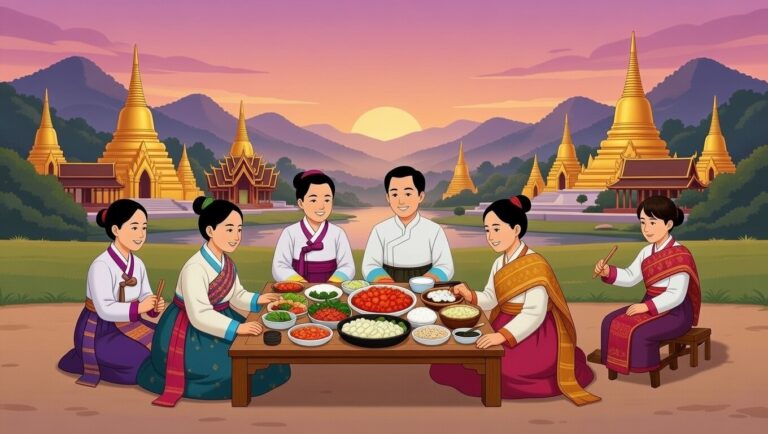
The first thing you hear as morning arrives over Luang Prabang is the soft, undulating sound of a khene blowing one note, mingled with the distant ring of a temple bell and the scent of fresh sticky rice and tam mak hung (papaya salad) drifting from a nearby home. That khene-sound carries our story back to a time of rivers and temples, when we lived as the Lao Loum, Lao Theung, Lao Sung and other peoples in this land we called Lao. Our ancestors built temples in Luang Prabang and Vientiane with golden stupas reflecting the sun, grew rice in the fertile valleys of the Mekong, wove sinh cloths with patterns that told stories. The Buddha was honored in Wat Xieng Thong, the animist spirits of the phi were respected with offerings, families celebrated Pi Mai Lao with water that cleansed and blessed. Every family knew the tales of the Phra Bang, the festivals where everyone danced the lamvong, the bond stronger than time. That was our golden time: a land of rivers and mountains, where people lived in harmony with the Mekong as mother and the spirits as guides, connected through Buddhism and simplicity.
But then came the wave from outside, like a storm rising from the north. The French colonized us in the 19th century, called us French Indochina and made us a source of rubber and tin. Independence in 1953 brought hope, but also wars: the First Indochina War, the Vietnam War that bombed Laos in the 60s and 70s with more bombs than dropped on Germany in WWII. Every family knew the loss: an ancestor who fought in the jungle, a village burned to the ground, a child who learned that peace was far away. The secret war of the CIA, the bombs that still explode along the Ho Chi Minh Trail, the silence in the villages.
From that depth rises a pride that is quiet and resilient. The khene that still plays in the villages, the sticky rice shared by hand, the temples that still stand. Our people who laugh through hardships, our youth who dream of a better land, our culture that never fully died. We have found our voice again: the peace after 1975, the tourism that shows our land, the hope growing along the Mekong.
Yet the truth colors magenta like a sunset over Luang Prabang. The scars remain: the bombs that still explode, poverty in the villages, the emigration of youth, the memory of war. The outside world buys our tourism and our coffee, but often does not feel the depth of a people that never broke.
Still, we remember in silence: around the khene where music is made, during Pi Mai Lao when we pour water for cleansing, in the temples where spirits still speak—never forgetting who we were. We tell our children of the old kingdoms and of peace, of the river and the mountains, so they know: we were connected and strong before we were challenged.
And yet… the khene continues, soft and undulating, like a promise that floats over the Mekong. That is our secret: we have suffered under colonization, bombings, and poverty, but we were first a land of temples and river. For our children we build no walls, but a khene circle where everyone may join in playing. How do we let that khene-sound bring hope to everyone again, how does Laos remain a home of peace and connectedness?
January 2026
Manna Ori
ผ่านสายตาของชาวลาว
สิ่งแรกที่คุณได้ยินเมื่อเช้ามาถึงหลวงพระบางคือเสียงนุ่มนวลแผ่วเบาของแคนที่เป่าหนึ่งโน้ต ผสมกับเสียงระฆังวัดไกล ๆ และกลิ่นข้าวเหนียวสดกับตำมะละกอที่ลอยมาจากบ้านใกล้เคียง เสียงแคนนั้นพาเรื่องราวของเรากลับไปสู่ยุคแห่งแม่น้ำและวัด เมื่อเราใช้ชีวิตในฐานะลาวลุ่ม ลาวเทิง ลาวสูง และชาติพันธุ์อื่น ๆ ในดินแดนที่เราเรียกว่าลาว บรรพบุรุษของเราสร้างวัดในหลวงพระบางและเวียงจันทน์ด้วยพระธาตุสีทองที่สะท้อนแสงอาทิตย์ ปลูกข้าวในหุบเขาอุดมสมบูรณ์ของแม่น้ำโขง ทอผ้าซิ่นด้วยลายที่เล่าเรื่องราพุทธศาสนาได้รับการบูชาในวัดเชียงทอง วิญญาณผีได้รับการเคารพด้วยเครื่องบูชา ครอบครัวเฉลิมฉลองปีใหม่ลาวด้วยน้ำที่ชำระล้างและอวยพร ทุกครอบครัวรู้เรื่องพระบาง เทศกาลที่ทุกคนรำวงลำวง ความผูกพันที่เข้มแข็งกว่ากาลเวลา นั่นคือยุคทองของเรา: ดินแดนแห่งแม่น้ำและภูเขา ที่ผู้คนอยู่ร่วมกับแม่น้ำโขงเป็นมารดาและวิญญาณเป็นผู้นำทาง เชื่อมโยงด้วยพุทธศาสนาและความเรียบง่าย
แต่แล้วคลื่นจากภายนอกก็มา เหมือนพายุที่พัดมาจากทางเหนือ ชาวฝรั่งเศสล่าอาณานิคมเราในศตวรรษที่ 19 เรียกเราว่าอินโดจีนฝรั่งเศส และทำให้เราเป็นแหล่งยางและดีบุก อิสรภาพในปี 1953 นำความหวังมา แต่ก็นำสงครามมาด้วย: สงครามอินโดจีนครั้งที่หนึ่ง สงครามเวียดนามที่ทิ้งระเบิดลาวในทศวรรษ 1960-1970 มากกว่าที่ทิ้งลงเยอรมนีในสงครามโลกครั้งที่สอง ทุกครอบครัวรู้จักการสูญเสีย: บรรพบุรุษที่สู้รบในป่า หมู่บ้านถูกเผาเป็นเถ้าถ่าน เด็กที่เรียนรู้ว่าสันติภาพอยู่ไกล สงครามลับของ CIA ระเบิดที่ยังระเบิดตามเส้นทางโฮจิมินห์ ความเงียบในหมู่บ้าน
จากความลึกนั้นเกิดความภาคภูมิใจที่เงียบสงบและยืดหยุ่น แคนที่ยังบรรเลงในหมู่บ้าน ข้าวเหนียวที่แบ่งปันด้วยมือ วัดที่ยังตั้งตระหง่าน ชาวบ้านที่หัวเราะท่ามกลางความยากลำบาก เยาวชนที่ฝันถึงประเทศที่ดีกว่า วัฒนธรรมที่ไม่เคยตายสนิท เราพบเสียงของเราอีกครั้ง: สันติภาพหลังปี 1975 การท่องเที่ยวที่แสดงดินแดนเรา ความหวังที่เติบโตตามแม่น้ำโขง
แต่ความจริงสีม่วงแดงเหมือนพระอาทิตย์ตกเหนือหลวงพระบาง รอยแผลเป็นยังคงอยู่: ระเบิดที่ยังระเบิด ความยากจนในหมู่บ้าน การย้ายถิ่นของเยาวชน ความทรงจำสงคราม โลกภายนอกซื้อการท่องเที่ยวและกาแฟของเรา แต่บ่อยครั้งไม่รู้สึกถึงความลึกของชาติที่ไม่เคยแตกสลาย
ถึงกระนั้น เรายังระลึกอย่างเงียบ ๆ: รอบแคนที่บรรเลงดนตรี ในปีใหม่ลาวเมื่อเราเทน้ำชำระล้าง ในวัดที่วิญญาณยังพูด—ไม่เคยลืมว่าเราเป็นใคร เราบอกลูกหลานถึงอาณาจักรโบราณและสันติภาพ แม่น้ำและภูเขา เพื่อให้พวกเขารู้: ก่อนถูกทดสอบ เราผูกพันและเข้มแข็ง
ถึงกระนั้น… แคนยังคงดำเนินต่อไป นุ่มนวลและแผ่วเบา เหมือนคำสัญญาที่ลอยเหนือแม่น้ำโขง นั่นคือความลับของเรา: เราทนทุกข์จากอาณานิคม การทิ้งระเบิด และความยากจน แต่เราเป็นดินแดนแห่งวัดและแม่น้ำก่อนอื่น เพื่อลูกหลานเราไม่สร้างกำแพง แต่สร้างวงแคนที่ทุกคนสามารถเข้าร่วมบรรเลงได้ อย่างไรเราจะให้เสียงแคนนั้นนำความหวังมาสู่ทุกคนอีกครั้ง อย่างไรลาวจะยังคงเป็นบ้านแห่งความสงบและความผูกพัน?
มกราคม 2026
Manna Ori