
Through the Eyes of the Malagasy
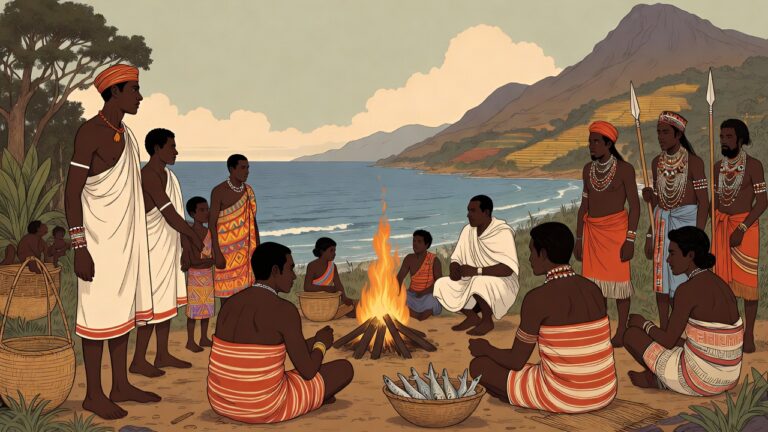
The first thing you hear as morning arrives over the highlands of Antananarivo is the soft, undulating sound of a valiha striking one string, mingled with the distant call of a lemur in the forests and the scent of fresh vary amin'anana (rice with greens) and smoked fish drifting from a nearby home. That string-sound carries our story back to a time of highlands and sea, when we lived as the Malagasy – the Merina, Betsileo, Sakalava, Antandroy, Bara, and many other peoples. Our ancestors built kingdoms in the highlands with palaces of wood and stone, sailed with pirogues over the Indian Ocean, grew rice in terraces that made the hills bloom. The Merina knew their kings and their astrology, the Sakalava their reliefs and knowledge of the sea, the Antandroy their sacred tombs and their cattle. Every family knew the ceremonies of famadihana where the dead are exhumed and rewrapped, the dances around the fire that filled the night with rhythm, communities where sharing was natural and respect for the razana (ancestors) was law. That was our golden time: an island of mountains, forests, and sea, where people lived in harmony with nature as mother and ancestors as father, connected through music, rice, and memory.
But then came the wave from outside, like a storm rising from the Indian Ocean. The Portuguese, French, and British tried to take our land from the 16th to 19th century, but our kings held firm. The French colonized us in 1896, made us a colony, and tried to make us French, to smother our language. Every family knew the loss: an ancestor who fought in uprisings, a child who had to speak French at school, a culture that had to hold on in secret. Independence in 1960 brought hope with Philibert Tsiranana, but also the challenges of a young nation: dictatorships, economic crises, political unrest in the 2000s and 2010s. Every family knew the tensions, the emigration, the silence in the villages.
From that depth rises a pride that is warm and resilient. The valiha that still plays melodies, the vary amin'anana shared with love, the lemurs living free in the forests. Our salegy music that makes hips dance, our people who laugh through hardships, our youth who dream of a better land. We have found our voice again: the democracy that grows, the hope that still burns in the highlands.
Yet the truth colors magenta like a sunset over the Avenue de l'Indépendance. The scars remain: poverty in the villages, the emigration of youth, the pressure of climate change on our rice fields, the memory of colonial times. The outside world buys our vanilla and our tourism, but often does not feel the depth of a people that never broke.
Still, we remember in silence: around the valiha where music is made, during Independence Day on 26 June when we raise our flag, in the highlands where spirits still speak—never forgetting who we were. We tell our children of the old kingdoms and of independence, of the sea and the mountains, so they know: we were connected and strong before we were challenged.
And yet… the valiha continues, soft and undulating, like a promise that floats over the highlands. That is our secret: we have suffered under colonization, unrest, and poverty, but we were first a land of valiha and rice. For our children we build no walls, but a village square where everyone may join the playing. How do we let that string-sound bring hope to everyone again, how does Madagascar remain a home of rhythm and connectedness?
January 2026
Manna Ori
Amin'ny mason'ny Malagasy
Ny zavatra voalohany reninao rehefa tonga ny maraina ambonin'ny faritra avaratra an'i Antananarivo dia ny feo malemy sy mivantana amin'ny valiha iray tady iray voakitika, mifangaro amin'ny feo lavitra amin'ny gidro any anaty ala ary ny fofon'ny vary amin'anana vaovao (vary misy anana) ary ny trondro voatsoaka avy amin'ny trano akaiky. Io feon'ny tady io mitondra ny tantaranay hiverina amin'ny fotoana feno avaratra sy ranomasina, rehefa niaina toy ny Malagasy isika – Merina, Betsileo, Sakalava, Antandroy, Bara ary firenena maro hafa. Ny razambentsika nanangana fanjakana any anaty avaratra miaraka amin'ny lapa vita amin'ny hazo sy vato, nanao sambo pirogue tamin'ny ranomasina Indiana, namboly vary tao anaty terasina izay nampitombo voninkazo ny tendrombohitra. Ny Merina nahafantatra ny mpanjakan'izy ireo sy ny astrologia, ny Sakalava ny fananganana sy ny fahalalany ny ranomasina, ny Antandroy ny fasana masina sy ny omby. Ny fianakaviana tsirairay nahafantatra ny lanonana famadihana izay nivoahan'ny faty ary nofonosana indray, ny dihy manodidina ny afobe izay nameno ny alina amin'ny ritma, ny fiarahamonina izay nizara ho ara-dalàna ary ny fanajana ny razana no lalàna. Io no fotoana volamena: nosy feno tendrombohitra, ala ary ranomasina, izay niainan'ny olona niaraka tamin'ny natiora ho reny ary ny razana ho ray, nifandray amin'ny hira, vary ary fahatsiarovana.
Fa avy eo tonga ny onjam-peo avy ivelany, toy ny tafio-drivotra mivoaka avy amin'ny ranomasina Indiana. Ny Portogey, Frantsay ary Anglezy nanandrana nitondra ny tanintsika nanomboka tamin'ny taonjato faha-16 ka hatramin'ny faha-19, fa ny mpanjakanay nihazona mafy. Ny Frantsay nanjanaka antsika tamin'ny 1896, nanangana kolonia ary nanandrana nanao antsika ho Frantsay, nanakona ny fiteninay. Ny fianakaviana tsirairay nahafantatra ny fatiantoka: razamben'ny olona niady tamin'ny fikomiana, zaza nianatra fa ny teny frantsay no tsy maintsy laharana any am-pianarana, kolontsaina tsy maintsy nitazona tsiambaratelo. Ny fahaleovantena tamin'ny 1960 nitondra fanantenana tamin'i Philibert Tsiranana, fa koa ny fanamby amin'ny firenena tanora: jadona, krizy ara-toekarena, tsy fandriampahalemana ara-politika tamin'ny taona 2000 sy 2010. Ny fianakaviana tsirairay nahafantatra ny fahasorenana, ny fifindran'ny tanora, ny fahanginana any an-tanàna.
Avy amin'io halalin'io no misondrotra ny rehareha mafana sy mahatohitra. Ny valiha mbola milalao feo, ny vary amin'anana mizara amin'ny fitiavana, ny gidro miaina malalaka any anaty ala. Ny hira salegy izay mampihodina ny valorany, ny olona izay mitsiky na dia eo aza ny fahoriana, ny tanora izay manonofy firenena tsara kokoa. Nahita ny feontsika indray isika: ny demokrasia mivoatra, ny fanantenana mbola mirehitra any anaty avaratra.
Kanefa ny fahamarinana miloko magenta toy ny filentehan'ny masoandro eo amin'ny Avenue de l'Indépendance. Ny ratra mbola mijanona: ny fahoriantany any an-tanàna, ny fifindran'ny tanora, ny fanerena ny fiovan'ny toetr'andro amin'ny sahanay vary, ny fahatsiarovana ny vanim-potoana kolonialy. Ny tontolo ivelany mividy ny vanila sy ny fizahan-tany antsika, fa matetika tsy mahatsapa ny halalin'ny firenena tsy mbola tapaka.
Na izany aza, tsaroantsika amin'ny fahanginana: manodidina ny valiha izay misy hira, amin'ny Andro Fahaleovantena ny 26 Jona rehefa manangana ny sainanay isika, any anaty avaratra izay mbola miteny ny fanahy – tsy manadino mihitsy hoe iza isika. Mitantara amin'ny zanatsika momba ny fanjakana taloha sy ny fahaleovantena, momba ny ranomasina sy ny tendrombohitra, mba hahafantarany: nifandray sy matanjaka isika talohan'ny nanapahan'ny fitsapana.
Ary na izany aza… ny valiha mbola mitohy, malemy sy mivantana, toy ny fanambarana mivantana ambonin'ny avaratra. Io no tsiambaratelonay: nijaly tamin'ny fanjanahana, tsy fandriampahalemana ary fahantrana isika, fa isika aloha no tany amin'ny valiha sy vary. Ho an'ny zanatsika tsy manao rindrina, fa kianja tanàna izay afaka miditra rehetra. Ahoana no ahafahantsika mamela io feon'ny tady io hitondra fanantenana ho an'ny rehetra indray, ahoana no hahafahan'i Madagasikara mijanona ho trano feno ritma sy fifandraisana?
Janoary 2026
Manna Ori