
Through the Eyes of the Mozambican
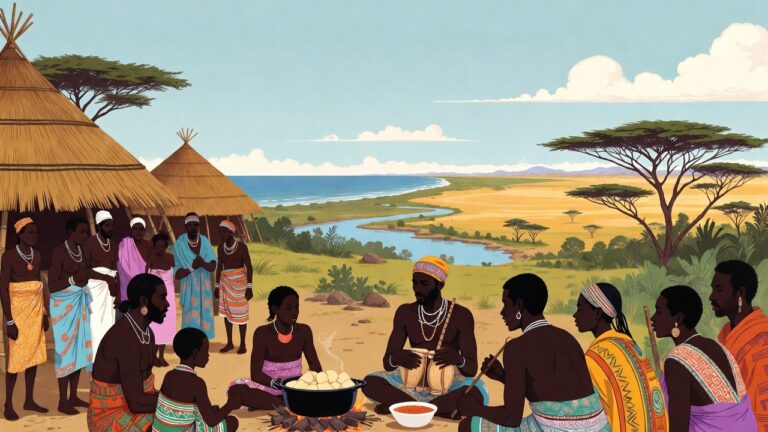
The first sound you hear as morning arrives over Maputo is the soft, rhythmic note of a timbila striking a single tone, mingled with the distant call of a fisherman at the market and the scent of fresh matapa (cassava leaves with coconut) and peri-peri drifting from a nearby home. That timbila-sound carries our story back to a time of rivers and coast, when we lived as the Makua, Tsonga, Sena, Shona, and other peoples in this land we called Moçambique. Our ancestors built villages along the Zambezi and the coast, fished with canoes in the Indian Ocean, grew sorghum and cassava in fertile soil. The Makua knew their sacred spirits and their knowledge of nature, the Tsonga their dances and cattle, the Sena their river trade. Every family knew the tales of the ancestors, the tufo and marrabenta dances that filled the night with rhythm, communities where sharing was natural and respect for elders was the law. That was our golden time: a land of coast, rivers, and savanna, where people lived in harmony with the sea as mother and the Zambezi as father, connected by music and hospitality.
But then came the wave from outside, like a storm rising from the sea. The Portuguese colonized us in the 15th century, turned us into a plantation colony of cashew, sugar, and labor. Slaves were shipped and sold, our land plundered, our culture smothered. Every family knew the loss: an ancestor who arrived in chains, a language that had to survive beside Portuguese, a connectedness stretched across oceans. The independence struggle from 1964 to 1975 brought FRELIMO and Samora Machel – hope that grew – but also the civil war from 1977 to 1992: millions dead, villages burned, families fleeing, landmines that still explode. Every family knew the fear, the disappearances, the emptiness in the streets of Beira and Maputo.
From that depth rises a pride that is warm and rhythmic. The timbila that still plays melodies, the matapa shared with love, the marrabenta that makes the hips dance. Our people laughing through hardship, our youth rising for a better land, our bond stronger than the pain. We have found our voice again: the peace after 1992, the democracy growing, the hope still burning along the coast.
Yet the truth colors magenta like a sunset over the Zambezi. The scars remain: landmines that still explode, poverty in the villages, emigration of youth, memory of the civil war. The outside world buys our cashew and our tourism, but often does not feel the depth of a people who never broke.
Still, we remember in silence: around the timbila where music is made, during Independence Day on 25 June when we raise our flag, in the villages where the spirits still speak – never forgetting who we were. We tell our children of the old kingdoms and of Machel, of the sea and the rivers, so they know: we were connected and strong before we were challenged.
And yet… the timbila continues, soft and waving, like a promise drifting over the coast. That is our secret: we have suffered under colonization, slavery, and civil war, but first we were a land of rivers and rhythm. For our children we build no walls, but a village square where everyone may dance. How do we let that timbila-sound bring hope to everyone again? How does Mozambique remain a home of rhythm and unity?
January 2026
Manna Ori
Pelos Olhos do Moçambicano
O primeiro som que ouves quando a manhã chega sobre Maputo é a nota suave e rítmica de uma timbila que toca uma única nota, misturada com o chamado distante de um pescador no mercado e o aroma de matapa fresca (folhas de mandioca com coco) e peri-peri que sai de uma casa vizinha. Esse som de timbila leva a nossa história de volta a um tempo de rios e costa, quando vivíamos como os Makua, Tsonga, Sena, Shona e outros povos nesta terra que chamávamos Moçambique. Os nossos ancestrais construíram aldeias ao longo do Zambeze e da costa, pescaram com canoas no Oceano Índico, cultivaram sorgo e mandioca em solos férteis. Os Makua conheciam os seus espíritos sagrados e o conhecimento da natureza, os Tsonga as suas danças e gado, os Sena o comércio pelo rio. Cada família conhecia as histórias dos antepassados, as danças tufo e marrabenta que enchiam a noite de ritmo, comunidades onde partilhar era natural e o respeito pelos mais velhos era a lei. Esse foi o nosso tempo dourado: uma terra de costa, rios e savana, onde as pessoas viviam em harmonia com o mar como mãe e o Zambeze como pai, conectadas por música e hospitalidade.
Mas então veio a onda de fora, como uma tempestade que se ergueu do mar. Os portugueses colonizaram-nos no século XV, transformaram-nos numa colónia de plantações de caju, açúcar e mão-de-obra. Escravos foram embarcados e vendidos, a nossa terra saqueada, a nossa cultura sufocada. Cada família conheceu a perda: um antepassado que chegou em correntes, uma língua que teve de sobreviver ao lado do português, uma ligação esticada por oceanos. A luta pela independência de 1964 a 1975 trouxe a FRELIMO e Samora Machel – esperança que cresceu – mas também a guerra civil de 1977 a 1992: milhões de mortos, aldeias incendiadas, famílias em fuga, minas terrestres que ainda explodem. Cada família conheceu o medo, os desaparecimentos, o vazio nas ruas de Beira e Maputo.
Dessa profundidade surge um orgulho quente e rítmico. A timbila que ainda toca melodias, a matapa partilhada com amor, a marrabenta que faz as ancas dançar. O nosso povo que ri apesar das dificuldades, a nossa juventude que se levanta por uma terra melhor, a nossa ligação mais forte do que a dor. Voltámos a encontrar a nossa voz: a paz depois de 1992, a democracia que cresce, a esperança que ainda arde ao longo da costa.
No entanto, a verdade colore-se de magenta como um pôr do sol sobre o Zambeze. As cicatrizes permanecem: minas que ainda explodem, pobreza nas aldeias, emigração da juventude, memória da guerra civil. O mundo exterior compra o nosso caju e o nosso turismo, mas muitas vezes não sente a profundidade de um povo que nunca se quebrou.
Ainda assim, lembramo-nos em silêncio: à volta da timbila onde se faz música, no Dia da Independência a 25 de junho quando içamos a nossa bandeira, nas aldeias onde os espíritos ainda falam – nunca esquecemos quem fomos. Contamos aos nossos filhos dos antigos reinos e de Machel, do mar e dos rios, para que saibam: estávamos conectados e fortes antes de sermos desafiados.
E ainda assim… a timbila continua, suave e ondulante, como uma promessa que flutua sobre a costa. Esse é o nosso segredo: sofremos sob colonização, escravatura e guerra civil, mas primeiro fomos uma terra de rios e ritmo. Para os nossos filhos não construímos muros, mas uma praça onde todos possam dançar. Como fazemos para que esse som de timbila traga esperança a todos outra vez? Como Moçambique permanece um lar de ritmo e unidade?
Janeiro 2026
Manna Ori