Through the Eyes of the Nauruan
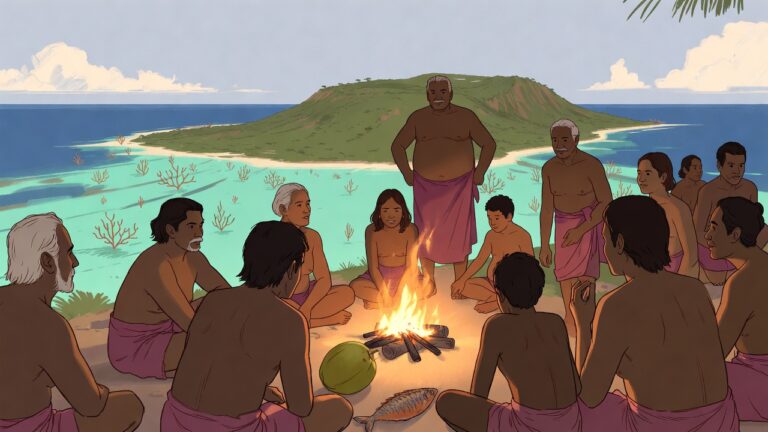
The first sound you feel as morning arrives over Nauru is the soft, endless rhythm of waves breaking against the coral reef, mingled with the distant cry of a frigatebird and the scent of fresh coconut and smoked fish drifting from a nearby home. That wave-whisper carries our story back to a time of islands and infinite horizons, when we lived as the Nauruans on this small round island we called Naoero. Our ancestors built homes of palm and reed around the lagoon, fished with lines and nets in the turquoise sea, grew coconut and pandanus in fertile soil. They lived in harmony with the ocean as mother and the sun as father: clans that cooperated in ijiribai (traditional meetings), dances that told stories of heroes and spirits, communities where sharing was natural and respect for elders was the law. Every family knew the legends of the first people who came from the sea, the feasts where everyone gathered, the bond stronger than the island's smallness. That was our golden time: a land of one single atoll, where people lived with the sea as road and the stars as guide, free and connected by family and nature.
But then came the wave from outside, like a storm rising from the ocean itself. The Germans colonized us in 1888, the Australians took us in 1914, the Japanese bombed and occupied us in World War II. Phosphate mining from the 1920s changed our island: fertile soil was stripped away, the central plateau became a moonscape of pinnacles, our people became laborers on their own land. Every family knew the loss: an ancestor who worked for strangers, a child who grew up without the old gardens, a culture that had to adapt to modern times. Independence in 1968 brought wealth from phosphate, but also the exhaustion of the island, economic crisis when reserves ran out, emigration of youth to Australia and New Zealand because the future sometimes vanished underground.
From that depth rises a pride that is quiet and resilient. The coconut that still gives us everything, the dances that fill the night, the bond that never broke. Our people laughing through hardship, our youth dreaming of a future on the island, our culture still alive in the family. We have found our voice again: hope growing on the small land, calls to the world for climate action.
Yet the truth colors magenta like a sunset over the lagoon. The scars remain: exhausted phosphate mines, rising sea threatening the atoll, emigration of youth, poverty on the island. The outside world buys our phosphate and our fish, but often does not feel the depth of a people literally fighting against the waves and the emptiness.
Still, we remember in silence: around the fire where stories are told, during Independence Day on 31 January when we raise our flag, on the beaches where the spirits still speak – never forgetting who we were. We tell our children of the old clans and of independence, of the sea and the atoll, so they know: we were connected and strong before we were challenged.
And yet… the wave-whisper continues, calm and endless, like a promise that the sea always returns. That is our secret: we have suffered under colonization, exhaustion, and rising seas, but first we were a land of atoll and connection. For our children we build no walls, but a canoe where everyone may paddle together. How do we let that wave-whisper bring hope to everyone again? How does Nauru remain a home of sea and resilience?
January 2026
Manna Ori