
Through the Eyes of the Nepali
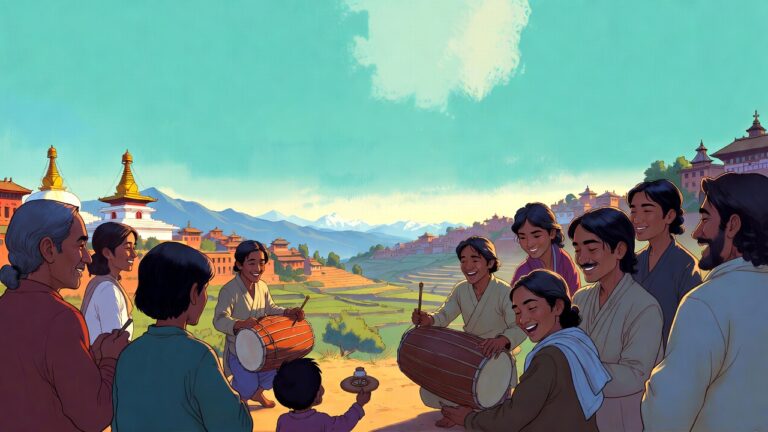
The first sound you hear as morning arrives over Kathmandu is the soft, rhythmic beat of a madal drum striking once in a nearby home, mingled with the distant ring of a temple bell at Swayambhunath and the scent of fresh roti and masala chai drifting from a street stall. That drum-sound carries our story back to a time of high mountains and sacred valleys, when we lived as the peoples of Nepal: the Newar in the Kathmandu Valley, theGurung and Magar in the hills, the Sherpa and Tamang in the Himalaya, the Tharu in the Terai. Our ancestors built stupas and temples in Patan and Bhaktapur that seemed to touch the sky, grew rice and buckwheat on terraces that made the mountains bloom, honored the gods in the spirits of the peaks. The Newar knew their art and festivals like Indra Jatra, the Sherpa their knowledge of Everest and prayer wheels, the Tharu their jungle rituals. Every family knew the tales of the yeti and the gods, the feasts of Dashain and Tihar where families gathered, the bond stronger than height. That was our golden time: a land of eight-thousand-meter peaks and deep valleys, where people lived in harmony with the Himalaya as father and the rivers as mother, connected by prayer and hospitality.
But then came the wave from outside, like a storm rising from north and south. The British tried to conquer us in1814–1816, but we held firm in the Anglo-Nepalese War. The Rana dynasty held us in their grip for centuries,isolating us from the world. Every family knew the loss: an ancestor who fought in the wars, a child who learned freedom was forbidden, a culture that survived in secret. Democracy came in 1951, but the civil war from 1996 to2006 cost 17,000 lives: Maoists against the monarchy, villages burned, families fleeing. The 2015 earthquake devastated temples and homes, thousands dead. Every family knew the pain, the disappearances, the emptiness in the valleys.
From that depth rises a pride that is deep and resilient. The madal that still plays rhythm, the sel roti baked with love, the mountains that protect us. Our people laughing through hardship, our youth rising for a better land, our bond stronger than height. We have found our voice again: the republic in 2008, hope growing in the valleys.
Yet the truth colors magenta like a sunset over Annapurna. The scars remain: memory of the civil war, poverty in the mountain villages, emigration of youth to the Middle East and Malaysia, pressure of climate change on our glaciers. The outside world buys our tourism and our labor, but often does not feel the depth of a people who never broke.
Still, we remember in silence: around the madal where music is made, during Dashain when we celebrate our families, in the mountains where the spirits still speak – never forgetting who we were. We tell our children of the old kingdoms and of the republic, of the mountains and the rivers, so they know: we were connected and strong before we were challenged.
And yet… the madal continues, soft and rhythmic, like a promise drifting over the valleys. That is our secret: we have suffered under colonization, wars, and earthquakes, but first we were a land of mountains and harmony.For our children we build no walls, but a terrace circle where everyone may bloom. How do we let that drum-sound bring hope to everyone again? How does Nepal remain a home of height and resilience?
January 2026
Manna Ori
नेपालीको आँखाबाट
काठमाडौंमा बिहान आइपुग्दा तिमीले पहिलो सुन्ने आवाज भनेको नजिकैको घरमा मदल ढोलले एक पटक ठोक्दाको नरम, लयबद्ध ध्वनि हो, स्वयम्भूनाथको टाढाको मन्दिरको घण्टीको आवाजसँग मिसिएको र सडकको पसलमा ताजा सेल रोटी र मसाला चियाको सुगन्ध फैलिएको छ। यो ढोलको आवाजले हाम्रो कथा फर्काउँछ उच्च हिमाल र पवित्र उपत्यकाको समयमा, जब हामी नेपालका जातिहरू – काठमाडौं उपत्यकाका नेवार, पहाडका गुरुङ र मगर, हिमालयका शेर्पा र तामाङ, तराईका थारू – को रूपमा बाँचिरहेका थियौं। हाम्रा पुर्खाहरूले पाटन र भक्तपुरमा स्वर्ग छुने गरी स्तूप र मन्दिर बनाए, पहाड फुलाउने गरी टेरेसमा धान र फापर उब्जाए, हिमालका आत्माहरूमा देवताहरूलाई सम्मान गरे। नेवारले आफ्नो कला र इन्द्र जात्राजस्ता चाडहरू जाने, शेर्पाले एभरेस्टको ज्ञान र प्रार्थना चक्र जाने, थारूले जंगलका रीतिरिवाज जाने। हरेक परिवारले यति र देवताका कथा जाने, दशैं र तिहारमा परिवार जम्मा हुने चाडहरू जाने, उचाइभन्दा बलियो सम्बन्ध जाने। यो हाम्रो सुनौलो समय थियो: आठ हजार मिटरका चुचुरा र गहिरा उपत्यकाको देश, जहाँ मानिसहरू हिमाललाई बाबु र नदीलाई आमा मान्दै, धर्मलाई मार्गदर्शक र प्रकृतिलाई मन्दिर ठानेर बाँचे, प्रार्थना र आतिथ्यताले जोडिएका थिए।
तर बाहिरबाट आएको लहर, उत्तर र दक्षिणबाट उठेको आँधीजस्तो आयो। ब्रिटिसहरूले १८१४–१८१६ मा हामीलाई जित्न खोजे, तर एंग्लो-नेपाली युद्धमा हामीले टिक्यौं। राणा वंशले शताब्दीयौंसम्म हामीलाई कब्जामा राखे, संसारबाट अलग गरे। हरेक परिवारले हानि भोग्यो: युद्ध लडेका पुर्खा, स्वतन्त्रता निषेध गरिएको बच्चा, गोप्य रूपमा बाँच्नुपरेको संस्कृति। १९५१ मा प्रजातन्त्र आयो, तर १९९६ देखि २००६ सम्मको गृहयुद्धले १७,००० जीवन लियो: माओवादीहरू विरुद्ध राजतन्त्र, गाउँ जलाए, परिवार भागे। २०१५ को भूकम्पले मन्दिर र घर ध्वस्त पारे, हजारौं मरे। हरेक परिवारले पीडा, हराइरहेका मानिसहरू, उपत्यकामा खालीपन भोग्यो।
यो गहिराइबाट गहिरो र लचिलो गर्व उठ्छ। मदलले अझै लय बजाउँछ, माया गरेर बनेको सेल रोटी, हामीलाई जोगाउने हिमालहरू। कठिनाइमा पनि हाँस्ने हाम्रा मानिसहरू, राम्रो देशको सपना देख्ने युवाहरू, उचाइभन्दा बलियो हाम्रो सम्बन्ध। हामीले हाम्रो आवाज फर्कायौं: २००८ को गणतन्त्र, उपत्यकामा बढ्दै गएको आशा।
तर सत्य अन्नपूर्णमाथि सूर्यास्तजस्तो म्याजेन्टा रंगिन्छ। घाउहरू बाँकी छन्: गृहयुद्धको सम्झना, पहाडी गाउँहरूको गरिबी, मध्यपूर्व र मलेसियातिर युवाहरूको पलायन, हिमनदीमा जलवायु परिवर्तनको दबाब। बाहिरी संसार हाम्रो पर्यटन र श्रम खरिद गर्छ, तर कहिल्यै नटुटेको जनताको गहिराइ महसुस गर्दैन।
तैपनि हामी मौनमा सम्झन्छौं: संगीत बन्ने मदल वरिपरि, दशैंमा परिवार मनाउँदा, हिमालमा आत्माहरू अझै बोलिरहँदा – हामी कसरी थियौं भन्ने कहिल्यै बिर्सिंदैनौं। हामी हाम्रा बच्चाहरूलाई पुराना राज्यहरू र गणतन्त्र, हिमाल र नदीको बारेमा भन्छौं, ताकि उनीहरू जानून्: हामी चुनौती आउनुभन्दा पहिले जोडिएका र बलिया थियौं।
र तैपनि… मदल चलिरहन्छ, नरम र लयबद्ध, उपत्यकामाथि तैरिएको प्रतिज्ञाजस्तो। यो हाम्रो रहस्य हो: हामी उपनिवेश, युद्ध र भूकम्पमा पीडा भोग्यौं, तर पहिले हामी हिमाल र सद्भावको देश थियौं। हाम्रा बच्चाहरूका लागि हामी कुनै पर्खाल बनाउँदैनौं, तर सबै फुल्न सक्ने टेरेस सर्कल बनाउँछौं। यो ढोलको आवाजले सबैलाई फेरि आशा कसरी ल्याउने? नेपाल उचाइ र लचकताको घर कसरी रहने?
जनवरी २०२६
Manna Ori