
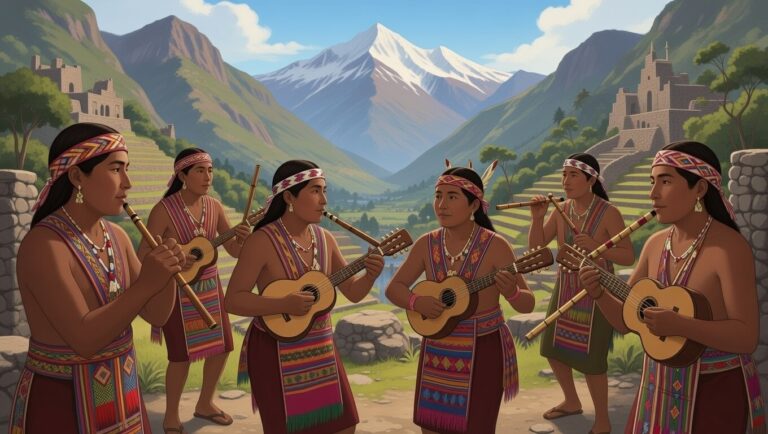
Through the Eyes of the Peruvian
The first sound you hear as morning arrives over Cusco is the soft, rhythmic note of a quena (flute) blowing a single tone, mingled with the distant call of a llama on the high plateau and the scent of fresh anticucho and coca tea drifting from a nearby home. That flute-sound carries our story back to a time of high mountains and stone cities, when we lived as the people of Tawantinsuyu – the Inca Empire. Our ancestors built Machu Picchu and Sacsayhuamán from stones that fit without mortar, wrote quipus with knots that guarded knowledge, grew quinoa and potatoes on terraces that made the Andes bloom. The Incas ruled with wisdom, the Sapa Inca as son of the sun, communities where ayni (mutual aid) was the law. Every family knew the feasts of Inti Raymi honoring the sun, the tales of Viracocha, the bond stronger than height. That was our golden time: a land of Andes and Amazon, where people lived in harmony with the mountains as father and Pachamama as mother, connected by knowledge and rhythm.
But then came the wave from outside, like a storm rising from the sea. The Spanish arrived in 1532 with Pizarro, and within years the Inca Empire fell. They took our gold, our people as slaves in the mines of Potosí, our temples as pagan. Every family knew the loss: an ancestor who vanished into the mines, a language that had to survive in secret, a culture that blended to endure. Independence in 1821 brought San Martín and Bolívar, but also centuries of oligarchy, dictatorships, and inequality. The Shining Path terror in the 1980s and 90s cost tens of thousands of lives, villages burned, families fleeing. Every family knew the pain, the disappearances, the emptiness in the streets of Ayacucho.
From that depth rises a pride that is deep and colorful. The quena that still plays melodies, the ceviche prepared with love, the Inca trails that still walk. Our people laughing through hardship, our youth rising for a better land, our bond stronger than the pain. We have found our voice again: recognition of indigenous rights, hope growing in the Andes.
Yet the truth colors magenta like a sunset over Machu Picchu. The scars remain: poverty in the highlands, tensions between communities, emigration of youth, memory of the terror. The outside world buys our tourism and our quinoa, but often does not feel the depth of a people who never broke.
Still, we remember in silence: around the quena where music is made, during Independence Day on 28 July when we raise our flag, in the mountains where the spirits still speak – never forgetting who we were. We tell our children of the Incas and of independence, of the mountains and the rivers, so they know: we were connected and strong before we were challenged.
And yet… the quena continues, soft and high, like a promise drifting over the Andes. That is our secret: we have suffered under colonization, terror, and inequality, but first we were a land of terraces and wisdom. For our children we build no walls, but a terrace where everyone may bloom. How do we let that quena-sound bring hope to everyone again? How does Peru remain a home of height and resilience?
January 2026
Manna Ori
A Través de los Ojos del Peruano
El primer sonido que escuchas cuando la mañana llega sobre Cusco es la nota suave y rítmica de una quena que sopla un solo tono, mezclada con el llamado lejano de una llama en la meseta alta y el aroma de anticucho fresco y mate de coca que sale de una casa cercana. Ese sonido de quena lleva nuestra historia de vuelta a un tiempo de altas montañas y ciudades de piedra, cuando vivíamos como el pueblo de Tawantinsuyu – el Imperio Inca. Nuestros ancestros construyeron Machu Picchu y Sacsayhuamán con piedras que encajaban sin mortero, escribieron quipus con nudos que guardaban conocimiento, cultivaron quinua y papas en terrazas que hicieron florecer los Andes. Los incas gobernaron con sabiduría, el Sapa Inca como hijo del sol, comunidades donde el ayni (ayuda mutua) era la ley. Cada familia conocía las fiestas de Inti Raymi honrando al sol, las historias de Viracocha, el lazo más fuerte que la altura. Ese fue nuestro tiempo dorado: una tierra de Andes y Amazonía, donde la gente vivía en armonía con las montañas como padre y Pachamama como madre, conectada por conocimiento y ritmo.
Pero entonces llegó la ola de afuera, como una tormenta que surgió del mar. Los españoles llegaron en 1532 con Pizarro, y en pocos años el Imperio Inca cayó. Tomaron nuestro oro, a nuestra gente como esclavos en las minas de Potosí, nuestros templos como paganos. Cada familia conoció la pérdida: un ancestro que desapareció en las minas, una lengua que tuvo que sobrevivir en secreto, una cultura que se mezcló para perdurar. La independencia en 1821 trajo a San Martín y Bolívar, pero también siglos de oligarquía, dictaduras y desigualdad. El terror de Sendero Luminoso en los 80 y 90 costó decenas de miles de vidas, aldeas quemadas, familias huyendo. Cada familia conoció el dolor, las desapariciones, el vacío en las calles de Ayacucho.
De esa profundidad surge un orgullo profundo y colorido. La quena que aún toca melodías, el ceviche preparado con amor, los caminos incas que aún se caminan. Nuestra gente que ríe a través de las dificultades, nuestra juventud que se levanta por una tierra mejor, nuestro lazo más fuerte que el dolor. Hemos recuperado nuestra voz: reconocimiento de derechos indígenas, esperanza que crece en los Andes.
Sin embargo, la verdad se tiñe de magenta como un atardecer sobre Machu Picchu. Las cicatrices permanecen: pobreza en las alturas, tensiones entre comunidades, emigración de jóvenes, memoria del terror. El mundo exterior compra nuestro turismo y nuestra quinua, pero a menudo no siente la profundidad de un pueblo que nunca se rompió.
Aun así, recordamos en silencio: alrededor de la quena donde se hace música, durante el Día de la Independencia el 28 de julio cuando izamos nuestra bandera, en las montañas donde los espíritus aún hablan – nunca olvidamos quiénes fuimos. Contamos a nuestros hijos de los incas y de la independencia, de las montañas y los ríos, para que sepan: estábamos conectados y fuertes antes de ser desafiados.
Y sin embargo… la quena continúa, suave y alta, como una promesa que flota sobre los Andes. Ese es nuestro secreto: hemos sufrido bajo colonización, terror y desigualdad, pero primero fuimos una tierra de terrazas y sabiduría. Para nuestros hijos no construimos muros, sino una terraza donde todos puedan florecer. ¿Cómo hacemos para que ese sonido de quena vuelva a traer esperanza a todos? ¿Cómo Perú sigue siendo un hogar de altura y resiliencia?
Enero 2026
Manna Ori