Through the Eyes of the Vincentian
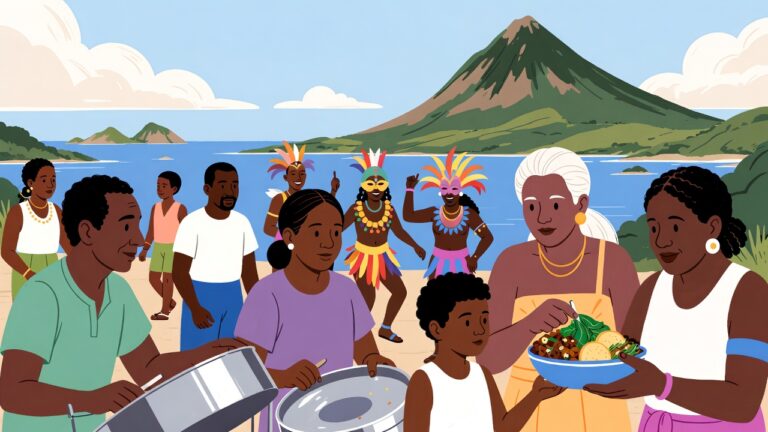
The first sound you hear as morning arrives over Kingstown is the soft, rhythmic note of a steelpan striking once, mingled with the distant call of a tropical bird and the scent of fresh callaloo and bakes drifting from a nearby home. That steel-sound carries our story back to a time of volcanoes and sea, when we lived as the Garifuna, Kalinago, and African enslaved who together shaped Saint Vincent and the Grenadines. Our ancestors built villages along the coast, fished with nets in turquoise waters, grew cassava and fruit in fertile soil around La Soufrière volcano. The Garifuna knew their knowledge of the sea and their rhythms, the Kalinago their sacred places and resilience, the enslaved brought their music and courage. Every family knew the tales of the spirits, the dances around the fire that filled the night with rhythm, communities where sharing was natural and respect for elders was the law. That was our golden time: a land of islands and mountains, where people lived in harmony with the sea as mother and the volcano as father, connected by rhythm and survival.
But then came the wave from outside, like a hurricane rising from the Caribbean Sea. The French and British colonized us from the 18th century, fought over the island, turned us into a plantation colony of sugar and cotton. Enslaved people were shipped from Africa, their backs broken under the sun, their spirits smothered but never killed. Every family knew the loss: an ancestor who arrived in chains, a language that had to survive in secret, a culture that blended to endure. Independence in 1979 brought Milton Cato – hope that grew – but also the trials of a young island nation: poverty, emigration of youth, pressure of climate change on our coasts and hurricanes that devastate villages.
From that depth rises a pride that is warm and rhythmic. The steelpan that still sounds in the pan yards, the callaloo prepared with love, the carnival that fills the streets with color. Our people laughing through hardship, our youth rising for a better land, our bond stronger than the sea. We have found our voice again: independence, hope growing on the islands.
Yet the truth colors magenta like a sunset over La Soufrière. The scars remain: memory of slavery, poverty in the villages, emigration of youth, pressure of hurricanes and climate change. The outside world buys our tourism and our bananas, but often does not feel the depth of a people who never broke.
Still, we remember in silence: around the steelpan where music is made, during Independence Day on 27 October when we raise our flag, on the beaches where the spirits still speak – never forgetting who we were. We tell our children of the Kalinago and of Cato, of the sea and the mountains, so they know: we were connected and strong before we were challenged.
And yet… the steelpan continues, clear and rhythmic, like a promise drifting over the islands. That is our secret: we have suffered under colonization, slavery, and storms, but first we were a land of sea and rhythm. For our children we build no walls, but a carnival square where everyone may dance. How do we let that steel-sound bring hope to everyone again? How does Saint Vincent and the Grenadines remain a home of rhythm and resilience?
January 2026
Manna Ori