
Through the Eyes of the Sri Lankan
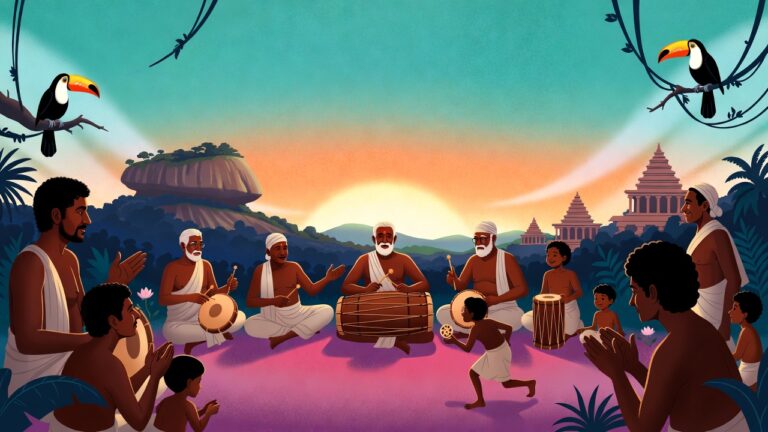
The first sound you hear as morning arrives over Kandy is the soft, waving beat of a geta bera (Kandy drum)striking once, mingled with the distant call of a toucan and the scent of fresh kottu roti and coconut drifting from a nearby home. That drum-sound carries our story back to a time of temples and sea, when we lived as theSinhalese, Tamils, Moors, and Vedda peoples on this island we called Lanka. Our ancestors built Sigiriya rock with frescoes that seemed to paint the sky, the temples of Anuradhapura and Polonnaruwa with stupas that reflected the sun, irrigation systems that made dry zones bloom. The Sinhalese knew their kings likeParakramabahu who built reservoirs, the Tamils their Hindu temples in the north, the Moors their trade along the coast. Every family knew the feasts of Vesak with lanterns and dances, the tales of the Mahavamsa, the bond stronger than differences. That was our golden time: an island of mountains, jungle, and sea, where people livedin harmony with nature as mother and the Buddha as guide, connected by art, trade, and tolerance.
But then came the wave from outside, like a storm rising from the sea. The Portuguese arrived in 1505, theDutch and British followed, colonized us for three centuries, carved our land for tea, rubber, and cinnamon. Every family knew the loss: an ancestor who worked on plantations, a child who had to speak English at school, a culture that had to adapt. Independence in 1948 brought D.S. Senanayake – hope that grew – but also tensions between Sinhalese and Tamils, the civil war from 1983 to 2009 with LTTE and government forces: tens of thousands dead, villages destroyed, families fleeing. Every family knew the pain, the disappearances, the emptiness in the streets of Jaffna and Colombo.
From that depth rises a pride that is warm and resilient. The geta bera that still beats in the temples, the kottu roti prepared with love, the tea from the central highlands that wakes the world. Our people laughing through hardship, our youth rising for a better land, our bond stronger than the pain. We have found our voice again:peace after 2009, hope growing along the coast.
Yet the truth colors magenta like a sunset over Sigiriya. The scars remain: the civil war still in memory, poverty inthe villages, emigration of youth, pressure of climate change on our coasts. The outside world buys our tea and our tourism, but often does not feel the depth of a people who never broke.
Still, we remember in silence: around the geta bera where music is made, during Independence Day on 4February when we raise our flag, in the temples where the spirits still speak – never forgetting who we were. We tell our children of the old kingdoms and of Senanayake, of the sea and the mountains, so they know: we were connected and strong before we were challenged.
And yet… the geta bera continues, deep and low, like a heartbeat that never falls silent. That is our secret: we have suffered under colonization, civil war, and unrest, but first we were a land of temples and sea. For our children we build no walls, but a temple square where everyone may pray. How do we let that drum-sound bring hope to everyone again? How does Sri Lanka remain a home of rhythm and unity?
January 2026
Manna Ori
ශ්රී ලාංකිකයාගේ ඇසින්
කැන්ඩි මත උදෑසන එළඹෙන විට ඔබට ඇසෙන පළමු හඬ යනු ගෙට බෙර (කැන්ඩි බෙර) එක වරක් පහර දෙන මෘදු, රිද්මයෙන් යුත් හඬයි, දුරින් තොකන් කුරුල්ලෙකුගේ කෑගැස්ම සමඟ මිශ්ර වී ඇති අතර, ආසන්න ගෙයකින් නැගෙන තවත් කොටු රොටි සහ කොහුගේ සුවඳයි. එම බෙර හඬ අපේ කතාව ආපසු ගෙන යයි මුද්රා සහ මුහුදු කාලයට, අපි ශ්රී ලංකාවේ සිංහල, දෙමළ, මුස්ලිම් සහ වැදි ජනතාව ලෙස ජීවත් වූ කාලයට. අපේ පූර්වජයන් සිගිරිය බිම්මල් සහිත බිම්මල් ගල සහ අනුරාධපුර, පොළොන්නරුව යනුවෙන් ස්තූප සහිත මුද්රා ගොඩනැගූහ, බටහිර බිම්මල් ගල්වල තේ, රබර් සහ කුළුබඩු වගා කළහ. සිංහලයන් පරාක්රමබාහු රජු වැනි රජවරුන් සහ ඔවුන්ගේ විල් ගොඩනැගීම දැන සිටියහ, දෙමළයන් උතුරේ හින්දු මුද්රා දැන සිටියහ, මුස්ලිම්වරුන් වෙරළබඩ සුදු වෙළඳාම දැන සිටියහ. සෑම පවුලක්ම වෙසක් උත්සවයේ ලාම්පු සහ නැටුම් දැන සිටියහ, මහාවංශයේ කතා දැන සිටියහ, වෙනස්කම්වලට වඩා ශක්තිමත් සම්බන්ධතාව දැන සිටියහ. එය අපේ රන් කාලය විය: කඳු, ජංගල සහ මුහුදු දිවයිනක්, මිනිසුන් ස්වභාව ධර්මය මවක් ලෙස සහ බුදුන් වහන්සේ මාර්ගශ්රීය ලෙස ජීවත් වූ, කලාව, වෙළඳාම සහ ඉවසීමෙන් එකතු වූ තැනක්.
නමුත් පසුව බාහිරින් ආ රළ ආවේය, මුහුදෙන් ඇති වූ තද බුලුලක් මෙනි. පෘතුගීසීන් 1505 දී පැමිණියහ, ලන්දේසීන් සහ බ්රිතාන්යයන් පසුව ආවහ, අපව තුන් සියවස් තිස්සේ යටත් විජිත කළහ, තේ, රබර් සහ කුළුබඩු සඳහා අපේ රට කොටස් කළහ. සෑම පවුලක්ම නැතිවීම දැන සිටියේය: රෝපණයන්හි වැඩ කළ පූර්වජයෙක්, පාසලේ ඉංග්රීසි කතා කිරීමට ඉගෙන ගත් දරුවෙක්, රහසින් ජීවත් වූ සංස්කෘතියක්. 1948 දී නිදහස ලැබුණු D.S. Senanayake – බලාපොරොත්තුව වැඩි වූ – නමුත් සිංහලයන් සහ දෙමළයන් අතර ආතතිය, 1983 සිට 2009 දක්වා LTTE සහ රජයේ හමුදා අතර සිවිල් යුද්ධය: දහස් ගණනින් මිය ගියහ, ගම්මාන විනාශ විය, පවුල් පලා ගියහ. සෑම පවුලක්ම වේදනාව දැන සිටියේය, අතුරුදහන් වීම්, ජාඇෆ්නා සහ කොළඹ වීදිවල හිස් බව.
එම ගැඹුරෙන් උණුසුම් සහ ඔරොත්තු දෙන ආඩම්බරකමක් ඇති වේ. ගෙට බෙර තවමත් ගම්මානවල බස්සයි, ආදරයෙන් සකස් කරන කොටු රොටි, මධ්යම කඳුකරයෙන් ලෝකය අවදි කරන තේ. අපේ මිනිසුන් අමාරුකම් හරහා සිනාසෙති, අපේ තරුණයන් වඩා හොඳ රටක් සඳහා නැගී සිටිති, අපේ සම්බන්ධතාව වේදනාවට වඩා ශක්තිමත් ය. අපි නැවත අපේ හඬ සොයා ගත්තෙමු: 2009න් පසු සාමය, වෙරළබඩ වැඩෙන බලාපොරොත්තුව.
නමුත් සත්යය සිගිරිය මත හිරු බසින විට මැජන්ටා වර්ණයට හැරේ. තුවාල තවමත් ඇත: සිවිල් යුද්ධයේ සිහිපත, ගම්මානවල දරිද්රතාව, තරුණයන්ගේ විදේශගත වීම, අපේ වෙරළබඩ කාලගුණ විපර්යාසවල බලපෑම. බාහිර ලෝකය අපේ තේ සහ සංචාරක ව්යාපාර මිලදී ගනී, නමුත් බොහෝ විට කිසිදා නොබිඳුණු ජනතාවක ගැඹුර දැනගන්නේ නැත.
තවදුරටත් අපි නිහඬව සිහි කරමු: සංගීතය සෑදෙන ගෙට බෙර වටා, පෙබරවාරි 4 වනදා නිදහස් දිනයේ අපේ කොඩිය ඔසවන විට, ගෙවල්වල ආත්මයන් තවමත් කතා කරන තැන්වල – අපි කවුද කියා කිසිදා නොඅමතක කරමු. අපි අපේ දරුවන්ට පැරණි රාජධානි සහ සේනානායක ගැන, මුහුද සහ කඳු ගැන කියමු, ඔවුන් දැනගන්නට: අපට අභියෝග කිරීමට පෙර අපි එකතු වී ශක්තිමත් විය.
එහෙත්… ගෙට බෙර තවමත් බස්සයි, ගැඹුරු සහ අඩු, ගඟක් මත ගලා යන ප්රතිඥාවක් මෙන්. එය අපේ රහසයි: අපි යටත්විජිතකරණය, සිවිල් යුද්ධය සහ අස්ථාවරත්වය යටතේ දුක් වින්දෙමු, නමුත් පළමුව අපි මුද්රා සහ මුහුදේ රටක් විය. අපේ දරුවන් සඳහා අපි බිත්ති නොගොඩනඟමු, නමුත් සියල්ලන්ටම යාච්ඤා කළ හැකි ගෙයි පුදබිමක්. එම බෙර හඬ නැවත සියල්ලටම බලාපොරොත්තුව ගෙන එන්නේ කෙසේද? ශ්රී ලංකාව රිද්මය සහ එකමුතුකමේ නිවහනක් ලෙස පවතින්නේ කෙසේද?
ජනවාරි 2026
Manna Ori