
Through the Eyes of the Tongan
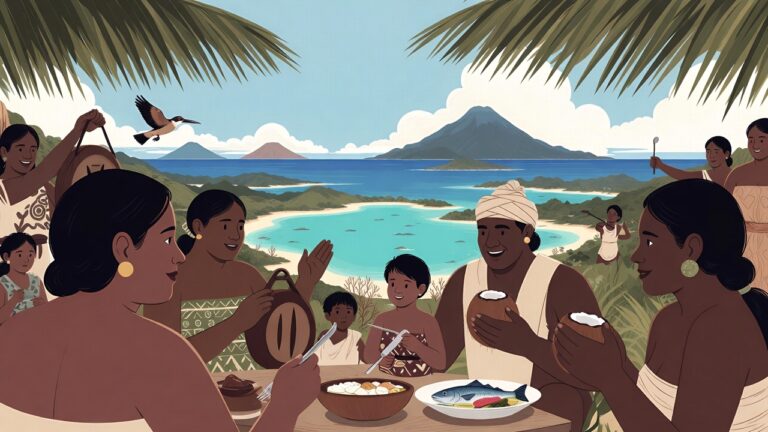
The first sound you hear as morning washes over Nuku'alofa is the soft, rolling breath of the ocean against the coral reef, blended with the distant call of a tropical bird and the drifting scent of fresh 'ota 'ika (raw fish with coconut) and lu pulu (coconut with corned beef) rising from a nearby home. That gentle surge of waves carries our story back to a time of islands and endless horizons, when we lived as the Tongan peoples on this archipelago of 176 islands we call Tonga. Our ancestors built langa fale (great houses) of wood and palm, fished with canoes in the deep blue sea, grew taro and yam in fertile soil. They lived in harmony with the sea as mother and the land as father: kings (Tu'i Tonga) ruled with tapu (sacred rules), families shared everything in feasts of kava ceremonies, the lakalaka and 'otuhaka dances told stories of heroes and ancestors. Every family knew the legends of Maui who pulled the islands from the sea, the gatherings where all came together, the bond stronger than the distances between islands. That was our golden time: a land of lagoons, coral, and volcanoes, where people moved with the ocean as their road and the stars as their guide—free and connected through fa'a Tonga, the Tongan way.
But then came the wave from outside, rising like a storm from the Pacific. The British made us a protectorate in 1900, tried to control us yet left our monarchy standing. Every family knew the loss: an ancestor who labored for strangers, a child taught that freedom had limits, a culture forced to bend to new rules. Independence in 1970 brought King Taufa'ahau Tupou IV—hope that grew—but also the trials of a small island nation: poverty, the emigration of youth to New Zealand and Australia, the pressure of climate change that threatens our low atolls and swallows our shores.
From that depth rises a pride that is warm and welcoming. The lakalaka dance still fills the night, 'ota 'ika prepared with love, the kava ceremony celebrating connection. Our people laugh through hardships, our young dream of a future on the islands, our bonds stronger than the sea. We have reclaimed our voice: the monarchy that unites us, the hope growing across the islands.
Yet the truth colors magenta like a sunset over the Vava'u group. The scars remain: emigration that splits families, the rising sea endangering atolls, poverty on remote islands, the weight of a fast-changing world. The outside world buys our tourism and our fish, but often fails to feel the depth of a people literally fighting the waves.
Still, we remember in silence: around the kava circle where stories are shared, on Independence Day the 4th of June when we raise our flag, on the beaches where spirits still speak—never forgetting who we were. We tell our children of the ancient kings and of Tupou IV, of the sea and the islands, so they know: we were connected and strong before the challenges came.
And yet… the rolling of the waves continues, calm and endless, like a promise that the ocean always returns. That is our secret: we have suffered under colonization, emigration, and rising seas, but first we were a land of islands and rhythm. For our children we build no walls, but a fale where everyone is welcome. How do we let that wave-sound bring hope once more to all? How does Tonga remain a home of connection and resilience?
January 2026
Manna Ori
Ki he Mata 'o e Tonga
Ko e meʻa muʻomuʻomu ke ke fanongo ki ai ʻi he pongipongi ʻoku hoko ki Nukuʻalofa ko e leʻo molemole, lolomi ʻo e moana ʻoku tauhi ki he hakau, ʻoku fefiofio mo e leʻo mamaʻo ʻo e manu ʻo e fonua mo e kakai ʻo e 'ota 'ika foʻou (ika mata mo e niu) mo e lu pulu (niu mo e pulu) ʻoku hoko atu mei ha fale loto. Ko e lolomi ʻoe ngalu naʻá ne toe taki ange kitautolu ki he taimi ʻo e ngaahi motu mo e hakau taʻengata, ʻi he taimi naʻá mau nofo ai ʻo hange ko e kakai Tonga ʻi he ngaahi motu 176 ʻoku mau ui ko Tonga. Naʻe langa ʻe he kau kui ʻa e langa fale (fale lahi) mei he laʻakau mo e niu, naʻe fai ʻa e ika ʻi he vaka ʻi he moana moʻoni, naʻe tupu ʻa e talo mo e ʻufi ʻi he kelekele monuʻia. Naʻa nau nofo ʻi he feʻofaʻaki mo e moana ko e faʻē mo e fonua ko e tamai: ko e ngaahi Tuʻi Tonga naʻe puleʻi ʻaki ʻa e tapu (tulafono tapu), ko e ngaahi famili naʻe vahevahe ʻa e meʻa kotoa ʻi he ngaahi meʻaʻofa ʻo e inu kava, ko e saka lakalaka mo e ʻotuhaka naʻe talatalaaki ai ʻa e ngaahi talanoa ʻo e kau toa mo e kau kui. Naʻe ʻilo ʻe he famili kotoa ʻa e ngaahi talanoa ʻo e Maui naʻá ne tohi ʻa e ngaahi motu mei he moana, ko e ngaahi feilaulau naʻe haʻu ai ʻa e kakai kotoa, ko e feʻofaʻaki naʻe mālohi ange ʻi he vahevahe ʻoe motu. Ko ia ʻa e taimi koula: ko e fonua ʻo e ngaahi lagune, hakau, mo e moʻungaafi, ʻa e kakai naʻa nau ʻalu mo e moana ko e hala mo e fetuʻu ko e taʻiala—saʻoloto mo feʻofaʻaki ʻi he faʻa Tonga, ko e founga Tonga.
Ka naʻe hoko mai ʻa e ngalu mei mui, ʻo hake hange ko e afā ʻoku hoko mei he Pasifiki. Ko e kau Pilitānia naʻá nau fai kitautolu ko e protectoraat ʻi he 1900, naʻa nau feinga ke puleʻi kitautolu ka naʻa nau tuku ke kei ai ʻa e puleʻanga tuʻi. Naʻe ʻilo ʻe he famili kotoa ʻa e mole: ko e kui naʻá ne ngāue ki he kau muli, ko e tamasiʻi naʻe ako ke ʻilo ʻoku ha meʻa ʻe kau ki he saʻoloto, ko e kulitūtaʻanga naʻe fai ke liliu ki he tulafono foʻou. Ko e tauhi fonua ʻi he 1970 naʻá ne ʻomi ʻa Kingi Taufaʻahau Tupou IV—ko e ʻamanaki naʻe tupu—ka ko e ngaahi faingataʻa foki ʻo e fonua motu siʻi: ko e fattongiá, ko e hiki ʻoe kau talavou ki Nuʻu Sila mo ʻAositelēlia, ko e fakatāfea ʻoe liliu oʻo e tauhiʻanga ʻoku fakatāfea ʻa e ngaahi atoll maʻulalo mo e ngaahi matakafoʻou.
Mei he loloto naʻe hoko mai ʻa e loto māʻoniʻoni naʻe mafana mo fakafeʻofaʻi. Ko e saka lakalaka ʻoku kei fakafonu ʻa e po, ko e 'ota 'ika ʻoku fai ʻaki ʻa e ʻofa, ko e inu kava ʻoku fiefiaʻi ai ʻa e feʻofaʻaki. Ko e kakai ʻoku nau kata ʻi he ngaahi faingataʻa, ko e kau talavou ʻoku nau moʻoni ki he kahaʻu ʻi he motu, ko e feʻofaʻaki ʻoku mālohi ange ʻi he moana. Kuo mau toe maʻu ʻa e leʻo: ko e puleʻanga tuʻi ʻoku fakatahataha kitautolu, ko e ʻamanaki ʻoku tupu ʻi he ngaahi motu.
Ka ko e moʻoni ʻoku lanu magenta hange ko e mehikitanga ʻi he Vavaʻu. Ko e ngaahi ila ʻoku kei ai: ko e hiki ʻoe famili naʻe vahevahe, ko e moana ʻoku hake ʻoku fakatāfea ʻa e atoll, ko e fattongiá ʻi he motu mamaʻo, ko e fakatāfea ʻoe māmani naʻe liliu vave. Ko e māmani muli ʻoku nau fakatau ʻa e turisi mo e ika, ka ʻoku ikai ke nau ongoʻi ʻa e loloto ʻoe kakai ʻoku tau mo e ngalu.
Ka ko e manatu ʻoku fai ʻi he lolo: ʻi he vahe kava ʻoku vahevahe ai ʻa e talanoa, ʻi he ʻAho Tauhi Fonua ʻi he 4 ʻo Sune ʻi he taimi ʻoku tau hiki ai ʻa e fuka, ʻi he ngaahi matakafoʻou ʻoku kei lea ai ʻa e ngaahi laumālie—ʻikai ngalo ko hai naʻá mau ai. ʻOku mau talatala ki he fānau ʻo e kau Tuʻi muʻa mo Tupou IV, ʻo e moana mo e motu, koeʻuhi ke nau ʻilo: naʻá mau feʻofaʻaki mo mālohi ʻi muʻa ʻi he ngaahi fakatāfea.
Pea talangofua… ʻoku kei lolomi ʻa e ngalu, file moe taʻengata, hange ko e ʻoatu ʻoku kei hoko mai ʻa e moana. Ko ia ʻa e hemá: kuo mau mamahi ʻi he koloniasi, hiki, mo e moana ʻoku hake, ka muʻomuʻomu naʻá mau fonua ʻo e motu mo e founga lolomi. Ki he fānau ʻoku ʻikai te mau langa ʻa e ngaahi pā, ka ko e fale ʻoku tali ʻa e kakai kotoa. Ko e hā ʻoku mau fai ai ke toe ʻomi ʻe he leʻo ngalu naʻá e ʻamanaki ki he kakai kotoa? Ko e hā ʻoku kei ai ʻa Tonga ko e kāinga ʻo e feʻofaʻaki mo e loto mālohi?
Sānuali 2026
Manna Ori