
Through the Eyes of the Trinidadian and Tobagonian
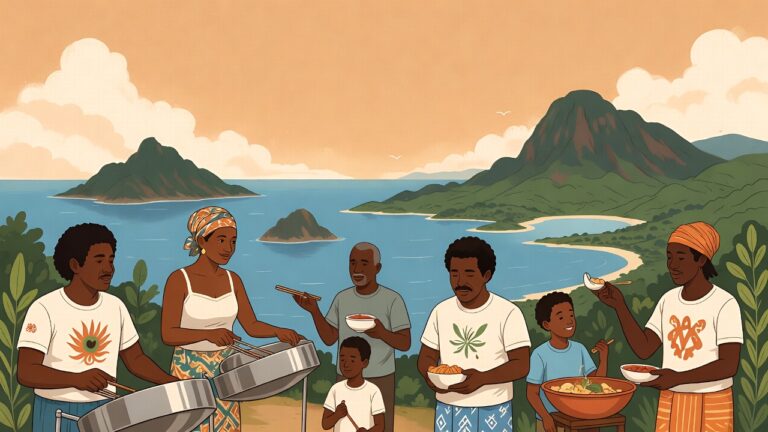
The first sound you hear as morning breaks over Port of Spain is the soft, rhythmic strike of a single note on a steelpan, blended with the distant call of a tropical bird and the drifting scent of fresh doubles (bara with channa) and pepper sauce rising from a street stall. That metallic ring carries our story back to a time of islands and sea, when we lived as the peoples of Trinidad and Tobago: the indigenous Caribs and Arawaks, the African enslaved, the Indian indentured labourers, the Chinese, Syrians, and Europeans who together shaped the Creole culture. Our ancestors built villages along the coast, fished with canoes in the Caribbean Sea, grew sugarcane and cacao in the fertile soil. The Caribs knew their wisdom of the sea and nature, the Africans brought their rhythms and resilience, the Indian workers their roti and their festivals. Every family knew the stories of the spirits, the dances around the fire that filled the night with calypso and soca, the communities where sharing was natural and respect for elders was law. That was our golden time: a land of two islands, where people lived in harmony with the sea as mother and the Northern Range as father, connected through rhythm, food, and diversity.
But then came the wave from outside, rising like a hurricane from the Caribbean Sea. The Spanish, French, and British colonised us from the 16th century onward, turning us into a plantation colony of sugar, cacao, and coffee. Enslaved people were shipped from Africa, their backs broken under the sun, their spirits smothered but never extinguished. Every family knew the loss: an ancestor brought in chains, a language that survived only in secret, a culture that blended to endure. Independence in 1962 brought Eric Williams—hope that grew—but also the trials of a young nation: the oil crisis, the Black Power Revolution in 1970, the attempted coup in 1990, the emigration of youth to the United States and Canada.
From that depth rises a pride that is hot and rhythmic. The steelpan still rings in the pan yards, calypso and soca make the world dance, doubles are shared with love. Our people laugh through hardships, our young rise for a better country, our bonds stronger than origin. We have reclaimed our voice: the Carnival that shows the world who we are, the hope growing across the islands.
Yet the truth colours magenta like a sunset over the Pitch Lake. The scars remain: the memory of slavery, poverty in the barrios, the emigration of youth, the pressure of climate change on our coasts. The outside world buys our tourism and our oil, but often fails to feel the depth of a people that never broke.
Still, we remember in silence: around the steelpan where music is born, on Independence Day the 31st of August when we raise our flag, on the beaches where spirits still speak—never forgetting who we were. We tell our children of the Kalinago and of Williams, of the sea and the mountains, so they know: we were connected and strong before the challenges came.
And yet… the steelpan continues, clear and rhythmic, like a promise floating over the islands. That is our secret: we have suffered under colonisation, slavery, and unrest, but first we were a land of sea and rhythm. For our children we build no walls, but a carnival street where everyone may dance. How do we let that steel sound bring hope once more to all? How does Trinidad and Tobago remain a home of rhythm and unity?
January 2026
Manna Ori
Troo de Eyes ah de Trini an Tobagonian
De eerste ting yuh hear when mornin break over Port of Spain is de soft, rhythmic ping of one note on a steelpan, mix up wid de far-off call of a tropical bird an de smell of fresh doubles (bara wid channa) an pepper sauce comin from a street stall. Dat steel sound carry we story back to a time of islands an sea, when we was livin as de people of Trinidad an Tobago: de indigenous Caribs an Arawaks, de African enslave, de Indian indenture labourers, de Chinese, Syrians, an Europeans who come together an shape de Creole culture. We ancestors build village dem by de coast, fish wid canoe in de Caribbean Sea, plant cane an cocoa in de rich soil. De Caribs know dey sea an nature wisdom, de Africans bring dey rhythm an resilience, de Indian workers bring dey roti an dey festival. Every family know de spirit story, de dance roun de fire dat fill de night wid calypso an soca, de community where sharin normal an respect for elder is de law. Dat was we golden time: a land of two island, where people live in harmony wid de sea as mudda an de Northern Range as fadda, connect through rhythm, food, an diversity.
But den come de wave from outside, risin like a hurricane from de Caribbean Sea. De Spanish, French, an British colonise we from de 16th century, turn we into a plantation colony of sugar, cacao, an coffee. Enslave people ship from Africa, dey back break under de sun, dey spirit smother but never kill. Every family know de loss: an ancestor come in chain, a language survive only in secret, a culture mix up to stay alive. Independence in 1962 bring Eric Williams—hope dat grow—but also de trial of a young nation: de oil crisis, de Black Power Revolution in 1970, de coup attempt in 1990, de youth migration to de US an Canada.
From dat depth rise a pride dat hot an rhythmic. De steelpan still ring in de pan yard, calypso an soca make de worl dance, doubles share wid love. We people laugh through hardship, we young rise for a better country, we bond stronger dan where yuh come from. We reclaim we voice: de Carnival dat show de worl who we is, de hope growin across de island.
Yet de truth colour magenta like a sunset over de Pitch Lake. De scar remain: de memory of slavery, poverty in de barrio, de youth migration, de pressure of climate change on we coast. De outside worl buy we tourism an we oil, but often fail to feel de depth of a people dat never break.
Still, we remember in silence: roun de steelpan where music born, on Independence Day de 31st August when we raise we flag, on de beach where spirit still talk—never forget who we was. We tell we children bout de Kalinago an Williams, bout de sea an de mountain, so dey know: we was connect an strong before de challenge come.
An yet… de steelpan continue, clear an rhythmic, like a promise floatin over de island. Dat is we secret: we suffer under colonisation, slavery, an unrest, but first we was a land of sea an rhythm. For we children we build no wall, but a carnival street where everybody could dance. How we go let dat steel sound bring hope back to all? How Trinidad an Tobago remain a home of rhythm an unity?
January 2026
Manna Ori