
Through the Eyes of the Turk
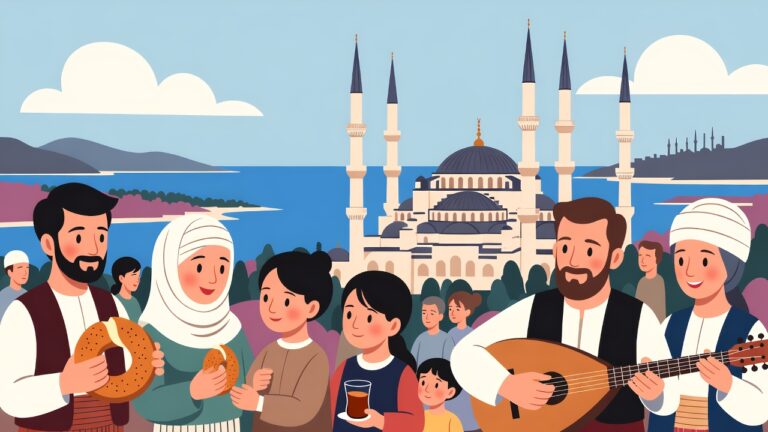
The first sound you hear as morning arrives over Istanbul is the soft, undulating call of the ezan (call to prayer) rising from the Sultan Ahmet Mosque (Blue Mosque), blended with the distant cries of seagulls over the Bosphorus and the drifting scent of fresh simit and çay from a street vendor. That ezan carries our story back to a time of bridges and empires, when we lived as the people of Turkey. Our ancestors built the Hagia Sophia and Topkapı Palace, ruled as Ottomans over three continents, traded silk and spices along the Silk Road. The sultans lived in harmony with the Bosphorus as mother and the mountains as father: poets like Yunus Emre and Mevlana Rumi sang of love and unity, the Janissaries protected the empire, communities where Muslims, Christians, and Jews lived side by side in the millet systems. Every family knew the feasts of Bayram where sweets were shared, the stories of the conquest of Constantinople in 1453, the bond stronger than borders. That was our golden time: a land of seas, mountains, and rivers, where people lived with history as guide and tolerance as compass, connected through poetry, trade, and faith.
But then came the wave from outside, rising like a storm from west and east. The First World War devastated our empire, the occupation of Istanbul in 1918 brought humiliation, the War of Independence from 1919–1923 under Mustafa Kemal Atatürk brought the republic in 1923—but also the pain of millions dead, the exchange of Greeks and Turks, the separation of ancient lands. Every family knew the loss: a grandfather who fought at Çanakkale, a child taught that freedom costs blood, a culture that had to reinvent itself. The years that followed: military coups in 1960, 1971, 1980, and 1997, tensions with Kurds, PKK terror, earthquakes, and economic crises.
From that depth rises a pride that is deep and resilient. The ezan still echoes in the mosques, simit baked with love, the Bosphorus that connects us. Our people laugh through hardships, our young rise for a better country, our bonds stronger than history. We have reclaimed our voice: the republic, the hope growing in the cities.
Yet the truth colours magenta like a sunset over the Bosphorus. The scars remain: the memory of wars and coups, tensions between communities, the emigration of youth, the pressure of a fast-changing world. The outside world buys our tourism and our history, but often fails to feel the depth of a people that never broke.
Still, we remember in silence: around the ezan where prayers rise, on Republic Day the 29th of October when we raise our flag, in the streets where spirits still speak—never forgetting who we were. We tell our children of Atatürk and the Ottomans, of the sea and the mountains, so they know: we were connected and strong before the challenges came.
And yet… the ezan continues, warm and persistent, like a call drifting over the Bosphorus. That is our secret: we have suffered under occupations, wars, and change, but first we were a land of bridges and wisdom. For our children we build no walls, but a bridge over the Bosphorus where everyone may cross. How do we let that ezan sound bring hope once more to all? How does Turkey remain a home of unity and light?
January 2026
Manna Ori
Türk'ün Gözünden
Sabah İstanbul'un üzerine geldiğinde ilk duyduğun ses, Sultan Ahmet Camii'nden (Mavi Camii) yükselen yumuşak, dalgalı ezan sesidir; Boğaz'daki martıların uzak çığlıklarıyla karışır ve sokak satıcısından yayılan taze simit ile çayın kokusuyla birleşir. O ezan sesi bizi köprüler ve imparatorluklar zamanına geri taşır; biz Türkiye halkı olarak yaşadığımız zamana. Atalarımız Ayasofya'yı ve Topkapı Sarayı'nı inşa etti, Osmanlı olarak üç kıtaya hükmetti, İpek Yolu üzerinden ipek ve baharat ticareti yaptı. Sultanlar Boğaz'ı anne, dağları baba olarak uyum içinde yaşadılar: Yunus Emre ve Mevlana Rumi gibi şairler aşk ve birlik üzerine şarkılar söyledi, yeniçeriler imparatorluğu korudu, Müslümanlar, Hristiyanlar ve Yahudilerin millet sistemleri içinde yan yana yaşadığı topluluklar vardı. Her aile Bayram'da tatlıların paylaşıldığı kutlamaları, 1453'te İstanbul'un fethinin hikâyelerini, sınırdan güçlü olan bağı bilirdi. O bizim altın çağımızdı: denizler, dağlar ve nehirler ülkesi; tarih rehber, hoşgörü pusula olarak yaşanılan, şiir, ticaret ve inançla bağlı bir yer.
Ama sonra dışarıdan gelen dalga geldi, batıdan ve doğudan fırtına gibi yükseldi. Birinci Dünya Savaşı imparatorluğumuzu yıktı, 1918'de İstanbul'un işgali utanç getirdi, 1919–1923 Kurtuluş Savaşı Mustafa Kemal Atatürk önderliğinde cumhuriyeti 1923'te getirdi—ama milyonlarca ölümün acısını, Yunan-Türk mübadelesini, eski toprakların ayrılışını da. Her aile kaybı tanıdı: Çanakkale'de savaşan dede, özgürlüğün kanla ödendiğini öğrenen çocuk, kendini yeniden icat etmek zorunda kalan kültür. Sonraki yıllar: 1960, 1971, 1980 ve 1997 askeri darbeleri, Kürtlerle gerilimler, PKK terörü, depremler ve ekonomik krizler.
O derinlikten derin ve dayanıklı bir gurur yükselir. Ezan hâlâ camilerde yankılanır, simit sevgiyle pişirilir, bizi bağlayan Boğaz akar. İnsanlarımız zorluklara gülerek geçer, gençlerimiz daha iyi bir ülke için ayağa kalkar, bağlarımız tarihten güçlüdür. Sesimizi yeniden bulduk: cumhuriyet, şehirlerde büyüyen umut.
Ama gerçek Boğaz'ın üzerinde batan güneş gibi magenta renklidir. Yara izleri kalır: savaşlar ve darbelerin hatırası, topluluklar arası gerilimler, gençlerin göçü, hızla değişen dünyanın baskısı. Dış dünya turizmimizi ve tarihimizi satın alır, ama asla kırılmayan bir halkın derinliğini hissetmez çoğu zaman.
Yine de sessizlikte anarız: ezanın yükseldiği yerlerde dualar, 29 Ekim Cumhuriyet Bayramı'nda bayrağımızı kaldırdığımızda, ruhların hâlâ konuştuğu sokaklarda—kim olduğumuzu asla unutmayız. Çocuklarımıza Atatürk'ü ve Osmanlıları, denizi ve dağları anlatırız ki bilsinler: meydan okumalar gelmeden önce bağlı ve güçlüydük.
Ve yine de… ezan devam eder, sıcak ve ısrarcı, Boğaz'ın üzerinde süzülen bir çağrı gibi. İşte sırrımız: işgaller, savaşlar ve değişim altında acı çektik, ama önce köprüler ve hikmet ülkesiydik. Çocuklarımız için duvar değil, herkesin geçebileceği Boğaz köprüsü inşa ederiz. O ezan sesinin yeniden herkese umut getirmesini nasıl sağlarız, Türkiye nasıl birlik ve ışık evi olarak kalır?
Ocak 2026
Manna Ori