
Through the Eyes of the Tuvaluan
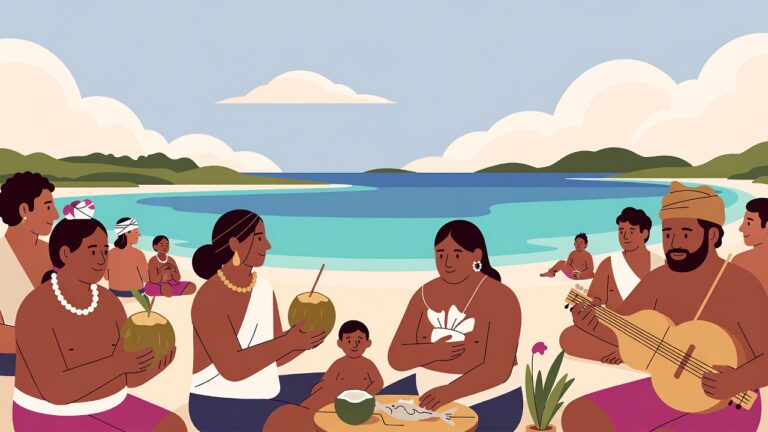
The first thing you feel as morning comes over Funafuti is the soft, endless sound of waves breaking against the coral reef, blended with the distant cry of a frigatebird and the scent of fresh coconut and smoked fish drifting from a nearby home. That wave murmur carries our story back to a time of low atolls and infinite horizons, when we lived as the Tuvaluans on these nine islands we call Tuvalu. Our ancestors built fale of palm and thatch, fished with outrigger canoes in turquoise lagoons, grew pulaka (giant taro) in the fertile soil of the islands. They lived in harmony with the sea as mother and the sun as father: navigators who read the stars to travel between atolls, fatele dances that filled the night with rhythm, communities where sharing was natural and respect for the aliki (leaders) was law. Every family knew the legends of the first people who came from the sea, the feasts where all gathered, the bond stronger than the smallness of the islands. That was our golden time: a land of reefs and lagoons, where people moved with the ocean as their road and the stars as their guide—free and connected through sea and family.
But then came the wave from outside, rising like a storm from the Pacific. The British colonised us in the 19th century as the Gilbert and Ellice Islands, carving our land into pieces with artificial borders. Every family knew the loss: an ancestor who laboured for strangers, a child taught that freedom had limits, a culture forced to adapt to new rules. Independence in 1978 brought Toaripi Lauti—hope that grew—but also the trials of a small island nation: the rising sea level threatening our atolls, saltwater intrusion destroying drinking water and crops, the emigration of youth to New Zealand and Australia because the future sometimes lies underwater. Every family knew the fear, the displacement by the waves, the silence on the beaches.
From that depth rises a pride that is warm and resilient. The fatele dance still fills the night, coconut giving us everything, the navigation knowledge still alive. Our people laugh through hardships, our young dream of a future on higher ground, our bonds stronger than the sea. We have reclaimed our voice: the calls to the world for climate action, the hope that never drowns.
Yet the truth colours magenta like a sunset over the lagoon. The scars remain: the rising sea swallowing islands, poverty on remote atolls, the emigration of youth, the memory of colonial times. The outside world buys our fish and our tourism, but often fails to feel the depth of a people literally fighting the waves.
Still, we remember in silence: around the fale where stories are told, on Independence Day the 1st of October when we raise our flag, on the beaches where spirits still speak—never forgetting who we were. We tell our children of the ancient navigators and of Lauti, of the sea and the atolls, so they know: we were connected and strong before the challenges came.
And yet… the wave murmur continues, calm and endless, like a promise that the sea always returns. That is our secret: we have suffered under colonisation, rising seas, and uncertainty, but first we were a land of atolls and rhythm. For our children we build no walls, but a canoe where everyone may paddle along. How do we let that wave sound bring hope once more to all? How does Tuvalu remain a home of sea and resilience?
January 2026
Manna Ori
I Mata o te Tuvalu
Te mea muamua e lagona e koe i te taeao e tae mai ki Funafuti ko te leo malū mo te tumau o te ngaru e pati ki te hakau, e fefiloi mo te leo mamao o te katafa mo te kakara fou o te niu mo te ika aka mai i te fale e latalata. Te leo o te ngaru e toe taki mai ki te taimi o te atoll maualalo mo te fāititili e seki gata, i te taimi na tatou noho ai o ni Tuvalu i enei fenua e iva e tatou e ta'ua ko Tuvalu. Ko tatou tupuna na fausia fale i te niu mo te rai, na faifaiva i te vaka outrigger i te lagoons turquoise, na tupu pulaka i te kelekele monu'ia o te fenua. Na latou noho i te fealofani mo te moana ko te fa'e mo te la ko te tamai: na fa'atufugaga na faitau fetu e faimalaga i te va o te atoll, na fatele na fa'atumu te po i te leo, na fa'alapotopotoga na fa'asoa mea masani mo te fa'aaloalo ki te aliki. Na iloa e te aiga uma na tala o te tagata muamua na omai mai te moana, na fa'atasiga na fa'apotopotoga uma, te fealofani na malosi atu i te la'ititi o te fenua. Ko te taimi koula tenei: fenua o te hakau mo te lagoons, na tagata na fealualua mo te moana ko te ala mo te fetu ko te ta'iala—sa'oloto mo fealofani i te moana mo te aiga.
Ka na omai te ngaru mai fafo, e tula'i mai o se afā mai te Pasifiki. Na fa'akolone a Peretania i te senituri 19 o Gilbert and Ellice Islands, na vaevaeina te fenua i tuaoi fa'afuase'i. Na iloa e te aiga uma te leiloa: se tupuna na galue mo tagata ese, se tamaiti na a'oa'oina o le sa'olotoga e fai tapula'a, se aganuu na tatau ona fetuutuuna'i ki tulafono fou. Na aumai le tuto'atasi i le 1978 ma Toaripi Lauti—fa'amoemoe na tuputupu ae fa'atasi ma fa'afitauli o se atunu'u la'ititi: le si'isi'i o le sami e fa'amata'u ai tatou atoll, le ulufale o le masima e fa'aumatia ai vai inu mo fa'ato'aga, le malaga o tupulaga i Niu Sila mo Ausetalia ona o le lumana'i e ono i lalo o le vai. Na iloa e te aiga uma le fefe, le fa'ate'aina e ngaru, le filemu i te matāfenua.
Mai lena loloto e tula'i mai se mitimiti e mafana mo le malosi. Te fatele e fa'atumu pea te po, te niu e avatu mea uma, te poto fa'atufugaga e ola pea. Na tagata e kata i fa'afitauli, tupulaga e moemoe o se lumana'i i luga, te fealofani e malosi atu i te moana. Na toe maua te leo: vala'au ki te lalolagi mo gaioiga o le tau, fa'amoemoe e le malemo.
Ae o le mea moni e lanu magenta pei o le goto o le la i luga o te lagoons. O fa'ailoga e tumau: le si'isi'i o le sami e 'ai ai fenua, le mativa i atoll mama'o, le malaga o tupulaga, le manatuaga o taimi fa'akolone. Te lalolagi i fafo e fa'atau ai a tatou ika mo turisi, ae e le masani ona lagona le loloto o se nu'u e tau fa'asaga i ngaru.
Ae e manatua pea i le filemu: i le fale e talatala ai tala, i te Aso Tuto'atasi i le 1 o Oketopa ina ua matou si'i ai te fua, i te matāfenua e talanoa pea ai agaga—e le galo ai o ai tatou. Matou te talanoa ki a matou fanau o te fa'atufugaga anamua mo Lauti, o te moana mo te atoll, ina ia iloa: sa fealofani ma malosi tatou ae le'i o'o mai fa'afitauli.
Ae e tumau… te leo o te ngaru e fa'aauau, filemu mo e le gata, pei o se folafola e toe fo'i mai te moana. Ko te mea lilo tenei: na tatou mafatia i fa'akolone, si'isi'i o te moana mo le le mautonu, ae muamua sa tatou fenua o te atoll mo te leo. Mo a tatou fanau e le fausia tatou pā, ae o se vaka e mafai ai e tagata uma ona alo fa'atasi. E fa'afefea ona tatou fa'atagaina te leo o te ngaru e toe aumai fa'amoemoe ki tagata uma? E fa'afefea ona tumau Tuvalu o se fale o te moana mo le malosi?
Ianuali 2026
Manna Ori