
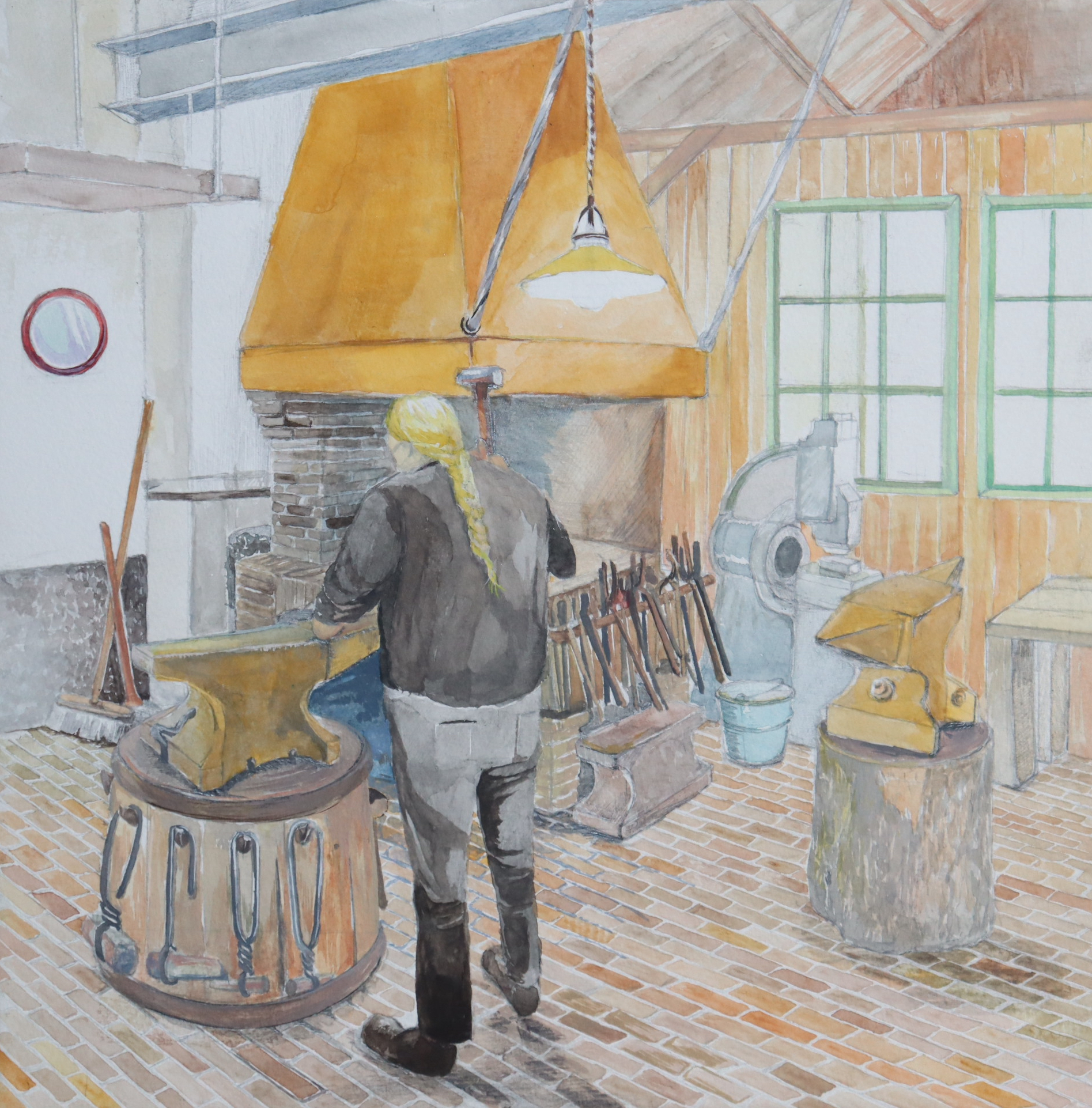
12. The Golden Mirror
Intro: This is Manna’s start to his golden trilogy, warning against greed. It contrasts with the love before, teaching what truly holds value—a shift to external challenges.
In a small village nestled between hills and forests, there lived a man named Elias, an honest blacksmith known for his hard work and the beautiful objects he forged from iron. But there was one thing Elias desired more than the joy of his work or the friendship of his neighbors: gold.
One day, while he was working, Elias found an old, dust-covered mirror in a corner of his smithy. The mirror wasn’t large, but its frame was made of beautiful, though weathered, gold. When he cleaned the mirror, he saw not only his own reflection, but also a vision of a treasure chamber filled with gold, more than he could ever have imagined.
From that moment, Elias became obsessed with the mirror. He spent less and less time on his work each day, more time staring at the gold in the mirror, dreaming of all the things he could buy and the wealth he could amass. His smithy, once a place of creation and community, he neglected, and his friendships began to fade.
The villagers began to see Elias as strange, a man who cared more about his golden reflections than the people around him. The smithy, once the beating heart of the village, began to rust, and customers came less and less. Elias barely noticed, so blinded was he by the promise of riches.
One day, when the sun shone at its brightest, Elias saw something new in the mirror. Instead of gold, he now saw an image of himself, old and alone, surrounded by nothing but golden coins and jewels. No friends, no laughter, no life—only the coldness of gold. The vision shocked him to his core.
In a moment of clarity, Elias realized that the golden mirror didn’t just show his greatest desire, but also his greatest fear: a life full of wealth, but empty of meaning. He understood that the mirror was a test, a warning of the price he would pay for his greed.
With new determination, Elias decided to put the mirror away. He returned to his smithy, restored his friendships, and began working with passion again. He used the lessons of the mirror to not only forge beautiful objects but also to enrich the lives of his neighbors through acts of kindness and community.
Yet, he kept the mirror as a reminder of what could have been. He shared his story with the youth of the village, warning them of the shadow of the golden mirror—the shadow of greed that can darken the light of a fulfilled life. And so, the legend of Elias and his golden mirror became a tale told through generations, a reminder of what truly holds value in life.
Manna