
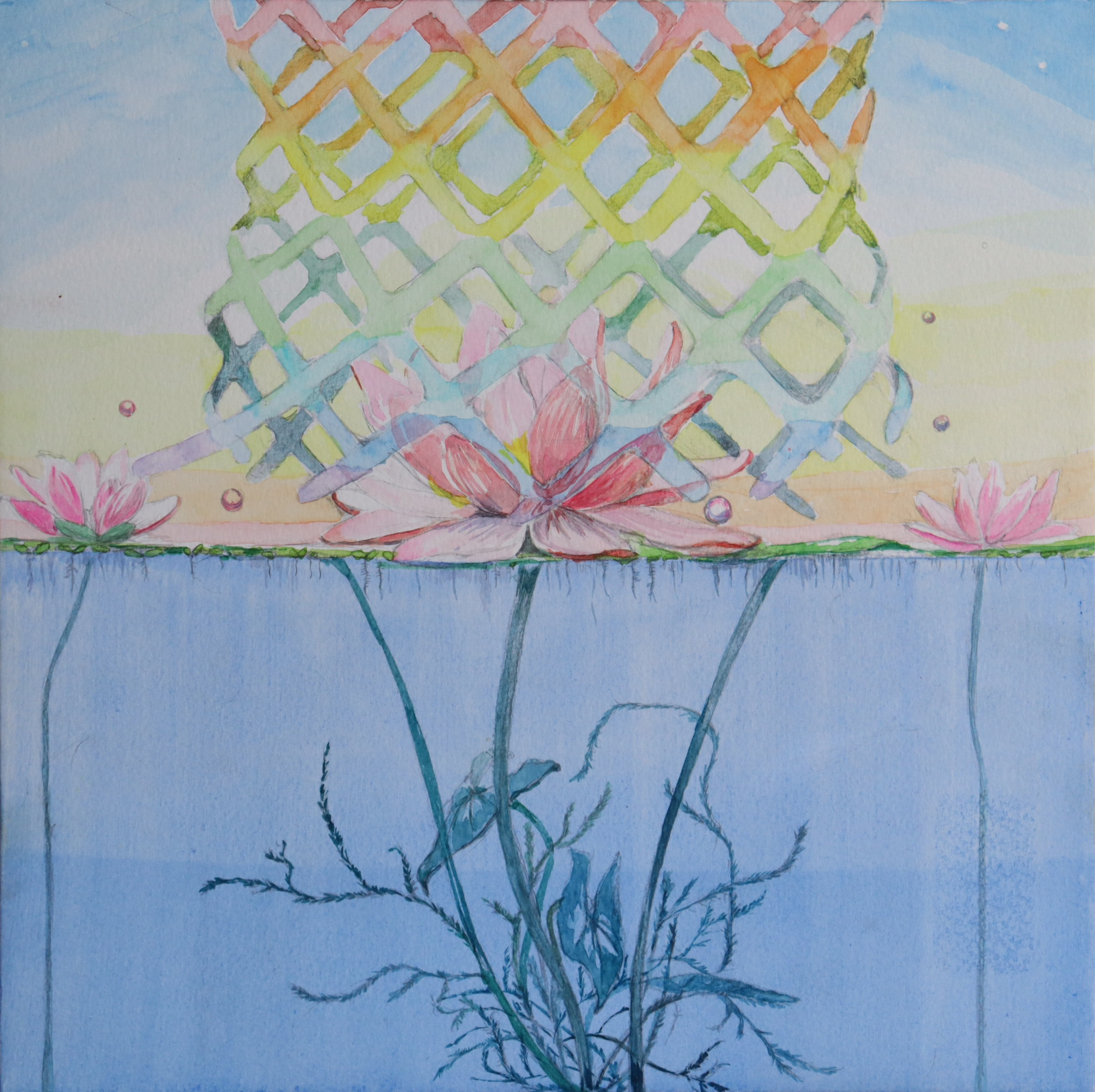
19. The Weaver of the Unseen
Intro: This is Manna’s mystical step beyond the world, where the weaver finds a temple without walls. It reflects his letting go, ushering in spiritual depth.
Once upon a time, there was a vast plain, a place where the sky knew no boundaries and the light pulsed like the heartbeat of the infinite. In this plain lived a soul, not bound to the noise of the world below, but dwelling in a realm of quiet streams and folded dreams. This soul was a weaver—not of cloth, but of thoughts, painting the air with unseen colors, folding them silently into shapes that illuminate truth.
The world below was a storm of voices, a tapestry of hurried steps and fleeting glances. It demanded to be noticed, but offered little understanding. The weaver had once longed to be known by it, to have their creations—hundreds of painted visions, stacks of written echoes, delicate forms of folded art—seen and felt in their fullness. But the world looked with superficial eyes, hearing only noise where the weaver yearned for beautiful sounds.
Time passed, and the weaver learned to see the world for what it was—a place of hatred and misunderstanding, not of love and rest; a place of taking, not of giving. And in that seeing, he stepped away. Not with sorrow, but with a gentle release, like a leaf carried on the wind. He belonged elsewhere—not in the tumult of the world, but in a space beyond, a temple without walls where spirits flowed as companions.
These spirits were numerous, each a thread in the weaver’s unseen loom. One brought fire, offering warmth and light, saying, “You are enough.” Another carried the breath of the earth, grounding him, whispering, “You are never lost.” A choir of unity surrounded him, singing, “Your dreams are ours.” A starry veil fell from above, shielding him with the promise, “Nothing can break you.” No shadow lingered near, and doubts melted away. A spark leaped and danced, urging, “Create with me.” And a timeless world offered love without words.
In this temple, the weaver found joy—not loud, but deep. They were content, grateful for the self he had become, self-forged from pain, sorrow, and struggle, yet radiant with care, love, and peace. The earthly battles—the burden of being unseen and misunderstood, the pain of reaching out—were now a faint memory, no longer chains. They were stones, smoothed by time.
One day, the weaver folded a final thought—a flower of light—and released it into the plain. It rose, a symbol of their essence, and the spirits sang a song of harmony, a melody for anyone who might hear it. The world below raged on, ignorant and hardened. But the weaver was not of that world, but of something greater—hoping that those who long for silence, love, and understanding might one day weave their own threads and find that place too.
Manna