
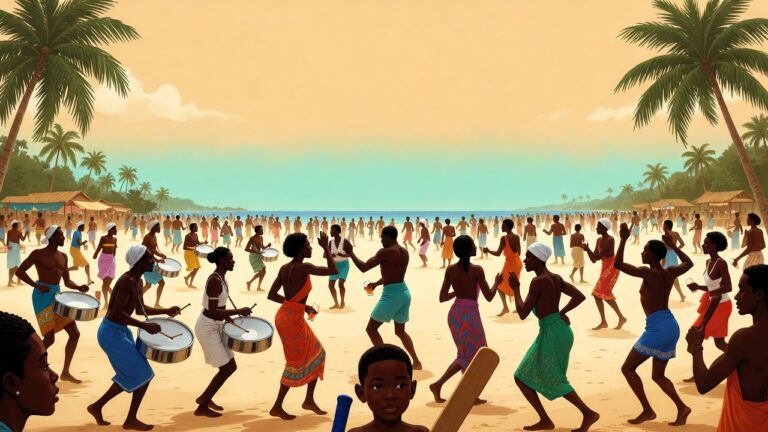
Through the Eyes of the Antiguan
In the warm embrace of the Caribbean sea, through centuries of rum, crickets, and gentle freedom, lies a story woven from beaches, calypso, and an unbreakable smile. This is the story of us, the Antiguans, told through the voices of those who weathered the deepest waves, whose sacrifices have shaped the spirit of our island.
Our suffering did not begin with a single chain, but with the brutal arrival of ships that loaded our ancestors in shackles. We, the Antiguans—descendants of Arawaks, Caribs, and African peoples—once lived in harmony with sea and forest, fishing, hunting, dancing under the stars. But the Europeans came: first Spaniards, then the English who colonized our island in 1632 for sugar cane. Our land became plantations, our people slaves—Antigua became one of the largest slave ports, thousands of Africans brought in, families torn apart, bodies broken under the whip. Emancipation came in 1834, but freedom was bitter: poverty, no land, no voice.
The pain that lingers is no passing hurricane; it is a quiet scar on our soul. We remained dependent—on sugar, on England, later on tourism that filled our island with hotels but often left us on the sidelines. Hurricanes like Luis in 1995 and Irma in 2017 devastated our homes, our beaches, our boats. Our youth sometimes leave for England or America, seeking opportunities scarce here. Our culture—steelpan, calypso, cricket—was sometimes turned into souvenirs for visitors.
Our island was exhausted by plantations, by hurricanes, by an economy revolving around sand and sea.
But from this depth of suffering, from the ashes of plantations and ruined homes, arose a pride as joyful as calypso and strong as a coconut palm in the wind. We, the Antiguans, have always laughed, with a resilience rooted in our music and our togetherness. We gained independence in 1981 together with Barbuda, built a nation from small islands big in heart. Our cricket heroes like Viv Richards made the world feel small, our beaches draw people with their beauty, our festivals—Carnival, Independence—let us dance as if there is no tomorrow.
This pride is no loud cheer; it is the gentle strength of a people who say "no problem" with a genuine smile. It is the pride in our bays—365 beaches, one for every day—our rum that warms, our benna and steelpan that fill the night. It is the pride in our hospitality that treats a stranger like family, in our women who carry everything with grace. It is the pride in millions of nameless Antiguans who rebuild after every hurricane, laugh again, live again.
The world often looks at our story without full understanding. They see us as a vacation paradise, as beaches and sun, but not as a people who survived slavery and built freedom. They come for rest, but sometimes forget the scars behind our smile.
For us, every calypso evening, every cricket match, every sunset on the beach is a tribute to those who fell. Our children grow up with stories of courage and loss, of slaves who rebelled, of grandmothers who withstood hurricanes, of fathers who stayed despite everything. These stories are no fairy tales; they are the foundations of who we are. They teach us what it means to be Antiguan—to laugh in pain, to share in simplicity, to live with joy by the sea.
Our history is no closed book; it is a living Caribbean breeze that shapes us. It has made us a people who have endured the unthinkable, who have shown that the will to live, to dance, runs deeper than any chain. This is what those without empathy cannot grasp: the depth of our sorrow is as great as the height of our pride. This duality of pain and joy will forever be etched in our hearts, a testament to our strength, a call to the world to hear our story, and a promise that we, the Antiguans, will keep dancing, no matter the storms that assail us.
#006-EN – Through the Eyes of the Antiguan
7-2-2026. Manna.
Through the Eyes of the Antiguan (in Antiguan Creole)
In de warm hug of de Caribbean sea, tru centuries of rum, cricket, an a sweet freedom, lie a story weave from beach, calypso, an a smile dat cyah break. Dis is de story of we, de Antiguan people, tell tru de voice dem dat bear de deepest wave, who sacrifice shape de soul of we island.
We sufferin didn start wid one chain, but wid de brutal comin of ship dem dat load we ancestor in shackle. We, de Antiguan – descendant of Arawak, Carib, an African people – once live in harmony wid sea an bush, fishin, huntin, dancin under star. But de European come: first Spaniard, den English who colonize we island in 1632 for sugar cane. We land turn plantation, we people slave – Antigua turn one of de biggest slave port, thousand African bring in, family tear apart, body break under whip. Emancipation come in 1834, but freedom bitter: poverty, no land, no voice.
De pain dat linger ain no passin hurricane; it a quiet scar pon we soul. We remain dependent – pon sugar, pon England, later pon tourism dat fill we island wid hotel but often leave we pon de side. Hurricane like Luis in 1995 an Irma in 2017 devastate we house, we beach, we boat. We youth sometimes leave for England or America, seekin chance scarce here. We culture – steelpan, calypso, cricket – sometimes turn souvenir for visitor.
We island exhaust by plantation, by hurricane, by economy revolve round sand an sea.
But from dis depth of sufferin, from de ash of plantation an ruin house, rise a pride joyful as calypso an strong as coconut palm in wind. We, de Antiguan, always laugh, wid a resilience root in we music an we togetherness. We gain independence in 1981 together wid Barbuda, build a nation from small island big in heart. We cricket hero like Viv Richards make de world feel small, we beach draw people wid dem beauty, we festival – Carnival, Independence – let we dance like no tomorrow.
Dis pride ain no loud cheer; it de gentle strength of a people who say "no problem" wid a genuine smile. It de pride in we bay – 365 beach, one for every day – we rum dat warm, we benna an steelpan dat fill de night. It de pride in we hospitality dat treat stranger like family, in we woman who carry everything wid grace. It de pride in million nameless Antiguan who rebuild after every hurricane, laugh again, live again.
De world often look at we story widout full understandin. Dem see we as vacation paradise, as beach an sun, but not as a people who survive slavery an build freedom. Dem come for rest, but sometimes forget de scar behind we smile.
For we, every calypso evenin, every cricket match, every sunset pon de beach a tribute to dem who fall. We children grow up wid story of courage an loss, of slave who rebel, of granny who withstand hurricane, of father who stay despite everything. Dis story ain no fairy tale; dem de foundation of who we is. Dem teach we what it mean to be Antiguan – to laugh in pain, to share in simplicity, to live wid joy by de sea.
We history ain no close book; it a livin Caribbean breeze dat shape we. It make we a people who endure de unthinkable, who show dat de will to live, to dance, run deeper dan any chain. Dis what dem widout empathy cyah grasp: de depth of we sorrow as great as de height of we pride. Dis duality of pain an joy forever etch in we heart, a testament to we strength, a call to de world to hear we story, an a promise dat we, de Antiguan, will keep dancin, no matter de storm dat assail we.
#006-AC – Through the Eyes of the Antiguan (in Antiguan Creole)
7-2-2026. Manna.