Through the Eyes of the Bahamian
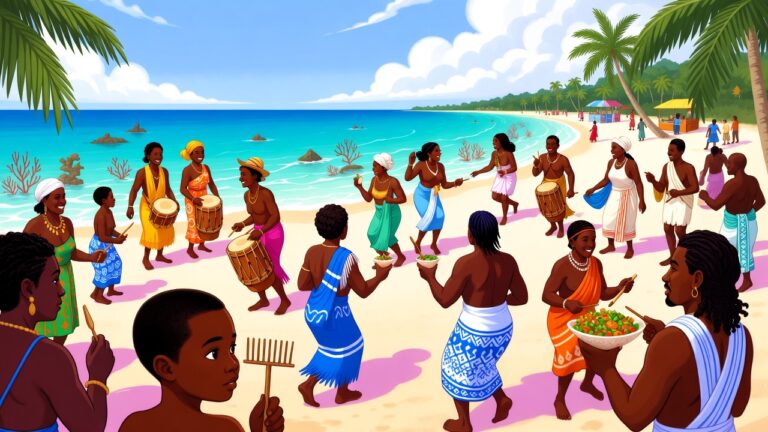
In the turquoise waters of the Caribbean, where palm trees sway in the trade winds and the ocean holds us in an endless blue embrace, our story lies hidden. A story of coral reefs that color like rainbows, of junkanoo drums that fill the night, and of a people that forged freedom from chains. We, the Bahamians, are children of islands that rose from the sea, born from sand and salt, with hearts that beat to the rhythm of “no rush” and a deep joy. Our past is a tapestry woven with blood and tears, but also with golden threads of resistance and togetherness. Through the eyes of the Bahamian, we see a people wrestling with the storms of history, always dancing through the suffering—a symphony of pain and light that grants us our identity and calls us to peace.
Our suffering is as deep as the Tonga Trench off our coast, an open wound that bleeds across generations. It began with the arrival of Columbus in 1492, who nearly wiped out our Lucayan indigenous people through disease and slavery. For centuries our islands were a transit point for pirates and plantations: African ancestors were brought here in chains, sold and broken, their blood feeding sugar and cotton while families were torn apart. After the abolition of slavery in 1834, poverty and discrimination remained, with a white minority holding power until independence in 1973. Hurricanes struck mercilessly—Dorian in 2019 devastated entire islands, killed dozens, left thousands homeless, and ruined economies. Climate change raises our sea levels, threatening our low islands with submersion. Tourism brings money but also inequality, and drug routes sometimes make our streets unsafe. Every family knew loss: an ancestor in chains, a home swept away by wind, a child who emigrated because opportunities were scarce.
Yet from these ashes rises our pride, unbreakable as our coral reefs and joyful as a junkanoo parade. We became the first black-majority country to gain independence within the British Commonwealth (1973), led by heroes like Lynden Pindling. We gave the world junkanoo music, rake-n-scrape, Bahamian souse, and conch salad. Our athletes shine—Shaunae Miller-Uibo runs like the wind, Buddy Hield shoots three-pointers. We are champions of hospitality: we say “Welcome home” even to strangers. Our island family is close-knit, our churches full of gospel, our beaches symbols of freedom. From pain came resilience: we are relaxed yet strong, joyful yet deep—our hearts full of color and rhythm.
But outsiders often look without empathy, seeing us as a “tourist paradise” with cocktails and beaches, but forgetting slavery, hurricanes, the struggle to survive. Great powers used us as a base, plundered our waters, minimized our suffering while profiting from our beauty. The world comes to vacation but rarely sees our real pain.
We commemorate it all with quiet reverence and loud celebration. On Emancipation Day (first Monday in August) we celebrate freedom, on Independence Day (July 10) we dance junkanoo. Monuments to the Lucayans and slavery remind us, churches and festivals connect us. Our children learn at school about Pindling, about Dorian, about togetherness in disasters—so the torch passes on: “We rise together.”
The depth of our loss is as great as the height of our pride. We are a people of duality: pain from slavery and storm, pride from freedom and joy. Our scars are magenta, our hope turquoise. We learn togetherness, fight for climate justice and equality in a changing world, promise: from ashes we rise, for peace and unity.
7 January 2026
Manna