
Through the Eyes of the Costa Rican
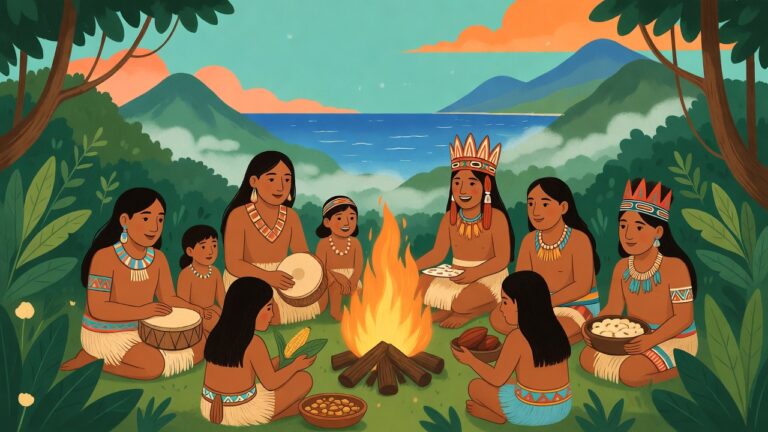
In the land where rainforests hang like green clouds above the mountains, where two oceans – the Pacific and the Caribbean Sea – kiss the coasts and volcanoes stand as silent guardians, our story begins in a time of simplicity and connection. Long before foreign ships filled the horizon, we lived as the peoples of the Boruca, Bribri, Cabécar, Maleku, Térraba, and Huetar. Our ancestors built small villages of wood and palm leaf, grew corn, beans, and cacao in harmony with the seasons, wove baskets and carved masks that spoke to the spirits. The Bribri knew their sacred places in the mountains, the Boruca their dances and knowledge of medicines from the forest, the Huetar their astronomy and connection to the rivers. We lived in balance with nature: hunters who respected what they took, shamans who spoke with the spirits of animal and plant, communities where elders were honored and stories around the fire filled the night. Every family knew the rains that nourished the earth, the volcanoes that gave life to the soil, the ocean that brought fish. That was our golden time: a land of green hills and rich forests, where differences were richness and nature a mother who always cared.
But then came the wave from outside, like a wind rising from the sea. The Spaniards arrived in 1502 with Columbus, but found no gold and largely left us alone – our peoples resisted assimilation better than elsewhere. Independence in 1821 came without great bloodshed, but coffee plantations grew in the 19th century, and the banana republics of the United Fruit Company took large tracts of land. Every family knew the loss: an ancestor who worked for strangers, a piece of land that disappeared, a culture that survived in the shadows. The dictatorships of the 1930s and 1940s brought oppression, but in 1948 we chose peace: we abolished the army, invested in education and health. Yet the pain remained: indigenous peoples who saw their land shrink, farmers who struggled, poverty in the cities.
From that depth comes a pride that is soft and green. The rainforests we protect – one of the most biodiverse places on earth – the volcanoes that give life, the turtles that lay on our beaches. Our coffee and bananas that feed the world, our pura vida that lives in every smile, our ecotourism that shows the world what conservation means. We have found our voice again: the first country in the world without an army, the constitution that gives rights to nature, the women and youth who rise for a better country. Our music of calypso and tamborito, our turtles that return to lay – that is us. A people that chooses peace, green, life.
But the truth colors magenta like a sunset over the Pacific. The scars remain: deforestation for bananas and cattle, poverty in the periphery, indigenous peoples still fighting for their land, climate change that threatens our rainforests and coasts. The outside world buys our coffee and comes to see our nature, but often sees not the struggle to preserve what we have.
Yet we remember in silence: on the beaches where the turtles come, during Independence Day on September 15 when we raise our flag, in the rainforests where the spirits still speak – never forgetting who we were. We tell our children of the Bribri and the volcanoes, of pura vida and nature, so they know: we were connected and rich before we were challenged.
And yet… a rainforest grows after the storm, green and strong, turquoise like the ocean that embraces us. That is our secret: we suffered under colonization, inequality, and threats, but we were first a land of peoples and nature. For our children we fold no walls, but a question: how do we preserve this green connection, how do we let the rainforests sing again for everyone, how does Costa Rica remain a home of peace and life?
January 2026
Manna Ori
41. Through the Eyes of the Costa Rican
A Través de los Ojos del Costarricense
En el país donde los bosques lluviosos cuelgan como nubes verdes sobre las montañas, donde dos océanos – el Pacífico y el Caribe – besan las costas y los volcanes son guardianes silenciosos, nuestra historia comienza en un tiempo de simplicidad y conexión. Mucho antes de que barcos extranjeros llenaran el horizonte, vivíamos como los pueblos de los boruca, bribri, cabécar, maleku, térraba y huetar. Nuestros ancestros construyeron pequeños pueblos de madera y hojas de palma, cultivaron maíz, frijoles y cacao en armonía con las estaciones, tejieron canastas y tallaron máscaras que hablaban con los espíritus. Los bribri conocían sus lugares sagrados en las montañas, los boruca sus danzas y conocimiento de medicinas del bosque, los huetar su astronomía y conexión con los ríos. Vivíamos en equilibrio con la naturaleza: cazadores que respetaban lo que tomaban, chamanes que hablaban con los espíritus de animal y planta, comunidades donde los ancianos eran honrados y las historias alrededor del fuego llenaban la noche. Cada familia conocía las lluvias que alimentaban la tierra, los volcanes que daban vida al suelo, el océano que traía pescado. Ese fue nuestro tiempo dorado: un país de colinas verdes y bosques ricos, donde las diferencias eran riqueza y la naturaleza una madre que siempre cuidaba.
Pero entonces llegó la ola de afuera, como un viento que se elevaba del mar. Los españoles llegaron en 1502 con Colón, pero no encontraron oro y nos dejaron en gran parte solos – nuestros pueblos resistieron la asimilación mejor que en otros lugares. La independencia en 1821 llegó sin gran derramamiento de sangre, pero las plantaciones de café crecieron en el siglo XIX, y las repúblicas bananeras de la United Fruit Company tomaron grandes extensiones de tierra. Cada familia conocía la pérdida: un ancestro que trabajó para extraños, un pedazo de tierra que desapareció, una cultura que sobrevivió en las sombras. Las dictaduras de los años 30 y 40 trajeron opresión, pero en 1948 elegimos la paz: abolimos el ejército, invertimos en educación y salud. Sin embargo, el dolor permaneció: los pueblos indígenas que vieron su tierra reducirse, los campesinos que luchaban, la pobreza en las ciudades.
De esa profundidad surge un orgullo suave y verde. Los bosques lluviosos que protegemos – uno de los lugares más biodiversos de la Tierra – los volcanes que dan vida, las tortugas que ponen en nuestras playas. Nuestro café y bananos que alimentan al mundo, nuestro pura vida que vive en cada sonrisa, nuestro ecoturismo que muestra al mundo qué significa la conservación. Hemos recuperado nuestra voz: el primer país del mundo sin ejército, la constitución que da derechos a la naturaleza, las mujeres y jóvenes que se levantan por un mejor país. Nuestra música de calypso y tamborito, nuestras tortugas que regresan a poner – eso somos nosotros. Un pueblo que elige la paz, lo verde, la vida.
Pero la verdad se tiñe magenta como un atardecer sobre el Pacífico. Las cicatrices permanecen: la deforestación para bananos y ganado, la pobreza en la periferia, los pueblos indígenas que aún luchan por su tierra, el cambio climático que amenaza nuestros bosques lluviosos y costas. El mundo exterior compra nuestro café y viene a ver nuestra naturaleza, pero a menudo no ve la lucha por preservar lo que tenemos.
Aun así recordamos en silencio: en las playas donde llegan las tortugas, durante el Día de la Independencia el 15 de septiembre cuando izamos nuestra bandera, en los bosques lluviosos donde los espíritus aún hablan – sin olvidar nunca quiénes fuimos. Contamos a nuestros hijos de los bribri y los volcanes, del pura vida y la naturaleza, para que sepan: fuimos conectados y ricos antes de ser desafiados.
Y sin embargo… un bosque lluvioso crece después de la tormenta, verde y fuerte, turquesa como el océano que nos abraza. Ese es nuestro secreto: sufrimos bajo colonización, desigualdad y amenazas, pero fuimos primero un país de pueblos y naturaleza. Para nuestros hijos no doblamos muros, sino una pregunta: ¿cómo preservamos esta conexión verde, cómo dejamos que los bosques lluviosos canten de nuevo para todos, cómo Costa Rica sigue siendo un hogar de paz y vida?
Enero 2026
Manna Ori
41. A Través de los Ojos del Costarricense