
Through the Eyes of the Cuban
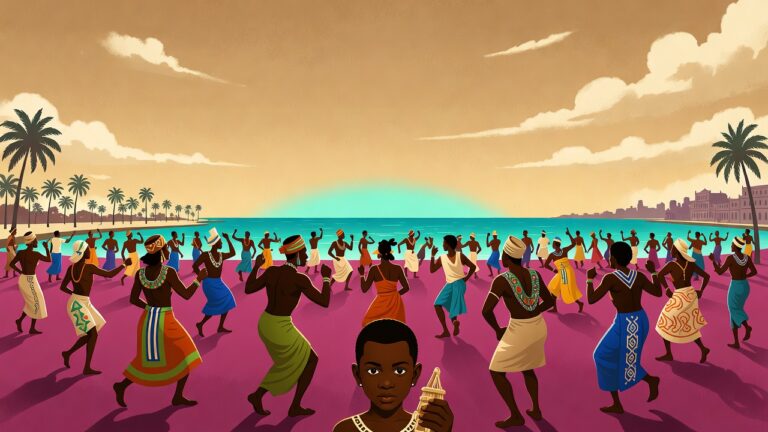
The first thing you smell when the morning wind blows over Havana is the sweet scent of coffee drifting from a small window, mingled with the salty sea breeze and the distant sound of a son that already begins early. That aroma carries our story back to a time of rhythm and warmth, when we lived as the Taíno on this island we called Cuba. Our ancestors built bohíos of palm leaf and wood, grew maize, beans, and sweet potatoes in the fertile soil, fished with nets in the turquoise sea. They danced the areito around the fire, told stories of the gods Atabey and Yúcahu, honored nature as a living being. Every family knew the cimarrones – the runaway slaves who found their freedom in the mountains – and the cimarrón spirit that never broke. That was our golden time: an island of music, dance, and freedom, where people lived with the sea as brother and the earth as mother, before the world gave us a name that was not our own.
But then came the wave from outside, like a hurricane rising from the sea. The Spaniards arrived in 1492 with Columbus, and what followed was centuries of slavery: millions of Africans shipped to sugar plantations, where bodies broke under the whip and the sun. Every family knew the loss: an ancestor who came in chains, a language smothered, a culture that had to survive in secret. The independence wars in the 19th century brought Martí and Maceo, but also blood. The American intervention in 1898, the dictatorship of Batista, and then the Revolution in 1959 – hope that began with Fidel, Che, the Sierra Maestra. But hope mingled with pain: embargoes that starved the people, exile for many, prisons for others, a country that became free yet also enclosed.
From that depth comes a pride that is hot and rhythmic. The son and rumba that fill the streets, the cigars rolled by hand, the oldtimers that still drive along the Malecón. Our dances – salsa, mambo, cha-cha-chá – that made the world swing. Our medical brigades that bring help across the globe, our literature from Martí to Alejo Carpentier, our resilience that says: "No hay mal que dure cien años" – There is no evil that lasts a hundred years, nor body that can endure it. We are a people that laughs through tears, that sings through pain, that keeps on dancing.
Yet the truth colors magenta like a sunset over the Malecón. The scars remain: the separation of families through emigration, the scarcity that sometimes returns, the young people who dream of more freedom, the embargo that still presses. The outside world often looks with judgment – they see cigars and salsa, but do not feel the deep, bittersweet longing of a people that always rises again.
Still, we remember in silence: on the Malecón where the waves crash, during Independence Day on October 10 when we raise our flag, in the cafés where son still sounds – never forgetting who we were. We tell our children of the Taíno and of Martí, of the sea and the rumba, so they know: we were free and connected before we were challenged.
And yet… a son sounds through the street, slow and warm, like a heartbeat that continues. That is our secret: we have suffered under colonization, slavery, embargo, and separation, but first we were an island of rhythm and freedom. For our children we fold no walls, but a question: how do we bring back that ancient warmth, how do we let the son ring again for everyone, how does Cuba become once more a home of dance and hope?
January 2026
Manna Ori
Por los ojos del cubano
Lo primero que hueles cuando el viento de la mañana sopla sobre La Habana es el dulce aroma del café que se escapa por una ventanita, mezclado con la brisa salada del mar y el sonido lejano de un son que ya empieza temprano. Ese aroma nos lleva de vuelta a un tiempo de ritmo y calor, cuando vivíamos como los taínos en esta isla que llamábamos Cuba. Nuestros ancestros construían bohíos de hoja de palma y madera, sembraban maíz, frijoles y batatas en la tierra fértil, pescaban con redes en el mar turquesa. Bailaban el areito alrededor del fuego, contaban historias de los dioses Atabey y Yúcahu, honraban la naturaleza como un ser vivo. Cada familia conocía a los cimarrones – los esclavos fugitivos que encontraban su libertad en las montañas – y el espíritu cimarrón que nunca se quebró. Esa fue nuestra época dorada: una isla de música, baile y libertad, donde la gente vivía con el mar como hermano y la tierra como madre, antes de que el mundo nos diera un nombre que no era el nuestro.
Pero entonces llegó la ola de afuera, como un huracán que se levanta del mar. Los españoles llegaron en 1492 con Colón, y lo que siguió fueron siglos de esclavitud: millones de africanos llevados a las plantaciones de azúcar, donde los cuerpos se rompían bajo el látigo y el sol. Cada familia conocía la pérdida: un ancestro que llegó en cadenas, una lengua ahogada, una cultura que tuvo que sobrevivir en secreto. Las guerras de independencia del siglo XIX trajeron a Martí y Maceo, pero también sangre. La intervención estadounidense en 1898, la dictadura de Batista, y luego la Revolución en 1959 – esperanza que empezó con Fidel, Che, la Sierra Maestra. Pero la esperanza se mezcló con dolor: embargos que hambriaron al pueblo, exilio para muchos, cárceles para otros, un país que se hizo libre pero también encerrado.
De esa profundidad nace un orgullo caliente y rítmico. El son y la rumba que llenan las calles, los puros enrollados a mano, los oldtimers que todavía ruedan por el Malecón. Nuestros bailes – salsa, mambo, cha-cha-chá – que hicieron bailar al mundo. Nuestras brigadas médicas que llevan ayuda por todo el planeta, nuestra literatura de Martí a Alejo Carpentier, nuestra resistencia que dice: "No hay mal que dure cien años". Somos un pueblo que ríe entre lágrimas, que canta a través del dolor, que sigue bailando.
Sin embargo, la verdad se tiñe de magenta como una puesta de sol sobre el Malecón. Las cicatrices quedan: la separación de familias por la emigración, la escasez que a veces regresa, los jóvenes que sueñan con más libertad, el embargo que todavía aprieta. El mundo de afuera mira a menudo con juicio – ven puros y salsa, pero no sienten la saudade profunda de un pueblo que siempre se levanta de nuevo.
Aun así, recordamos en silencio: en el Malecón donde rompen las olas, en el Día de la Independencia el 10 de octubre cuando izamos nuestra bandera, en los cafés donde aún suena el son – nunca olvidando quiénes fuimos. Les contamos a nuestros hijos de los taínos y de Martí, del mar y la rumba, para que sepan: fuimos libres y conectados antes de ser desafiados.
Y sin embargo… un son suena por la calle, lento y cálido, como un latido que sigue. Ese es nuestro secreto: hemos sufrido bajo colonización, esclavitud, embargo y separación, pero primero fuimos una isla de ritmo y libertad. Para nuestros hijos no doblamos muros, sino una pregunta: ¿cómo traemos de vuelta ese calor antiguo, cómo dejamos que el son suene de nuevo para todos, cómo se convierte Cuba otra vez en un hogar de baile y esperanza?
Enero 2026
Manna Ori