
Through the Eyes of the Swazi
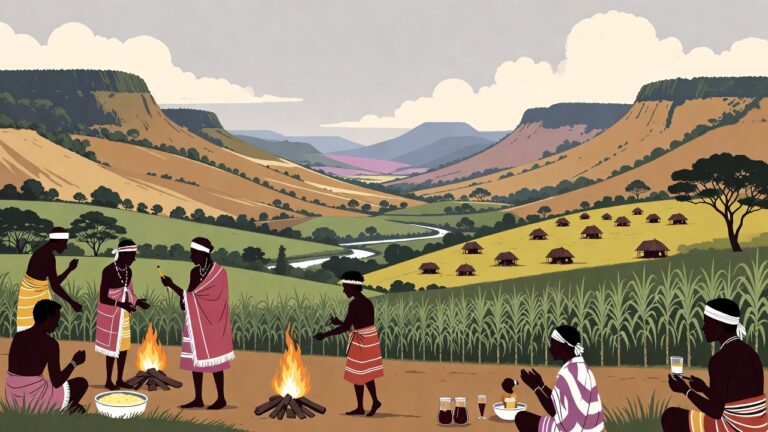
A deep, rolling drum strikes once through the hills of Eswatini, the sound traveling like a heartbeat over the green valleys and sugarcane fields, mingled with the scent of freshly cooked pap and the smoke from an open fire where umqombothi is being prepared. That drumming carries our story back to a time of royal harmony and deep roots, when we lived as the Swazi in this land we called eMakhosini, "place of the kings". Our ancestors built kraals of reed and clay, herded cattle that meant wealth and status, grew maize and sorghum in the fertile soil. The Nguni peoples came with their cattle and their songs, and under kings like Ngwane and Sobhuza I grew a nation that was never fully colonized. We lived in harmony with nature: the Umhlanga ceremony where young girls cut reeds to honor the queen mother, the Sibhaca dance that shows the strength of the warriors, the Swazi council where everyone has a voice. Every family knew the stories of the ancestors, the feasts around the fire, the unity that was stronger than division. That was our golden time: a small land of hills and rivers, where people lived with the king as father and nature as mother, connected by rhythm and respect.
But then came the wave from outside, like a cold wind rising from the south. The Boers and the British tried to take our land in the 19th century, but our kings held firm. In 1903 we became a British protectorate, and after 1968 independence under King Sobhuza II – but apartheid in South Africa weighed heavily on us, and the world often looked away. Every family knew the loss: an ancestor who fought against the Boers, a child who grew up in the shadow of more powerful neighbors, a people who sometimes had to muffle their voice. The smell of smoke from burning huts, the silence after conflicts, the emptiness in the villages.
From that depth comes a pride that is warm and rhythmic. The Umhlanga where thousands of girls cut reeds and dance for the queen mother, the Sibhaca that shows the strength of the Swazi, the cattle that still mean wealth. Our King Mswati III who leads us, our women who walk with dignity, our music that fills the night. We are a people that holds onto its traditions, that chooses peace over war, that laughs through difficulties.
Yet the truth colors magenta like a sunset over the Ezulwini Valley. The scars remain: the poverty in the rural areas, the pressures of the monarchy, the young people who emigrate because work is scarce, the health crises that touch us. The outside world buys our sugar and textiles, but often does not see the struggle for balance between tradition and modernity.
Still, we remember in silence: around the fire where umqombothi is shared, during Incwala – the first-fruits festival – when we celebrate our unity, in the hills where the spirits still speak – never forgetting who we were. We tell our children of Ngwane and of Sobhuza, of the rivers and the hills, so they know: we were connected and strong before we were challenged.
And yet… the drum keeps going, deep and low, like a heartbeat that never falls silent. That is our secret: we have suffered under colonization, pressure, and change, but first we were a land of kings and rhythm. For our children we build no walls, but a kraal where everyone may enter. How do we let that drumming bring unity again for everyone, how does Eswatini remain a home of respect and strength?
January 2026
Manna Ori
NgeMbono weSwazi
Isigubhu esijulile, esiyagudluka sishaya kanye emagqumeni ase-Eswatini, umsindvo uhamba njengesigqi senhliziyo phezu kwezigodi eziluhlaza nezigodlo zikashukela, uhambisana nephunga lephapha elisandza kuphekwa kanye nomusi womkhonto lapho umqombothi ulungiswa khona. Leso sigqi sesigubhu sithwala indaba yethu ibuyele emuva esikhathini sobukhosi obunokuthula kanye nezimpande ezijulile, lapho sasiphila khona njengamaSwazi kuleli zwe esasilibiza nge-eMakhosini, "indzawo yamakhosi". Bokhokho bethu bakha imizi yotshani lobukhuni kanye nodaka, belusa izinkomo ezazisho ingcebo nesikhundla, balima ummbila kanye nesorghum emhlabathini ovundile. AmaNguni afika nezinkomo zawo kanye nezingoma zawo, futhi ngaphansi kwamakhosi njengoNgwane noSobhuza I kwakhula isizwe esingakaze sithathwe ngokuphelele. Sasiphila nokuthula nemvelo: umhlanga lapho amantombazane amancane asika umhlanga ukuhlonipha indlovukazi, isibhaca esibonisa amandla amaqhawe, umkhansela wamaSwazi lapho wonke umuntu enelungelo lokukhuluma. Yonke imindeni yayazi izindaba zamadlozi, imikhosi emhlabathini, ubunye obuqinile kunokuhlukaniswa. Leyo yayiyisikhathi sethu segolide: izwe elincane lezintaba nemifula, lapho abantu babe phila nenkosi njengobaba nemvelo njengomama, bexhumene ngesigqi kanye nenhlonipho.
Kodwa-ke kwafika igagasi elivela ngaphandle, njengomoya obandayo ophuma eningizimu. AmaBhunu namaNgisi azama ukuthatha izwe lethu ngekhulu le-19, kodwa amakhosi ethu amaqembu. Ngo-1903 saba yisifunda sase-British, kwathi ngemva kuka-1968 inkululeko ngaphansi kweNkhosi Sobhuza II – kodwa i-apartheid eNingizimu Afrika yayisisindisa kakhulu, futhi umhlaba wawuvame ukubuka ngakwesinye. Yonke imindeni yayazi ukulahlekelwa: ukhokho owalwa namaBhunu, ingane eyakhula emthunzini wamazwe angomakhelwane anamandla, isizwe esasidinga ukuthulisa izwi laso ngezinye izikhathi. Umusi womkhonto wezindlu ezishisayo, ukuthula ngemva kwezingxabano, ukungabi nalutho emizini.
Kusuka kuleyo njululuko kuvela ukuziqhenya okufudumele futhi okunesigqi. Umhlanga lapho izinkulungwane zamantombazane asika umhlanga futhi adansele indlovukazi, isibhaca esibonisa amandla amaSwazi, izinkomo ezisakhombisa ingcebo. INkhosi yethu Mswati III esiholayo, abesifazane bethu abahamba ngesizotha, umculo wethu ogcwalisa ubusuku. Singabantu ababambelela emasikweni abo, abakhetha ukuthula kunempi, abahleka ngezinkinga.
Kodwa-ke iqiniso libala magenta njengokushona kwelanga phezu kweSigodi sase-Ezulwini. Izibazi zihlala: ubumpofu ezindaweni zasemaphandleni, ingcindezi yobukhosi, intsha ebalekela ngoba umsebenzi uyindlala, izinkinga zempilo ezisithinta. Umhlaba wangaphandle uthenga ushukela wethu nezindwangu zethu, kodwa uvame ukungaboni ubuhlungu bokulwela ukulinganisa phakathi kwesiko nesimanje.
Noma kunjalo, sikhumbula ngekwethula: emlilweni lapho umqombothi wabiwa khona, ngesikhathi se-Incwala – umkhosi wezithelo zokuqala – lapho sigubha ubunye bethu, ezintabeni lapho imimoya isakhuluma khona – singakhohlwa ukuthi sasiyini. Sitshela izingane zethu ngoNgwane noSobhuza, ngemifula nangezintaba, ukuze bazi: sasixhumene futhi sinamandla ngaphambi kokuba sihlolwe.
Futhi noma kunjalo… isigubhu siyaqhubeka, sijulile futhi siphansi, njengesigqi senhliziyo esingakaze sithule. Leyo yimfihlo yethu: sihlupheke ngaphansi kokoloni, ingcindezi nokushintsha, kodwa kuqala sasiyizwe lamakhosi nesigqi. Ezinganeni zethu asakhi izindonga, kodwa isibaya lapho wonke umuntu angangena khona. Singayenza kanjani leyongoma iphinde ilethe ubunye kubo bonke, i-Eswatini ihlale iyikhaya lenhlonipho namandla?
Inyanga kaJanuwari 2026
Manna Ori