
Through the Eyes of the Fijian
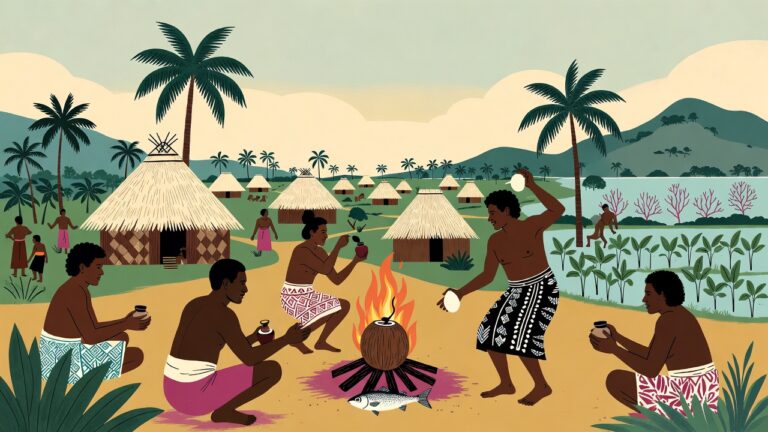
The first thing you hear as morning comes over a village on Viti Levu is the soft, rhythmic sound of a lali drumstriking once, mingled with the distant calls of birds in the palm trees and the scent of coconut oil and freshlycaught fish being prepared over an open fire. That drumming carries our story back to a time of ocean andconnection, when we lived as the iTaukei on these islands we called Viti. Our ancestors sailed with doublecanoes across the Pacific, built bure's of palm and wood, planted taro and yam in the fertile soil. They lived inharmony with the sea as mother and the mountains as father: fishermen honoring the ocean with offerings, clansgathering in the kava ceremony, meke dances that told stories of heroes and spirits. Every family knew theyaqona prepared in a tanoa, the tales of the fire god and sea spirits, the communities where sharing was normaland respect for the turaga (leaders) was the law. That was our golden time: an archipelago of islands, wherepeople lived with the ocean as path and nature as guide, free and connected by kava and canoe.
But then came the wave from outside, like a storm rising from the sea. The British colonized us in 1874, broughtIndian indentured laborers for sugarcane plantations, and disrupted our social structures. Every family knew theloss: an ancestor who labored on the plantations under harsh conditions, a language that had to survivealongside Hindi, a culture that adapted to endure. Independence in 1970 brought hope, but also tensions: coupsin 1987 and 2000, division between iTaukei and Indo-Fijians, military regimes that suppressed democracy. Everyfamily knew the fear, the unrest, the silence in the villages.
From that depth comes a pride that is warm and welcoming. The kava ceremony that still welcomes everyone,the meke dances that make the islands tremble, the rugby that connects us on every field. Our coconut and fishthat feed the world, our people who laugh through difficulties. We have found our voice again: the 2013constitution, the democracy that grows, the young people who dream of a better country.
Yet the truth colors magenta like a sunset over the coral reefs. The scars remain: tensions between communities,poverty on remote islands, climate change threatening our coasts, the emigration of young people. The outsideworld buys our tourism and sugar, but often does not see the pain of the coups, not the struggle for unity.
Still, we remember in silence: around the tanoa where kava is shared, during Independence Day on October 10when we raise our flag, in the villages where the lali still sounds – never forgetting who we were. We tell ourchildren of the old canoes and the fire god, of the sea and the islands, so they know: we were connected andstrong before we were challenged.
And yet… the lali keeps going, deep and low, like a heartbeat that never falls silent. That is our secret: we havesuffered under colonization, division, and storms, but first we were a land of canoes and kava. For our childrenwe build no walls, but a bure where everyone is welcome. How do we let that drumming bring unity again foreveryone, how does Fiji remain a home of hospitality and sea?
January 2026
Manna Ori
Ena Matadra na iTaukei
Na ka e sivia ni sa yabaki na mataka ena dua na koro i Viti Levu oya na domo malua, vakararaba ni lali e dua na vuku, sa veisautaki kei na kaila yawa ni manumami ena drau ni niu kei na kena boi ni wai ni niu kei na ika sa qai mai vakaciriloloma ena bukawaqa. Na domo ni lali oqo e kauta tale na noda itukutuku ki na gauna ni wasawasa kei na veitokani, ni keitou sa bula vakaiTaukei ena yanuyanu oqo eda sa kaya ni Viti. Na noda qase era sa lako ena waqa rua na sivia ena wasawasa levu, era tara bure ena drau ni niu kei na kau, era tea na dalo kei na uvi ena vanua sa rauta. Era bula vakatabani kei na wasawasa me tina kei na ulunivanua me tama: na gonedau era vakarokoroko ki na wasawasa ena nodra iserevi, na veimataqali era soqoni ena kena yaqona ena tanoa, na meke e vakatusa na itukutuku ni cauravou kei na yalo. Sa kila na veivuvale kece na yaqona e sa vakarautaki ena tanoa, na itukutuku ni kalou ni bukawaqa kei na yalo ni wasawasa, na veivale e sa normali na veiwase kei na veivakarokorokotaki ki na turaga. Oya na gauna ni koula: na veiyanuyanu, era bula na tamata ena wasawasa me sala kei na natura me ivakarau, sa veisautaki ka vakabula ena yaqona kei na waqa.
Ia qai lako mai na ua mai tai, me vaka na cagi ni draki e sa yabaki mai na wasawasa. Na Peritania era sa vakatovolea na noda vanua ena 1874, era kauta mai na lewe ni vanua mai India me cakacaka ena veiwere ni suka, ka sa yavala na noda ivakarau ni bula. Sa kila na veivuvale kece na nodra lavo: e dua na qase e cakacaka ena veiwere ena kaukauwa, dua na vosa e sa bula tiko ena vosa vaka-Hindi, dua na ivakarau e sa veisau me bula tiko. Na noda sa vakatabakidua ena 1970 e kauta mai na nuitaka, ia talega na veivutunitaka: na coup ena 1987 kei 2000, na veiveisa vei ira na iTaukei kei na Indo-Fijians, na matanitu ni mataivalu e sa vakatitiqa na dina ni lewe ni vanua. Sa kila na veivuvale kece na rerevaki, na veivutunitaka, na lo ena veikoro.
Mai na titobu oqo e sa tubu na noda qaravi ni loloma e sa veivakavoui ka veivakacegui. Na kena yaqona e sa yaga tiko me vakacegui ira kece, na meke e sa vakatetea na yanuyanu, na rugby e sa vakatabani ira ena veivale. Na noda wai ni niu kei na ika e sa vakani ira na vuravura, na noda tamata era sa dredre tiko ena nodra ka ca. Sa kila tale na noda domo: na vunivola ni 2013, na dina ni lewe ni vanua e sa tubu, na cauravou era sa moce ni dua na vanua vinaka.
Ia na dina e sa loma ni magenta me vaka na sigi ni loma ni wasawasa ena veivatu ni veivutia. Na noda vuna e sa tiko: na veiveisa vei ira na veimataqali, na dravuyagataka ena yanuyanu yawa, na veisau ni draki e sa veivutunitaka na noda baravi, na nodra lako tani na cauravou. Na vuravura mai tai e sa vola na noda turisi kei na suka, ia e sega ni raica vinaka na nodra ka ca na coup, na nodra veivakayacovi ni veitokani.
Ia tiko… eda sa vakasamataka ena lo: ena veitanoa e sa veiwasei na yaqona, ena Siga ni Vakabula ni Vanua ena 10 Okosita ni keitou sa vakatubura na noda waqa, ena veikoro e sa tiko tiko na lali – sega ni guilecavi ko cei eda a bula kina. Eda tukuna ki na noda gone na waqa makawa kei na kalou ni bukawaqa, na wasawasa kei na yanuyanu, me ra kila: eda sa veitokani ka kaukauwa ni keitou sa vakatitiqaki.
Ia tiko… sa tiko tiko na lali, titobu ka malua, me vaka na domo ni yaloka e sega ni mudu. Oya na noda vuni: eda sa vosovoso ena vakatovolea, veiveisa kei na draki ni cagi, ia eda a bula mada ga me noda vanua ni waqa kei na yaqona. Ki na noda gone eda sega ni tara vale ni veivakatitiqa, ia eda tara bure e sa vakacegui ira kece. E vakacava meda na vakatubura tale na domo ni lali me veitokani ki ira kece, e vakacava me tiko tiko na Viti me vale ni veivakavoui kei na wasawasa?
Januari 2026
Manna Ori