
Through the Eyes of the Ghanaian
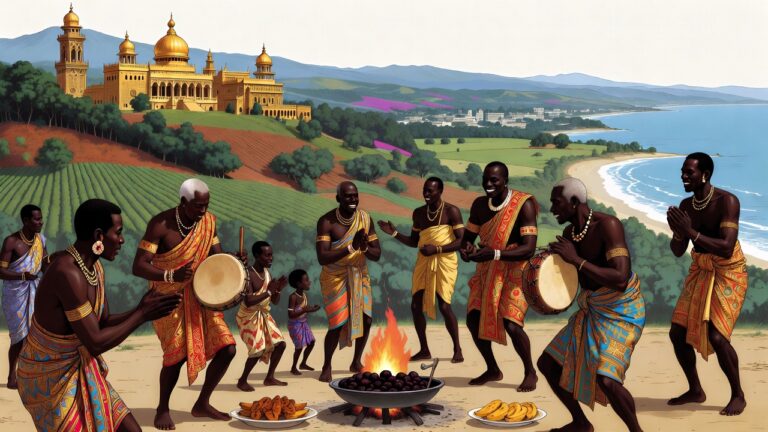
The first thing you hear as morning breaks over Accra is the soft, rhythmic sound of a talking drum struck once, mingled with the distant call of a market vendor and the scent of freshly cooked waakye and roasted plantain drifting through the air. That drum sound carries our story back to a time of golden kingdoms and rivers, when we as the Ashanti, Ewe, Ga, Dagomba, Fante and many others lived along the coast and in the forests of Ghana. Our ancestors built palaces of gold and wood in Kumasi, the Ashanti king ruled with the Golden Stool as symbol of unity, the Ewe knew their vodun rituals and knowledge of herbs. We grew cocoa and yam in the fertile soil, fished with canoes in the Gulf of Guinea, wove kente cloths that told stories in colours. Every family knew the ceremonies of adae, the adowa dances that touched the soul, the communities where sharing was natural and respect for the chiefs was law. That was our golden time: a land of gold, cocoa and kente, where people lived in harmony with the river as mother and the sun as father, connected by rhythm and respect.
But then came the wave from outside, like a storm rising from the sea. The Portuguese, Dutch and British colonised us from the 15th to 19th century, built forts along the coast like Elmina and Cape Coast, took our gold and our people as slaves. Millions were shipped across the Atlantic Ocean, families torn apart, villages emptied. Every family knew the loss: an ancestor who came in chains, a language that had to survive in secret, a culture that blended to endure. Independence in 1957 brought Kwame Nkrumah – the first in Africa to call for “freedom” – but also coups, dictatorships and economic crises. Every family knew the hope and the disappointment, the silence in the streets of Accra.
From that depth rises a pride that is warm and rhythmic. The highlife music that fills the night, the kente cloths still woven, the football that unites us on every field. Our cocoa that sweetens the world, our people who laugh through hardships, our youth dreaming of a better land. We have found our voice again: the democracy that grows, the festivals where everyone dances, the hope Nkrumah left behind.
Yet the truth colours magenta like a sunset over Cape Coast Castle. The scars remain: poverty in the villages, corruption that sometimes returns, the emigration of youth, the memory of the slave forts. The outside world buys our cocoa and our music, but often does not see the pain of the colonial legacy, the struggle for justice.
Still, we remember in silence: around the talking drum where stories are told, on Independence Day the 6th of March when we raise our flag, in the forts where the sea still whispers – never forgetting who we were. We tell our children of the Ashanti and of Nkrumah, of the river and the coast, so they know: we were connected and strong before we were challenged.
And yet… the talking drum continues, deep and low, like a heartbeat that never falls silent. That is our secret: we have suffered under colonisation, slavery and unrest, but first we were a land of gold and rhythm. For our children we build no walls, but a kente cloth where everyone may weave in. How do we let that drum sound bring unity to all once more, how does Ghana remain a home of strength and laughter?
January 2026
Manna Ori
Agya Nsem Mu Akyerɛkyerɛ
Ɛheɛn a owia bɛyɛ Accra so no, adeɛ a woteɛ foforo no ne ntumpan a ɛrebɔ din a ɛyɛ dɛ dɛn ara, a ɛfiri fie bi a ɛbɛn ho no mu, a ɛka ne nkokorɔn a ɛrebɔ din wɔ akyirikyiri no ne waakye foforo (mo mo ne beans) ne shito a ɛfiri abɔnten so adwumakuo bi mu no ho hyɛɛ. Saa ntumpan no de yɛn asɛm kɔ ahemman ne asuo no bereɛ so, bereɛ a yɛte sɛ Ashanti, Ewe, Ga, Dagomba, Fante ne afoforo wɔ mpoano ne kwaeɛ mu. Yɛn nananom sii ntama wɔ Kumasi a wɔde sika ne dua yɛɛ, Ashanti ahemfoɔ na wɔde Sika Dwa Kofi di panyin, Ewefoɔ wɔ wɔn vodun afahyɛ ne wɔn nhyira ho nimdeɛ. Yɛn nsa yɛɛ cocoa ne yam wɔ mubɔ no mu, yɛn nsa yɛɛ nkorɔfo wɔ Gulf of Guinea mu, yɛn nsa yɛɛ kente ntama a nsɛm wɔ mu. Abusua biara nim adae afahyɛ, adowa dawuro a ɛka kra no, nhyira a ɛfiri mpanyimfoɔ ho na wɔde kura. Saa na yɛn bereɛ a ɛyɛ sika no: asaase a ɛwɔ sika, cocoa ne kente; asuo yɛ ɛna, owia yɛ agya, wɔde ntumpan ne nhyira hyɛɛ mu.
Nanso afei no, asorɔkye a efiri po no mu baeɛ. Portugalfoɔ, Dutchfoɔ ne Britishfoɔ baeɛ fi 15th kosi 19th century mu, sii forts wɔ mpoano so mithl Elmina ne Cape Coast, tɔn yɛn sika ne nnipa sɛ nnipa a wɔde kɔɔ nnɔbaeɛ no nkyɛn. Miliyɔn bebree kɔɔ Atlantik so, abusua mu pae, nkuraa mu hwee nni hɔ. Abusua biara nim nnɔpaeɛ: nananom a wɔde nkɔntɔnkye ne wɔn kɔɔ, kasa a wɔde nnwom mu sieeɛ sɛnea ɛbɛtena, amammere a wɔde hyɛɛ mu nanso wɔamfa nso. Independence wɔ 1957 mu de Kwame Nkrumah baeɛ – Afrikafoɔ a ɔdi kan kae "freedom" – nanso coups, diktatɔ wɔ abrabɔ mu, nnɔpaeɛ wɔ abrabɔ mu. Abusua biara teɛ ani so hyerɛn ne werɛhow, komm wɔ Accra abɔnten so.
Fi saa mu no, ahotɔ a ɛyɛ dɛ ne ntumpan baeɛ. Highlife nnwom a ɛfɛfɛ naet, kente ntama a wɔnwea so da, football a ɛde yɛn hyɛɛ mu wɔ afiase biara so. Yɛn cocoa a ɛma wiase no dɛ, yɛn nnipa a wɔ sere wɔ nnɔpaeɛ mu, yɛn mma a wɔ sɔre pɛ Ghana a ɛyɛ fɛ. Yɛanya yɛn nne bio: democracy a ɛtumi, afahyɛ a obiara dawuro, umut a Nkrumah gyaa no.
Nanso nokware no yɛ magenta sɛ owia a ɛresɔ wɔ Cape Coast Castle so. Nkyerɛkyerɛ no wɔ hɔ: nnipa a wɔde kɔɔ no ne colonialism nyinaa, nnipa a wɔde nnipa no kɔɔ no, nnipa a wɔde nnipa no kɔɔ no, nnipa a wɔde nnipa no kɔɔ no. Afoforo no tɔ yɛn cocoa ne nnwom, nanso wɔnte nnipa a wɔamfa nso no mu dɔ no.
Nanso yɛkaeɛ wɔ komm: ntumpan a nsɛm kɔ so no ho, Independence Day wɔ March 6 no wɔ yɛn flag a yɛde so, forts a po no da so kasa no—yɛn werɛ mfi hɔ. Yɛka yɛn mma ho Ashanti ne Nkrumah, asuo ne mpoano no, sɛnea wɔbɛhunu: yɛyɛ nkitaho ne den ansa na nnɔpaeɛ no rebegye.
Na nanso… ntumpan da so bɔ, rhythmic na nkwa wɔ mu, sɛ bɔhyɛ a ɛrebɔ wɔ asaase no so. Saa yɛn ahintasɛm: yɛhunu nnipa a wɔde kɔɔ no, colonialism ne nnɔpaeɛ aseɛ, nanso yɛyɛ sika ne ntumpan asaase dada. Yɛn mma no yɛn nnsi afasu, nanso kente ntama a obiara betumi awea mu. Sɛnea yɛbɛma saa ntumpan no aba umut bio ma obiara? Sɛnea Ghana bɛyɛ abusua a wɔde ahotɔ ne sere wɔ mu no?
January 2026
Manna Ori