
hrough the Eyes of the Indian
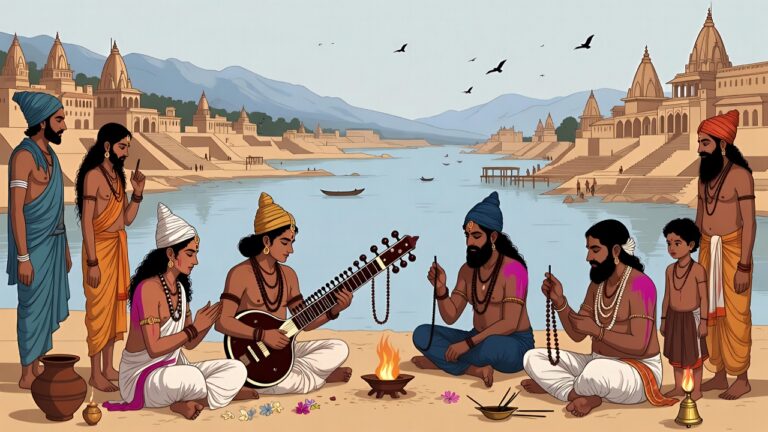
The first thing you hear as morning breaks over Varanasi is the soft plucking of a sitar string in a raga that floats in the early dawn air, drifting over the ghats along the Ganges, mingled with the distant ring of a temple bell and the scent of incense, sandalwood and fresh jasmine drifting from a nearby house. That string sound carries our story back to a time of rivers and wisdom, when we lived as the peoples of the Indus Valley, the Vedic age, the Maurya, Gupta and Mughal empires. Our ancestors built cities like Mohenjo-Daro with streets and drainage, wrote the Vedas and Upanishads that explored the soul, danced classical bharatanatyam and kathak that told stories. The Buddha and Mahavira taught us ahimsa, Gandhi walked that path and called it satyagraha. Every family knew the Ramayana and Mahabharata by the fire, the festivals of Diwali and Holi where light and colour filled the night, communities where diversity was wealth and karma was law. That was our golden time: a land of rivers, mountains and oceans, where people lived with the Ganges as mother and the Himalaya as father, connected by wisdom and unity in diversity.
But then came the wave from outside, like a storm rising from the sea. The Mughals, Portuguese, British colonised us for centuries, carved our land into pieces, plundered our wealth, tried to divide us. Every family knew the loss: an ancestor who fought in the 1857 uprising, a child who learned that freedom was forbidden, a culture that had to hold on in secret. Independence in 1947 brought Gandhi and Nehru, but also Partition – millions dead, families forever separated, a land cut in two. Every family knew the pain of trains full of bodies, the emptiness in villages, the silence after blood.
From that depth rises a pride that is warm and multicoloured. The sitar that still plays ragas, Bollywood that makes the world dance, yoga that calms the soul. Our curry that feeds the world, our people who laugh through hardships, our youth rising for a better land. We have found our voice again: the democracy that grows, the hope that still burns in hearts.
Yet the truth colours magenta like a sunset over the Ganges. The scars remain: poverty in villages, tensions between communities, emigration of youth, the pressure of a fast-changing world. The outside world buys our software and our spices, but often does not feel the depth of a people that never broke.
Still, we remember in silence: on the ghats where the Ganges flows, on Independence Day the 15th of August when we raise our flag, in temples where spirits still speak – never forgetting who we were. We tell our children of the Vedas and of Gandhi, of the rivers and the mountains, so they know: we were connected and strong before we were challenged.
And yet… the sitar continues, soft and deep, like a promise that floats over the Ganges. That is our secret: we have suffered under colonisation, partition and division, but first we were a land of wisdom and unity. For our children we build no walls, but a river where everyone may bathe. How do we let that sitar sound bring hope to all once more, how does India remain a home of light and diversity?
January 2026
Manna Ori
भारत के नजरिए से
सबसे पहले जो सुनाई देता है जब सुबह बनारस पर उगती है, वह एक सितार की राग की नरम तार जो सुबह की हवा में तैरती है, घाटों के ऊपर गंगा के किनारे, दूर मंदिर की घंटी की आवाज़ से मिलकर और अगरबत्ती, चंदन और ताज़ा चमेली की खुशबू जो पास के घर से आती है। यह तार की आवाज़ हमारी कहानी को वापस ले जाती है उस समय की जब हम सिंधु घाटी के लोग, वैदिक काल, मौर्य, गुप्त और मुग़ल साम्राज्यों में रहते थे। हमारे पूर्वजों ने मोहनजो-दारो जैसी शहर बसाए सड़कों और नालियों के साथ, वेद और उपनिषद लिखे जो आत्मा की खोज करते थे, भरतनाट्यम और कथक नृत्य किए जो कहानियाँ बयान करते थे। बुद्ध और महावीर ने हमें अहिंसा सिखाई, गांधी ने उसी रास्ते पर चलकर इसे सत्याग्रह कहा। हर परिवार को अग्नि के पास रामायण और महाभारत की कहानियाँ पता थीं, दिवाली और होली के त्योहार जहाँ रोशनी और रंग रात भरते थे, समुदाय जहाँ विविधता धन थी और कर्म नियम था। वह हमारा स्वर्णिम समय था: नदियों, पर्वतों और समुद्रों की भूमि, जहाँ लोग गंगा को माँ और हिमालय को पिता मानकर जीते थे, ज्ञान और विविधता में एकता से जुड़े।
लेकिन फिर बाहर से लहर आई, जैसे समुद्र से उठी तूफान। मुग़ल, पुर्तगाली, ब्रिटिश ने सदियों तक हमें उपनिवेश बनाया, देश को टुकड़ों में काटा, धन लूटा, हमें बाँटने की कोशिश की। हर परिवार ने हानि जानी: एक पूर्वज जो 1857 की क्रांति में लड़ा, एक बच्चा जो सीखा कि स्वतंत्रता वर्जित है, एक संस्कृति जो गुप्त रूप से जीवित रही। 1947 की आज़ादी ने गांधी और नेहरू लाए, लेकिन विभाजन भी – लाखों मरे, परिवार हमेशा अलग, देश दो हिस्सों में कटा। हर परिवार ने ट्रेनों में लाशों का दर्द जाना, गाँवों में खालीपन, खून के बाद की खामोशी।
इस गहराई से एक गर्म और बहुरंगी गर्व उठता है। सितार जो अब भी राग बजाता है, बॉलीवुड जो दुनिया को नचाता है, योग जो आत्मा को शांत करता है। हमारी करी जो दुनिया को खिलाती है, हमारे लोग जो मुश्किलों में हँसते हैं, हमारी युवा पीढ़ी जो बेहतर देश के लिए उठती है। हमने अपनी आवाज़ फिर पाई: लोकतंत्र जो बढ़ता है, दिलों में जलती आशा।
फिर भी सत्य मेजेंटा रंग का हो जाता है, जैसे गंगा पर सूर्यास्त। घाव बने रहते हैं: गाँवों में गरीबी, समुदायों के बीच तनाव, युवाओं का पलायन, तेज़ बदलती दुनिया का दबाव। बाहर का विश्व हमारा सॉफ्टवेयर और मसाले खरीदता है, लेकिन अक्सर उस गहराई को नहीं महसूस करता जो कभी टूटा नहीं।
फिर भी हम चुपचाप याद करते हैं: घाटों पर जहाँ गंगा बहती है, 15 अगस्त को जब हम झंडा फहराते हैं, मंदिरों में जहाँ आत्माएँ अभी भी बोलती हैं – कभी नहीं भूलते हम कौन थे। हम अपने बच्चों को वेदों और गांधी की कहानियाँ सुनाते हैं, नदियों और पर्वतों की, ताकि वे जानें: हम जुड़े और मजबूत थे इससे पहले कि हमें चुनौती दी जाए।
और फिर भी… सितार चलता रहता है, नरम और गहरा, जैसे गंगा पर तैरता वादा। यही हमारा राज़ है: हमने उपनिवेश, विभाजन और बँटवारे सहा, लेकिन पहले हम ज्ञान और एकता की भूमि थे। बच्चों के लिए हम दीवारें नहीं बनाते, बल्कि एक नदी जहाँ सब स्नान कर सकें। कैसे हम इस सितार की आवाज़ को फिर से सबके लिए आशा बनाते हैं, कैसे भारत प्रकाश और विविधता का घर बना रहता है?
जनवरी 2026
Manna Ori