
Through the Eyes of the Jamaican
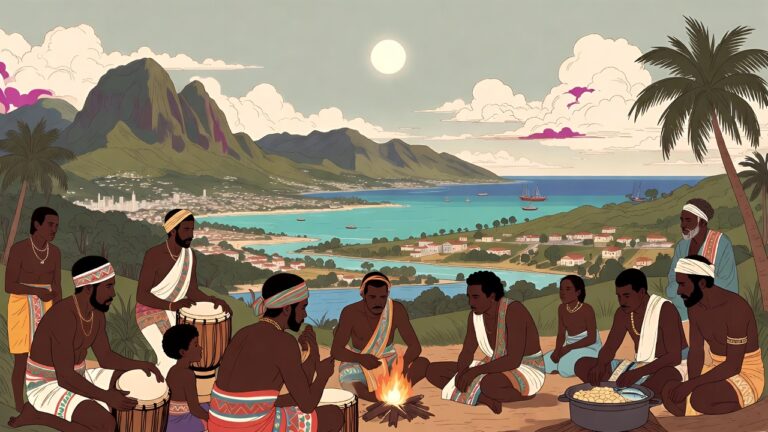
The first thing you hear as morning comes over the Blue Mountains is the soft, deep sound of a nyabinghi drum striking once, blending with the distant call of a trogon and the scent of freshly baked bammy and escovitch fish drifting from a nearby house. That drumbeat carries our story back to a time of mountains and sea, when we lived as the Taíno on this island we called Xaymaca, "land of wood and water". Our ancestors built villages along the coast, fished with nets in the turquoise sea, cultivated cassava and fruit in the fertile soil. They danced around the fire, told stories of the spirits, honored nature as a living being. Every family knew the paths through the mountains, the caves where they kept sacred images, the communities where sharing was normal and respect for the caciques was law. That was our golden time: an island of mountains and sea, where people lived in harmony with nature as mother and the wind as father, free and connected.
But then came the wave from outside, like a hurricane rising from the Caribbean Sea. The Spanish arrived in 1494 with Columbus, and within decades the Taíno were nearly wiped out by disease, forced labor, and violence. African slaves were shipped in to plant sugarcane, their backs broken under the sun, their spirits stifled but never killed. Every family knew the loss: an ancestor who arrived in chains, a language that had to survive in secret, a culture that blended to endure. Independence in 1962 brought hope with Norman Manley and Alexander Bustamante, but also the challenges of a young nation: poverty, violence, the emigration of many to England, Canada, and the US. Every family knew the pain of slavery, the hope and the disappointment, the silence in the streets of Kingston.
From that depth rises a pride that is hot and rhythmic. The reggae of Bob Marley that made the world sing "One Love", the dancehall that fills the streets, the jerk prepared with love. Our Blue Mountain coffee that wakes the world, our people who laugh through hardships, our youth who rise for a better land. We have found our voice again: the music that preaches peace, the Rastafari who call "one love", the hope that never dies.
Yet the truth colors magenta like a sunset over the Blue Mountains. The scars remain: poverty in the townships, violence that sometimes returns, the emigration of youth, the memory of slavery. The outside world buys our reggae and our coffee, but often does not feel the depth of a people that never broke.
Still, we remember in silence: around the drum where nyabinghi sounds, on Independence Day on August 6 when we raise our flag, in the mountains where the spirits still speak—we never forget who we were. We tell our children of the Taíno and of Marley, of the sea and the mountains, so they know: we were connected and strong before we were challenged.
And yet… the nyabinghi continues, deep and rhythmic, like a heartbeat that never falls silent. That is our secret: we have suffered under colonization, slavery, and unrest, but first we were an island of rhythm and fire. For our children we build no walls, but a riddim circle where everyone may dance. How do we let that drumbeat bring unity to everyone again? How does Jamaica remain a home of one love and resilience?
January 2026
Manna Ori
Chru di Aiyz a di Jamaican
Di fus ting yu hear wen mawnin come ova di Blue Mountains a di soft, deep soun a wan nyabinghi drum weh beat wan time, mix up wid di far call a wan trogon an di smell a fresh-bake bammy an escovitch fish weh float out a one nearby house. Dat drumbeat carry we story back to a time a mountain an sea, wen we live as di Taíno pon dis island we call Xaymaca, "lan a wood an wata". We ancestor dem build village dem a di coas, fish wid net inna di turquoise sea, plant cassava an fruit inna di rich sile. Dem dance roun di fire, tell story bout di spirit dem, honour nature as a livin ting. Evry family know di path dem tru di mountain, di cave dem weh dem keep holy image, di community weh sharin normal an respek fi di cacique a di law. Dat was we golden time: wan island a mountain an sea, weh people live inna harmony wid nature as mada an di win as fada, free an connect.
But den come di wave from outside, like a hurricane weh rise out a di Caribbean Sea. Di Spanish come eena 1494 wid Columbus, an inna few decade di Taíno near wipe out by sickness, forced labour, an violence. African slave dem ship een fi plant sugarcane, dem back bruk unda di sun, dem spirit choke but neva kill. Evry family know di loss: wan ancestor weh come eena chain, wan language weh haffi survive eena secret, wan culture weh mix up fi stay alive. Independence eena 1962 bring hope wid Norman Manley an Alexander Bustamante, but also di challenge a wan young nation: poverty, violence, di migration a plenty to England, Canada, an di US. Evry family know di pain a slavery, di hope an di disappointment, di silence eena di street a Kingston.
From dat depth rise a pride weh hot an rhythmic. Di reggae a Bob Marley weh mek di worl sing "One Love", di dancehall weh full di street, di jerk weh cook wid love. We Blue Mountain coffee weh wake up di worl, we people weh laugh tru hardship, we yute weh rise fi a betta lan. We find we voice again: di music weh preach peace, di Rastafari weh call "one love", di hope weh neva die.
Yet di truth colour magenta like a sunset ova di Blue Mountains. Di scar dem stay: poverty eena di township, violence weh sometimes come back, di migration a di yute, di memory a slavery. Di outside worl buy we reggae an we coffee, but often nuh feel di depth a wan people weh neva bruk.
Still, we remember inna silence: roun di drum weh nyabinghi sound, pon Independence Day pon August 6 wen we raise we flag, inna di mountain weh di spirit dem still talk – we neva forget who we was. We tell we pickney bout di Taíno an bout Marley, bout di sea an di mountain, so dem know: we was connect an strong before dem challenge we.
An yet… di nyabinghi continue, deep an rhythmic, like a heartbeat weh neva quiet. Dat a we secret: we suffer unda colonisation, slavery, an unrest, but first we was wan island a rhythm an fire. Fi we pickney we nuh build wall, but a riddim circle weh evrybody may dance. How we mek dat drumbeat bring unity back fi evrybody? How Jamaica stay a home a one love an resilience?
January 2026
Manna Ori