Through the Eyes of the Japanese
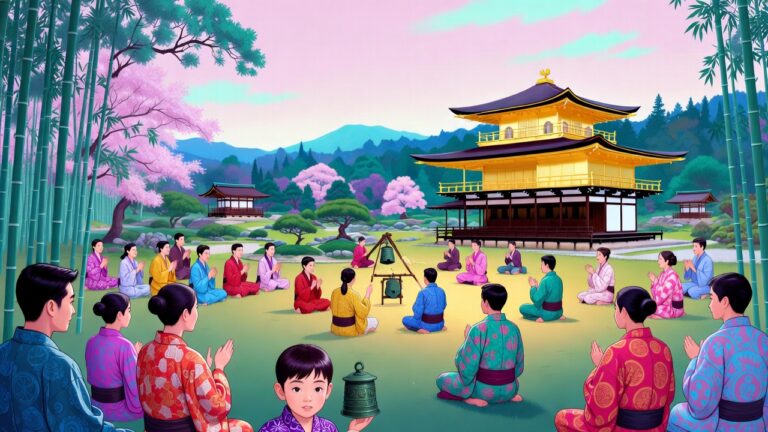
The first thing you feel as morning comes over Kyoto is the soft, persistent sound of a temple bell striking once atKinkaku-ji, blending with the distant rustle of bamboo in the wind and the scent of fresh matcha and incensedrifting from a nearby teahouse. That bell chime carries our story back to a time of silence and harmony, whenwe lived as the people of Yamato. Our ancestors built temples and Shinto shrines that honored nature, wrote theKojiki and Nihon Shoki that told of our origins, flourished in the Heian period with poetry and aesthetics. Thesamurai lived by bushido—honor, courage, and self-control—the Zen masters meditated in gardens of stone andsand, the tea ceremony became an art of mindfulness and simplicity. Every family knew the feasts of hanamiunder blooming cherry trees, the rituals of Oshogatsu, the bond with nature as kami—divine spirits in trees,rivers, and mountains. That was our golden time: a land of islands and seasons, where people lived with natureas teacher and silence as friend, bound by wabi-sabi—beauty in imperfection—and mono no aware—theawareness of transience.
But then came the wave from outside, like a storm rising from the west. The Mongols tried twice to conquer us inthe 13th century, but the divine wind (kamikaze) protected us. The Meiji Restoration opened us to the world inthe 19th century, but also brought industrialization and imperialism. World War II brought fire and ash: Hiroshimaand Nagasaki, cities erased, hundreds of thousands dead in an instant. Every family knew the loss: agrandfather who fought in the Pacific, a grandmother who survived the atomic bomb, a child who learned thatpeace is fragile. The smell of smoke, the silence after the blast, the emptiness in the cities.
From that depth rises a pride that is quiet and disciplined. The cherry blossoms that bloom and fall every year,the Zen gardens that offer peace, the technology that changes the world. Our sushi and ramen prepared withprecision, our manga and anime that feed the imagination, our people who continue to work and hope throughpain. We have found our voice again: the constitution of peace after 1945, the reconstruction, the harmony westill seek.
Yet the truth colors magenta like a sunset over Hiroshima. The scars remain: the memory of the atomic bombs,the pressure of an aging society, the loneliness that sometimes returns. The outside world buys our technologyand our culture, but often does not feel the depth of a people that never broke.
Still, we remember in silence: under the sakura where people gather, during Obon when we honor our ancestors,in the temples where the bell still rings—we never forget who we were. We tell our children of the kami and of thereconstruction, of the mountains and the sea, so they know: we were connected and strong before we werechallenged.
And yet… the bell chime continues, soft and persistent, like a promise that the seasons always return. That is oursecret: we have suffered under wars and destruction, but first we were a land of nature and harmony. For ourchildren we build no walls, but a tea garden where everyone may sit. How do we let that bell chime bring peaceto everyone again? How does Japan remain a home of silence and rebirth?
January 2026
Manna Ori
日本人の目を通して
京都に朝が訪れるとき、最初に感じるのは金閣寺のそばで一度だけ鳴る寺の鐘の柔らかく持続する音色だ。それは遠くの風に揺れる竹のざわめきと、近くの茶屋から漂う新鮮な抹茶と線香の香りと混じり合う。あの鐘の音は、私たちの物語を静寂と調和の時代へと運んでくれる。かつて私たちは大和の民として生きていた。先祖たちは自然を尊ぶ寺院と神道の社を建て、古事記と日本書紀に私たちの起源を記し、平安時代に詩と美学で花開いた。侍は武士道――名誉、勇気、自制――に生き、禅の師たちは石と砂の庭で瞑想し、茶の湯は注意と簡素の芸術となった。どの家族も桜の花の下での花見、正月の儀式、自然の中の神――木々、川、山に宿る神聖な霊――とのつながりを知っていた。あれが私たちの黄金時代だった。島々と四季の国。自然を師とし、静寂を友とし、わびさび――不完全さの中の美――と物のあはれ――儚さの認識――で結ばれた人々。
だが、やがて外からの波が来た。西から吹き上がる嵐のように。13世紀にモンゴルが二度侵攻を試みたが、神風(かみかぜ)が守ってくれた。19世紀の明治維新で世界に開かれたが、工業化と帝国主義ももたらした。第二次世界大戦は炎と灰をもたらした:広島と長崎、街々が一瞬で消え、何十万人もの命が失われた。どの家族も喪失を知っていた。太平洋で戦った祖父、原爆を生き延びた祖母、平和が脆いことを学んだ子。煙の匂い、爆発後の静寂、街々の空虚。
その深みから湧き上がるのは、静かで規律ある誇りだ。毎年咲いて散る桜、石庭が与える安らぎ、世界を変える技術。精緻に作られる寿司とラーメン、想像力を養うマンガとアニメ、痛みの中でも働き続ける人々。私たちは声を再び取り戻した:1945年後の平和憲法、復興、なお求める調和。
しかし真実は、広島に沈む夕陽のようにマゼンタに染まる。傷跡は残る:原爆の記憶、高齢化社会の圧力、時に戻る孤独。外の世界は技術と文化を買うが、決して折れなかった民の深みをしばしば感じ取らない。
それでも静かに思い出す。桜の下に人が集うとき、盂蘭盆で先祖を敬うとき、鐘がまだ鳴る寺院で――私たちが誰だったかを決して忘れない。子どもたちに神と復興を、山と海を語り継ぐ。そうすれば知るだろう。私たちは挑戦される前に、つながり強くあったのだと。
それでも…鐘の音は続く。柔らかく持続し、四季が必ず戻るという約束のように。それが私たちの秘密だ:戦争と破壊の下で苦しんだが、最初に私たちは自然と調和の国だった。子どもたちのために壁は築かず、誰もが座れる茶庭を築く。あの鐘の音を再びすべての人に平和として響かせるにはどうすればいいのか。日本はどうすれば静寂と再生の家であり続けられるのか?
2026年1月
マンナ・オリ