
Through the Eyes of the Jordanian
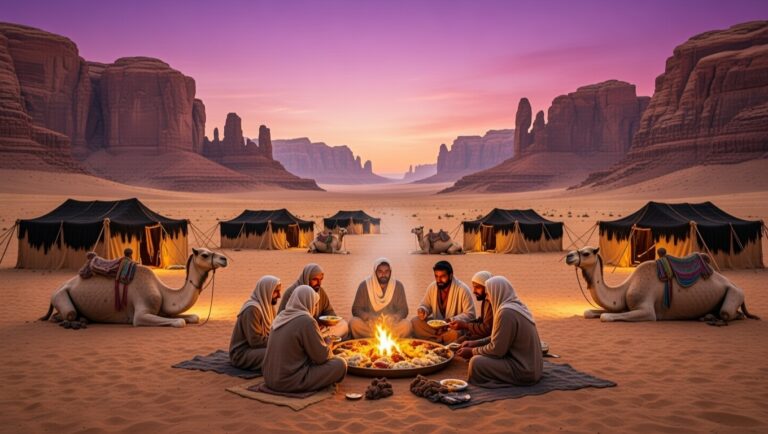
The first thing you hear as morning comes over Petra is the soft, echoing sound of a Bedouin song raising a single note, blending with the distant jingle of camel bells and the scent of freshly baked manakish and cardamom coffee drifting from a nearby tent camp. That song carries our story back to a time of desert and caravans, when we lived as the Nabataeans and other peoples in this land we called Transjordan. Our ancestors carved the rose-red rock city of Petra from sandstone, cut tombs and temples into the mountains, mastered the trade routes of spices and incense. They lived in harmony with the desert as mother and the springs as father: Bedouins herding their camels, traders exchanging stories by the campfires, communities where hospitality was the highest law. Every family knew the paths through Wadi Rum, the tales of the gods Dushara and Al-Uzza, the bond stronger than the heat. That was our golden time: a land of rocks and oases, where people lived with the wind as brother and the stars as guide, free and connected through trade and respect.
But then came the wave from outside, like a storm rising from the desert. The Assyrians, Babylonians, Persians, Greeks, Romans, Byzantines, Arabs, Ottomans—they all seized our land, plundered our caravans, tried to break us. The Crusades brought blood, the Ottomans held us in their grip for centuries. Every family knew the loss: an ancestor who fought in uprisings, a child who learned that freedom was far away, a culture that had to hold on in secret. Independence in 1946 brought King Abdullah I, but also the wars of 1948, 1967, and 1973, refugee flows, tensions over Jerusalem and the West Bank. Every family knew the pain, the displacement, the silence in the camps.
From that depth rises a pride that is deep and hospitable. The Bedouins who still roam Wadi Rum, the Dead Sea that nourishes us with minerals, Petra that still stands as a wonder. Our mansaf prepared with love, our music of oud and rebab that touches the soul, our people who laugh through difficulties. We have found our voice again: the peace with Israel in 1994, the hope for stability, the youth dreaming of a better land.
Yet the truth colors magenta like a sunset over the rocks of Petra. The scars remain: refugees still living in camps, poverty in the villages, the pressure from neighbors and great powers, the memory of wars. The outside world buys our tourism and our Dead Sea products, but often does not feel the depth of a people that never broke.
Still, we remember in silence: around the fire where mansaf is shared, on Independence Day on May 25 when we raise our flag, in the desert where the spirits still speak—we never forget who we were. We tell our children of the Nabataeans and of Abdullah, of the rocks and the rivers, so they know: we were connected and strong before we were challenged.
And yet… the Bedouin song continues, soft and deep, like a promise floating over the desert. That is our secret: we have suffered under occupations, wars, and displacement, but first we were a land of caravans and oases. For our children we build no walls, but a tent camp where everyone is welcome. How do we let that song bring hope to everyone again? How does Jordan remain a home of hospitality and resilience?
January 2026
Manna Ori
من خلال عيون الأردني
أول ما تسمعه عندما يطلع الصباح على البتراء هو الصوت الناعم الصدى لأغنية بدوية ترفع نغمة واحدة، ممزوجاً بصوت أجراس الجمال البعيدة ورائحة المناقيش الطازجة والقهوة بالهيل المنبعثة من مخيم قريب. ذلك الصوت يحمل قصتنا إلى زمن الصحراء والقوافل، حين كنا نعيش كالنبطيين وشعوب أخرى في هذه الأرض التي سميناها ما وراء الأردن. أجدادنا نحتوا مدينة البتراء الوردية من الحجر الرملي، نحتوا قبوراً ومعابد في الجبال، سيطروا على طرق التجارة للتوابل والبخور. عاشوا في تناغم مع الصحراء كأم والينابيع كأب: البدو يرعون جمالهم، التجار يتبادلون القصص عند نار المخيم، المجتمعات التي كانت الضيافة فيها أعلى قانون. كل عائلة كانت تعرف الطرق عبر وادي رم، قصص الآلهة دوشارا والعزى، الرابطة أقوى من الحرارة. كان ذلك عصرنا الذهبي: أرض صخور وعيون ماء، يعيش الناس مع الريح كأخ والنجوم كدليل، أحراراً ومترابطين بالتجارة والاحترام.
لكن ثم جاءت الموجة من الخارج، كعاصفة تنبعث من الصحراء. الآشوريون، البابليون، الفرس، اليونانيون، الرومان، البيزنطيون، العرب، العثمانيون – كلهم استولوا على أرضنا، نهبوا قوافلنا، حاولوا كسرنا. الحروب الصليبية جاءت بالدماء، العثمانيون سيطروا علينا قروناً. كل عائلة عرفت الخسارة: جد قاتل في الانتفاضات، طفل تعلم أن الحرية بعيدة، ثقافة اضطرت للحفاظ على نفسها سراً. الاستقلال عام 1946 جاء بالملك عبد الله الأول، لكنه جاء أيضاً بحروب 1948 و1967 و1973، تدفقات اللاجئين، التوترات حول القدس والضفة الغربية. كل عائلة عرفت الألم، الطرد، الصمت في المخيمات.
من تلك العمق ينبعث فخر عميق ومضياف. البدو الذين لا يزالون يجوبون وادي رم، البحر الميت الذي يغذينا بالمعادن، البتراء التي لا تزال تقف كعجيبة. المنسف المعد بحب، موسيقانا بالعود والرباب التي تمس الروح، شعبنا الذي يضحك رغم الصعاب. استعادنا صوتنا: السلام مع إسرائيل عام 1994، الأمل في الاستقرار، الشباب الذين يحلمون بوطن أفضل.
لكن الحقيقة تتلون بالماجنتا كغروب الشمس فوق صخور البتراء. الندوب باقية: اللاجئون الذين لا يزالون في المخيمات، الفقر في القرى، الضغط من الجيران والقوى الكبرى، ذكرى الحروب. العالم الخارجي يشتري سياحتنا ومنتجات البحر الميت، لكنه غالباً لا يشعر بعمق شعب لم ينكسر أبداً.
ومع ذلك نتذكر في صمت: حول النار حيث يُقسم المنسف، في يوم الاستقلال في 25 مايو حين نرفع علمَنا، في الصحراء حيث لا تزال الأرواح تتحدث – لا ننسى أبداً من كنا. نحكي لأطفالنا عن النبطيين وعن عبد الله، عن الصخور والأنهار، ليعلموا: كنا مترابطين وأقوياء قبل أن نُتحدى.
ومع ذلك… تستمر الأغنية البدوية، ناعمة وعمقاً، كوعد يطفو فوق الصحراء. ذلك سرنا: عانينا تحت الاحتلالات والحروب والنزوح، لكننا أولاً كنا أرض قوافل وعيون ماء. لأطفالنا لا نبني جدراناً، بل مخيماً يرحب بالجميع. كيف نجعل ذلك الصوت يعيد الأمل للجميع؟ كيف يبقى الأردن بيتاً للضيافة والصمود؟
يناير ٢٠٢٦
مانا أوري