
Through the Eyes of the Kazakh
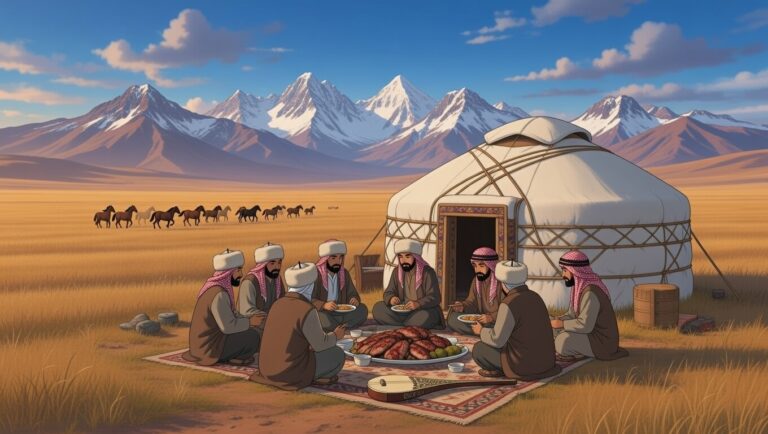
The first thing you feel as morning comes over the steppes of Almaty is the soft, endless sound of the windrustling through the tall grass, blending with the distant neighing of a horse and the scent of fresh shubat(fermented camel milk) and roasted meat drifting from a nearby yurt. That wind carries our story back to a time ofopen plains and freedom, when we lived as the Kazakhs in this land we called Qazaqstan. Our ancestors rodehorses across the endless steppes, herded livestock that was our wealth and our life, built yurts of felt and woodthat could stand anywhere. They lived in harmony with nature as mother and the wind as father: nomads whofollowed the seasons, shamans who spoke with the spirits of mountain and river, clans where the khan decidedwith counsel and the songs of the dombra filled the night. Every family knew the tales of the Golden Man, theepic of Manas, the bond stronger than distance. That was our golden time: a land of steppes and mountains,where people lived with the horizon as boundary and freedom as law, connected by horse and song.
But then came the wave from outside, like a storm rising from the north. The Mongols, the Russians, the Soviets—they all seized our land, tried to break us. Russian colonization in the 19th century took our land, the Soviet erabrought collectivization, famine in the 1930s where millions died, deportations of peoples, nuclear tests inSemipalatinsk that sickened generations. Every family knew the loss: a grandfather who vanished in the hunger,a child who had to speak Russian at school, a culture that had to survive in secret. Independence in 1991brought hope with Nursultan Nazarbayev, but also challenges: transition, corruption, the pressure of greatneighbors.
From that depth rises a pride that is deep and free. The dombra that still plays epics, the shubat shared withlove, the horses galloping over the steppes. Our music of the kobyz, our traditions of Nauryz feasts, our peoplewho laugh through difficulties. We have found our voice again: independence, the capital Astana that grew fromthe steppe, the hope that never dies.
Yet the truth colors magenta like a sunset over the steppe. The scars remain: the memory of the famine, thenuclear tests, the emigration of youth, the pressure of a fast-changing world. The outside world buys our oil andour uranium, but often does not feel the depth of a people that never broke.
Still, we remember in silence: around the yurts where stories are told, on Independence Day on December 16when we raise our flag, on the steppes where the wind still whispers—we never forget who we were. We tell ourchildren of the old khans and of independence, of the horses and the mountains, so they know: we wereconnected and free before we were challenged.
And yet… the wind continues to blow through the steppes, endless and free, like a promise that the horizonalways remains open. That is our secret: we have suffered under colonization, famine, and change, but first wewere a land of horses and wind. For our children we build no walls, but a yurt where everyone is welcome. Howdo we let that wind bring freedom to everyone again? How does Kazakhstan remain a home of space andresilience?
January 2026
Manna Ori
Қазақтың көзімен
Алматы даласына таң атқанда алғаш сезінетінің – биік шөп арасынан ескен желдің жұмсақ, шексіз дыбысы, алыстан естілетін жылқының кісінеуі және көршілес юртадан шыққан жаңа шұбат (түйе сүтінің ашытылғаны) пен қуырылған еттің иісі. Сол жел біздің әңгімемізді ашық дала мен еркіндік заманға апарады, біз Қазақстан деп атаған жерде қазақ болып өмір сүрген кезімізге. Ата-бабаларымыз шексіз далада атпен жүріп, мал бағып, байлығымыз бен өміріміз болған малды күзетті, киіз бен ағаштан юрталар құрып, қай жерде болса да тұра алатын. Олар табиғатты ана, желді әке деп сыйлап өмір сүрді: көшпелілер мезгілді бағып, тау мен өзеннің рухтарымен сөйлескен шамандар, хан кеңеспен шешім қабылдаған рулар, домбыра әуені түнді толтырған. Әрбір отбасы Алтын адам туралы әңгімені, Манас эпосын білді, қашықтықтан күшті байланысты сезінді. Ол біздің алтын дәуіріміз еді: дала мен таулар елі, адамдар көкжиекті шекара, еркіндікті заң деп өмір сүрді, ат пен әуенмен байланысқан.
Бірақ кейін сырттан толқын келді, солтүстіктен соққан дауылдай. Моңғолдар, орыстар, кеңестер – бәрі жерімізді басып алды, сындырмақ болды. 19-ғасырдағы орыс отарлауы жерімізді тартып алды, кеңес заманында ұжымдастыру, 30-жылдардағы ашаршылық миллиондаған адам өлтірді, халықтарды жер аудару, Семейдегі ядролық сынақтар ұрпақтарды ауру етті. Әр отбасы қасіретті білді: аштықта жоғалған ата, мектепте орысша сөйлеуге мәжбүр болған бала, құпияда сақталған мәдениет. 1991 жылғы тәуелсіздік Нұрсұлтан Назарбаевпен үміт әкелді, бірақ қиындықтар да: ауысу, сыбайлас жемқорлық, үлкен көршілердің қысымы.
Сол тереңдікте терең әрі еркін мақтаныш көтеріледі. Әлі эпостар ойнайтын домбыра, махаббатпен бөлісетін шұбат, далада шауып жүрген жылқылар. Кобыздың әуені, Наурыз мерекелерінің салт-дәстүрі, қиындықта да күлетін халқымыз. Біз дауысымызды қайта таптық: тәуелсіздік, даладан өскен Астана астанасы, ешқашан өлмейтін үміт.
Бірақ шындық Петроградтағы күн бату сияқты қызғылт күлгін түске боялады. Тыртықтар қалады: ашаршылық есі, ядролық сынақтар, жастардың көшуі, тез өзгеретін әлемнің қысымы. Сыртқы әлем біздің мұнай мен уранды сатып алады, бірақ ешқашан сынбаған халықтың тереңдігін сезінбейді көбіне.
Дегенмен тыныш еске аламыз: әңгіме айтылатын юрттардың айналасында, 16 желтоқсанда Тәуелсіздік күнінде туымызды көтергенде, жел әлі сыбырлайтын далада – біз кім болғанымызды ешқашан ұмытпаймыз. Балаларымызға ескі хандар мен тәуелсіздікті, жылқы мен тауларды айтамыз, сонда біледі: сынаққа ұшырамай тұрып біз байланысты әрі еркін болдық.
Сонда да… жел далада еседі, шексіз әрі еркін, көкжиек әрқашан ашық қалады деген уәде сияқты. Бұл біздің құпиямыз: отарлау, ашаршылық, өзгерістердің астында қиналдық, бірақ алғашқыда жылқы мен жел елі болдық. Балаларымыз үшін қабырға емес, әркім қош келсін дейтін юрта саламыз. Сол желді қалай қайтадан бәріне еркіндік әкелетін етеміз? Қазақстан қалай кеңістік пен төзімділіктің үйі болып қалады?
2026 жылдың қаңтары
Манна Ори