
Through the Eyes of the Kyrgyz
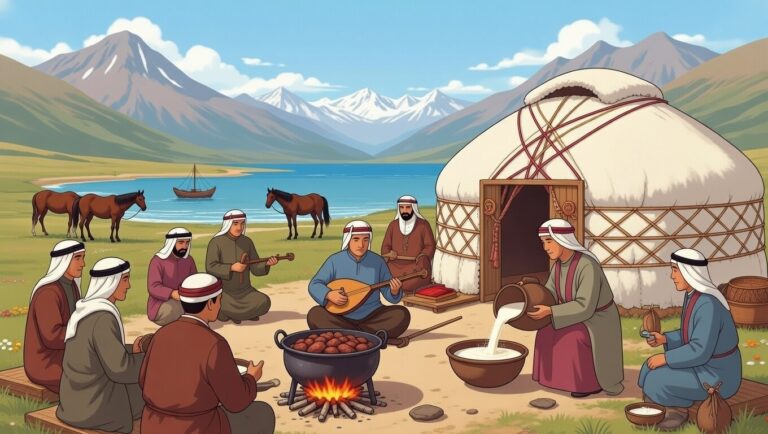
The first thing you hear as morning arrives over Lake Issyk-Kul is the soft, rolling sound of a komuz striking one string, mingled with the distant whinny of a horse and the scent of fresh koumiss (fermented mare's milk) and roasted meat drifting from a nearby yurt. That string-sound carries our story back to a time of high mountains and endless steppes, when we, as the Kyrgyz, lived in this land we call Kyrgyz Respublikasy. Our ancestors rode horses across the Tian Shan mountains, herded livestock that meant wealth and life, built yurts of felt and wood that could stand anywhere. They lived in harmony with nature as mother and the wind as father: nomads who followed the seasons, akyns who sang epics on the komuz, clans where manaschi told the stories of Manas—the hero who united the people. Every family knew the Nooruz festivals where fire was jumped over, the bond stronger than distance, the hospitality that was sacred. That was our golden time: a land of mountains and lakes, where people lived with the horizon as border and freedom as law, connected through horse, song, and nature.
But then came the wave from outside, like a storm rising from the north. The Mongols, the Chinese, the Russians annexed us in the 19th century, tried to make us Russian, to smother our language. The Soviet time brought collectivization, famine, deportations of entire peoples, nuclear tests in neighboring areas that made us sick. Every family knew the loss: a grandfather who vanished in the hunger, a child who had to speak Russian at school, a culture that survived in secret. Independence in 1991 brought hope, but also chaos: revolutions in 2005 and 2010, clan conflicts, corruption, the pressure from big neighbors.
From that depth rises a pride that is deep and free. The komuz that still plays epics, the koumiss shared with love, the horses galloping over the steppes. Our Manas epic still told, our yurts that can stand anywhere, our people who laugh through hardships. We have found our voice again: independence, the hope for unity, the youth who dream of a better land.
Yet the truth colors magenta like a sunset over Issyk-Kul. The scars remain: the memory of Soviet times, the revolutions that cost blood, the emigration of youth, the pressure of a rapidly changing world. The outside world buys our tourism and our wool, but often does not feel the depth of a people that never broke.
Still, we remember in silence: around the yurts where Manas is sung, during Independence Day on 31 August when we raise our flag, on the steppes where the wind still whispers—never forgetting who we were. We tell our children of Manas and of independence, of the mountains and lakes, so they know: we were connected and strong before we were challenged.
And yet… the komuz continues, soft and deep, like a promise that floats over the mountains. That is our secret: we have suffered under colonization, revolutions, and change, but we were first a land of horses and epics. For our children we build no walls, but a yurt where everyone is welcome. How do we let that string-sound bring unity to everyone again, how does Kyrgyzstan remain a home of freedom and wind?
January 2026
Manna Ori
Кыргыздын көзү менен
Ысык-Көлдүн үстүндө таң атканда биринчи угулганы – жакын жердеги боз үйдөн келген кымыздын (кымыз – жылкынын ачытылган сүтү) жана куурулган эттин жыты менен аралашкан, бир кылды чертип койгон комуздун жумшак, толкундуу үнү, алыстан аттын кишенегени. Ошол кыл үнү биздин окуяны бийик тоолор менен чексиз талаалардын дооруна алып барат, биз кыргыздар Кыргыз Республикасы деп атаган жерде жашаган кезде. Биздин ата-бабаларыбыз Тянь-Шан тоолорун ат менен кыдырып, мал багышкан – байлык менен жашоонун символу, кийиз менен жыгачтан боз үйлөрдү курушкан – каалаган жерге тиге беришкен. Алар табиятты эне, шамалды ата катары сыйлап жашаган: мезгилди ээрчиген көчмөндөр, комузда эпосторду ырдаган акындар, Манасчылар Манас жөнүндө айткан уруулар – элди бириктирген баатыр. Ар бир үй-бүлө Нооруз майрамында оттон секиргенди, аралыктан күчтүү байланышты, ыйык меймандостукту билген. Ошол биздин алтын доорубуз болгон: тоолор менен көлдөрдүн жери, горизонт чек ара, эркиндик мыйзам болгон жер, ат, ыр жана табият менен байланышкан.
Бирок сыртынан келген толкун түндүктөн бороон сыяктуу көтөрүлдү. Монголдор, кытайлар, орустар 19-кылымда бизди кошуп алышкан, бизди орус кылып, тилибизди басып көрүшкөн. Совет доору коллективдештирүү, ачарчылык, бүтүндөй элдерди сүргүнгө айдаган, коңшу аймактардагы ядролук сыноолор бизди ооруткан. Ар бир үй-бүлө жоготууну билген: ачарчылыкта жоголгон чоң ата, мектепте орусча сүйлөөгө мажбур болгон бала, жашыруун сакталып калган маданият. 1991-жылдагы көз карандысыздык үмүт алып келген, бирок ошол эле учурда башаламандык: 2005 жана 2010-жылдардагы революциялар, уруу кагылышуулары, коррупция, чоң коңшулардын басымы.
Ошол тереңдиктен терең жана эркин сыймык көтөрүлөт. Дагы эпосторду черткен комуз, сүйүү менен бөлүшүлгөн кымыз, талаада чапкан аттар. Дагы айтылып жаткан Манас эпосу, каалаган жерге тигилген боз үйлөр, кыйынчылыктарда күлгөн элибиз. Биз кайра үнүбүздү таптык: көз карандысыздык, биримдик үчүн үмүт, жакшы жерди кыялданган жаштар.
Бирок чындык Ысык-Көлдүн батышындагы күн баткандай кызгылт көк түскө боёлот. Жарааттар калат: Совет доорунун эскерүүсү, кан төгүлгөн революциялар, жаштардын чет өлкөгө кетиши, тез өзгөргөн дүйнөнүн басымы. Сырткы дүйнө биздин туризмди жана жүнүбүздү сатып алат, бирок эч качан сынбаган элдин тереңдигин сезбейт.
Ошого карабастан, биз жымжырт эскеребиз: Манас ырдалган боз үйлөрдүн айланасында, 31-август Көз карандысыздык күнүндө желегибизди көтөргөндө, шамал дагы шыбыраган талааларда – биз ким болгонубузду эч качан унутпайбыз. Биз балдарыбызга Манас жана көз карандысыздык, тоолор менен көлдөр жөнүндө айтабыз, ошондо алар билет: биз сыноодон мурун бириктирилген жана күчтүү болгонбуз.
Ошого карабастан… комуз жумшак жана терең уланат, тоолор үстүндө калкып жүргөн убада сыяктуу. Бул биздин сырыбыз: биз колониялаштыруу, революциялар жана өзгөрүүлөрдөн жабыркадык, бирок биз биринчи аттар менен эпостордун жери болгонбуз. Балдарыбыз үчүн дубал курбайбыз, ар кимге ачык боз үй курдук. Кантип ошол кыл үнү кайра баарына биримдик алып келет, кантип Кыргызстан эркиндик менен шамалдын үйү бойдон калат?
2026-жылдын январы
Manna Ori