
Through the Eyes of the Malawian
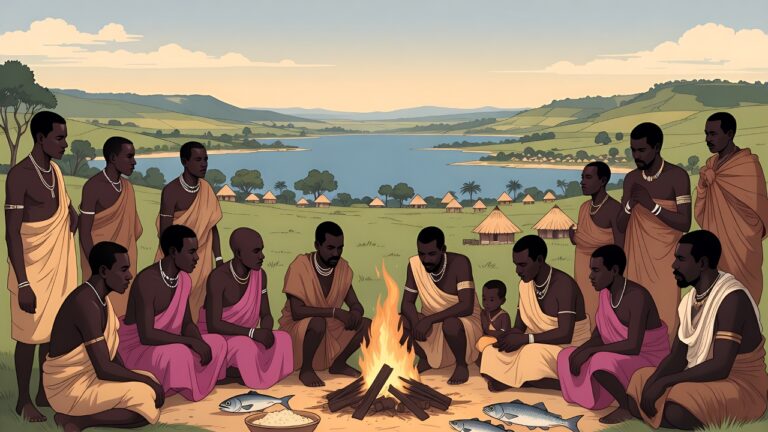
The first thing you hear as morning arrives over Lake Malawi is the soft, rhythmic sound of a likembe striking one note, mingled with the distant cry of a fish eagle and the scent of fresh nsima (maize porridge) and chambo fish drifting from a nearby home. That likembe-sound carries our story back to a time of lakes and hills, when we lived as the Chewa, Yao, Tumbuka, Ngoni, and other peoples in this land we call Malawi. Our ancestors built villages along the lake, fished with canoes in the clear water, grew sorghum and maize in fertile soil. The Chewa knew their Gule Wamkulu masks and their knowledge of nature, the Yao their trade across the lake, the Ngoni their cattle and warriors. Every family knew the initiation ceremonies, the dances around the fire that filled the night with rhythm, communities where sharing was natural and respect for elders was law. That was our golden time: a land of lake and mountains, where people lived in harmony with Lake Malawi as mother and the hills as father, connected through music and hospitality.
But then came the wave from outside, like a storm rising from the sea. The British colonized us in the 19th century, called us Nyasaland, and made us a source of labor for their plantations. Every family knew the loss: an ancestor who labored for strangers, a child who learned that freedom was forbidden, a culture that had to adapt. Independence in 1964 brought Hastings Banda—hope that lasted decades—but also a dictatorship with censorship and repression. Every family knew the fear, the silence in the villages, the migration to South Africa and beyond.
From that depth rises a pride that is warm and hospitable. The likembe that still plays melodies, the nsima shared with love, the fish from the lake that feeds us. Our kwela and chimurenga music that fills the night, our people who laugh through hardships, our youth who dream of a better land. We have found our voice again: the democracy after 1994, the hope that grows along the lake.
Yet the truth colors magenta like a sunset over Lake Malawi. The scars remain: poverty in the villages, the emigration of youth, the pressure of climate change on our fisheries, the memory of dictatorship. The outside world buys our tea and our tourism, but often does not feel the depth of a people that never broke.
Still, we remember in silence: around the likembe where music is made, during Independence Day on 6 July when we raise our flag, along the lake where spirits still speak—never forgetting who we were. We tell our children of the old kingdoms and of Banda, of the lake and the hills, so they know: we were connected and strong before we were challenged.
And yet… the likembe continues, soft and undulating, like a promise that floats over the lake. That is our secret: we have suffered under colonization, dictatorship, and poverty, but we were first a land of lake and rhythm. For our children we build no walls, but a lake where everyone may fish. How do we let that likembe-sound bring hope to everyone again, how does Malawi remain a home of hospitality and unity?
January 2026
Manna Ori
M'maso mwa Malawi
Choyamba chimene umamva pamene m'mawa ukufika pamwamba pa Nyanja ya Malawi ndi phokoso lofewa, lokhala ndi mayendedwe a likembe yomwe imamenya phokoso limodzi, losakanikirana ndi kulira kwakutali kwa nkhwazi ya nsomba ndi fungo la nsima yatsopano (phala la chimanga) ndi chambo wosuta womwe ukuchokera m'nyumba yapafupi. Phokoso la likembe limenelo limanyamula nkhani yathu kubwerera ku nthawi ya nyanja ndi mapiri, pamene tinali kukhala monga a Chewa, Yao, Tumbuka, Ngoni ndi mitundu ina yambiri m'dziko limeneli lomwe timatchula kuti Malawi. Makolo athu anamanga midzi m'mphepete mwa nyanja, ankakodza nsomba ndi mabwato m'madzi owonekera, ankabzala sorghum ndi chimanga m'nthaka yabwino. A Chewa ankadziwa maski awo a Gule Wamkulu ndi chidziwitso chawo cha chilengedwe, a Yao malonda awo kudutsa nyanja, a Ngoni ng'ombe zawo ndi ankhondo awo. Banja lililonse linkadziwa miyambo ya ukwati, mavinidwe ozungulira moto omwe ankadzaza usiku ndi mayendedwe, madera omwe kugawana kunali kwachilendo ndi ulemu kwa akulu ndiye lamulo. Imeneyi inali nthawi yathu yagolide: dziko la nyanja ndi mapiri, pamene anthu ankakhala mogwirizana ndi Nyanja ya Malawi monga mayi ndi mapiri monga atate, olumikizidwa ndi nyimbo ndi ukarimu.
Koma kenako kunabwera funde lochokera kunja, ngati chimphepo chomwe chinabwera kuchokera kunyanja. A British anatenga dziko lathu m'zaka za m'ma 1800, anatiuza Nyasaland, ndipo anatipanga kukhala gwero la ntchito zawo m'minda. Banja lililonse linkadziwa kutaya: kholo lomwe linkagwira ntchito kwa anthu osadziwika, mwana yemwe anaphunzira kuti ufulu unali woletsedwa, chikhalidwe chomwe chinayenera kusintha. Ufulu mu 1964 unabweretsa Hastings Banda – chiyembekezo chomwe chinapitilira zaka makumi – koma komanso ulamuliro wankhanza wokhala ndi kusefa ndi kupondereza. Banja lililonse linkadziwa mantha, chete m'midzi, kusamuka ku South Africa ndi kwina.
Kuchokera mu kuzama kumeneko kumadza kunyada komwe kuli kofunda ndi kosagwedezeka. Likembe yomwe ikupitirizabe kuimba nyimbo, nsima yomwe imagawidwa ndi chikondi, nsomba kuchokera ku nyanja yomwe imatidyetsa. Nyimbo zathu za kwela ndi chimurenga zomwe zimadzaza usiku, anthu athu omwe amaseka ngakhale pamavuto, achinyamata athu omwe amalota dziko labwino. Tapezanso mawu athu: demokalase pambuyo pa 1994, chiyembekezo chomwe chikupitirizabe kukula m'mphepete mwa nyanja.
Koma chowonadi chimapenta magenta ngati kulowa kwa dzuwa pamwamba pa Nyanja ya Malawi. Zilonda zikadalipo: umphawi m'midzi, kusamuka kwa achinyamata, kupsinjika kwa kusintha kwa nyengo pa usodzi wathu, kukumbukira nthawi ya ukoloni. Dziko lakunja limagula tiyi wathu ndi zokopa alendo zathu, koma nthawi zambiri silimamva kuzama kwa anthu omwe sanaphwanyidwepo.
Ngakhale zili choncho, timakumbukira mwakachetechete: mozungulira likembe komwe nyimbo zimapangidwa, pa Tsiku la Ufulu pa 6 Julayi pamene timakweza mbendera yathu, m'mphepete mwa nyanja komwe mizimu ikupitirizabe kulankhula – sitinaiwalepo kuti tinali ndani. Timauza ana athu za maufumu akale ndi za Banda, za nyanja ndi mapiri, kuti adziwe: tinali ogwirizana ndi amphamvu tisanayesedwe.
Ndipo ngakhale zili choncho… likembe ikupitiriza, yofewa ndi yoyenda, ngati lonjezo lomwe limayandikira pamwamba pa nyanja. Ichi ndi chinsinsi chathu: tavutika ndi ukoloni, ulamuliro wankhanza ndi umphawi, koma tinali koyamba dziko la nyanja ndi mayendedwe. Kwa ana athu sitimamanga makoma, koma nyanja yomwe aliyense angakodze nsomba. Kodi tingalole bwanji kuti phokoso la likembe libweretse chiyembekezo kwa aliyense kachiwiri, kodi Malawi ikhalabe nyumba ya ukarimu ndi umodzi?
Januwale 2026
Manna Ori