
Through the Eyes of the Moldovan
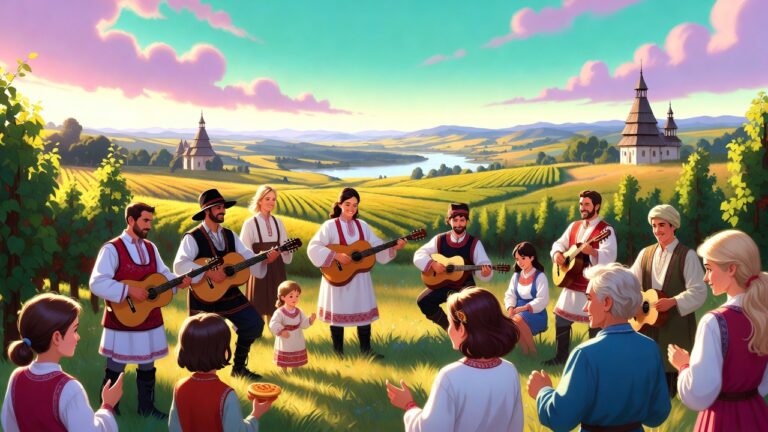
The first sound you hear as morning arrives over Chișinău is the soft, warm note of a cobză striking a singlestring, mingled with the distant hum of a market and the scent of fresh plăcintă and mămăligă drifting from anearby home. That string-sound carries our story back to a time of vineyards and rivers, when we lived as thepeople of Moldova. Our ancestors built monasteries at Orheiul Vechi and Curchi that seemed to touch the sky,grew grapes on the hills that gave Europe its finest wine, wove carpets with patterns that told stories. They livedin harmony with the Dniester as mother and the steppes as father: farmers who tended their land with care,families singing together at work, communities where hospitality was sacred and the bond stronger than borders.Every family knew the feasts of Mărțișor welcoming spring with red and white ribbons, the tales of Ștefan celMare who defended the land, the wine made with love. That was our golden time: a land of vineyards and rivers,where people lived with nature as guide and history as friend, free and connected by wine and song.
But then came the wave from outside, like a storm rising from the east. The Ottomans, Russians, Romanians,Soviets – all seized our land, tried to break us. Soviet times brought collectivization, famine, deportations toSiberia, tens of thousands of vanished families. Independence in 1991 brought hope, but also the war inTransnistria in 1992, the division still tangible, the emigration of youth to Europe and Russia. Every family knewthe loss: a grandfather who fought in the war, a brother who never returned from Siberia, a child who learnedunity was broken. The smell of smoke, the silence after trains, the emptiness in the villages.
From that depth rises a pride that is warm and welcoming. The wine from Cricova and Purcari that still reachesthe world, the plăcintă prepared with love, the cobză that touches the soul. Our people laughing throughhardship, our youth dreaming of a better land, our bond stronger than borders. We have found our voice again:independence, hope growing in the vineyards.
Yet the truth colors magenta like a sunset over the Dniester. The scars remain: the division of Transnistria,emigration of youth, poverty in the villages, pressure from big neighbors. The outside world buys our wine andour tourism, but often does not feel the depth of a people who never broke.
Still, we remember in silence: around the table where wine is shared, during Independence Day on 27 Augustwhen we raise our flag, in the vineyards where the spirits still speak – never forgetting who we were. We tell ourchildren of Ștefan cel Mare and of independence, of the river and the hills, so they know: we were connected andstrong before we were challenged.
And yet… the cobză continues, soft and deep, like a promise drifting over the hills. That is our secret: we havesuffered under occupations, division, and unrest, but first we were a land of vineyards and song. For our childrenwe build no walls, but a wine cellar where everyone is welcome. How do we let that string-sound bring unity toeveryone again? How does Moldova remain a home of warmth and resilience?
January 2026
Manna Ori
Prin ochii Moldoveanului
Primul sunet pe care îl auzi când dimineața se așterne peste Chișinău este nota blândă și caldă a unei cobze care atinge o singură coardă, amestecată cu murmurul îndepărtat al unei piețe și aroma de plăcintă proaspătă și mămăligă ce se ridică dintr-o casă vecină. Acel sunet de coardă poartă povestea noastră înapoi într-o vreme de vii și râuri, când noi trăiam ca poporul Moldovei. Strămoșii noștri au ridicat mănăstiri la Orheiul Vechi și Curchi ce păreau să atingă cerul, au cultivat struguri pe dealuri care dădeau Europei cel mai bun vin, au țesut covoare cu modele ce spuneau povești. Ei trăiau în armonie cu Nistrul ca mamă și stepele ca tată: țărani care își îngrijeau pământul cu drag, familii ce cântau împreună la muncă, comunități unde ospitalitatea era sfântă și legătura mai puternică decât granițele. Fiecare familie cunoștea sărbătorile de Mărțișor care întâmpinau primăvara cu panglici roșii și albe, poveștile lui Ștefan cel Mare care apăra țara, vinul făcut cu iubire. Acesta era timpul nostru de aur: o țară de vii și râuri, unde oamenii trăiau cu natura ca îndrumător și istoria ca prieten, liberi și uniți prin vin și cântec.
Dar apoi a venit valul din afară, ca o furtună ridicată dinspre răsărit. Otomanii, rușii, românii, sovieticii – toți au pus mâna pe pământul nostru, au încercat să ne frângă. Vremea sovietică a adus colectivizare, foamete, deportări în Siberia, zeci de mii de familii pierdute. Independența din 1991 a adus speranță, dar și războiul din Transnistria în 1992, despărțirea care încă se simte, emigrarea tinerilor spre Europa și Rusia. Fiecare familie a cunoscut pierderea: un bunic care a luptat în război, un frate care nu s-a mai întors din Siberia, un copil care a învățat că unitatea era ruptă. Mirosul de fum, tăcerea după trenuri, golul din sate.
Din acea adâncime se ridică un mândrie caldă și primitoare. Vinul din Cricova și Purcari care încă ajunge în lume, plăcinta pregătită cu dragoste, cobza ce atinge sufletul. Oamenii noștri care râd prin greutăți, tinerii noștri care visează la o țară mai bună, legătura noastră mai puternică decât granițele. Ne-am regăsit glasul: independența, speranța ce crește în vii.
Totuși adevărul se vopsește în magenta ca un apus peste Nistru. Cicatricile rămân: despărțirea Transnistriei, plecarea tinerilor, sărăcia din sate, presiunea vecinilor mari. Lumea din afară cumpără vinul și turismul nostru, dar adesea nu simte adâncimea unui popor care niciodată nu s-a frânt.
Totuși ne amintim în tăcere: în jurul mesei unde se împarte vinul, în Ziua Independenței pe 27 august când ridicăm steagul, în vii unde spiritele încă vorbesc – niciodată nu uităm cine am fost. Le spunem copiilor noștri de Ștefan cel Mare și de independență, de râu și de dealuri, ca să știe: eram uniți și tari înainte de a fi provocați.
Și totuși… cobza merge mai departe, blând și adânc, ca o făgăduială ce plutește peste dealuri. Acesta e secretul nostru: am suferit sub ocupații, despărțiri și neliniște, dar mai întâi am fost o țară de vii și cântec. Pentru copiii noștri nu zidim ziduri, ci o pivniță de vin unde toată lumea e binevenită. Cum facem ca acel sunet de coardă să aducă iar unitate pentru toți, cum rămâne Moldova un cămin de căldură și reziliență?
Ianuarie 2026
Manna Ori