
Through the Eyes of the Mongolian
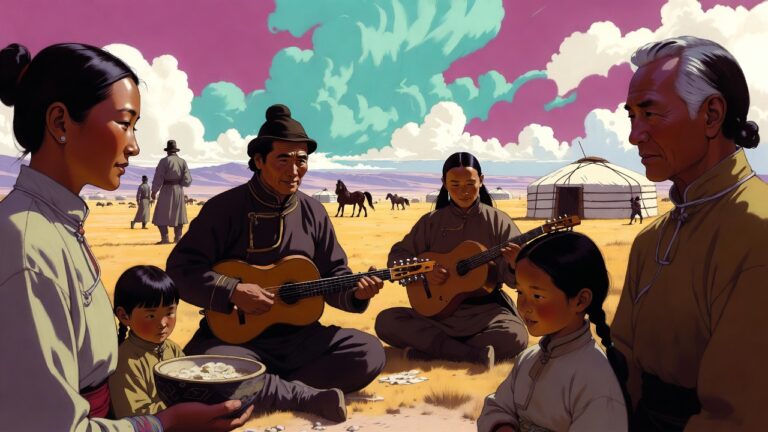
The first sound you feel as morning arrives over the Gobi steppe is the soft, endless whisper of wind rustling through tall grass, mingled with the distant neigh of a horse and the scent of fresh airag (fermented mare's milk)and roasted mutton drifting from a nearby ger (yurt). That wind carries our story back to a time of open plains and freedom, when we lived as the Mongols in this land we called Mongol Uls. Our ancestors rode horses acrossend less steppes, built gers of felt and wood that could stand anywhere, herded livestock that meant wealth and life. They lived in harmony with nature as mother and the wind as father: nomads who followed the seasons,shamans who spoke with the spirits of mountain and river, clans where the khan decided with counsel and the songs of the morin khuur filled the night. Every family knew the tales of Chinggis Khaan who united the world, the feasts of Naadam where wrestling, archery, and horse racing showed strength, the bond stronger than distance.That was our golden time: a land of steppes and mountains, where people lived with the horizon as boundary and freedom as law, connected by horse, song, and nature.
But then came the wave from outside, like a storm rising from north and east. The Chinese built the Great Wall to hold us back, the Manchus annexed us in the 17th century, the Russians and Soviets seized us in the 20th with collectivization, famine, and repression. Every family knew the loss: a grandfather who vanished in the hunger, achild who had to speak Russian at school, a culture that survived in secret. Independence in 1990 brought hope,but also the transition to democracy, economic crises, pressure from great neighbors.
From that depth rises a pride that is deep and free. The morin khuur that still plays epics, the airag shared with love, the horses galloping over the steppes. Our Naadam festivals that show the world who we are, our people laughing through hardship, our youth dreaming of a better land. We have found our voice again: democracy,hope growing on the steppes.
Yet the truth colors magenta like a sunset over the Gobi. The scars remain: memory of Soviet times, emigration of youth, pressure of climate change on our herding, dependence on neighbors. The outside world buys our tourism and our wool, but often does not feel the depth of a people who never broke.
Still, we remember in silence: around the ger where stories are told, during Naadam when we raise our flag, on the steppes where the wind still whispers – never forgetting who we were. We tell our children of Chinggis Khaanand of independence, of horses and mountains, so they know: we were connected and strong before we were challenged.
And yet… the wind keeps blowing through the steppes, endless and free, like a promise that the horizon always stays open. That is our secret: we have suffered under colonization, famine, and change, but first we were a land of horses and wind. For our children we build no walls, but a ger where everyone is welcome. How do we let that wind bring freedom to everyone again? How does Mongolia remain a home of space and resilience?
January 2026
Manna Ori
Монгол хүний нүдээр
Говь тал дээр өглөө ирэхэд анх сонсогдох зүйл бол өндөр өвсөөр сэвэлзэх салхины зөөлөн, төгсгөлгүй чимээ, холын морьын яншлага, ойр орчмын гэрээс цацрах шинэхэн айраг, шарсан хонины махны үнэр юм. Энэ салхи бидний түүхийг нээлттэй тал нутаг, эрх чөлөөний үе рүү буцаадаг – бид Монгол Улс гэж нэрлэдэг энэ газарт Монголчууд болж амьдарч байсан үе. Манай өвөг дээдэс мориор төгсгөлгүй тал нутгаар давхин, эсгий, модоор хийсэн гэр барьж хаана ч байрлуулж чаддаг байв, мал сүрэг нь баялаг, амьдралын утга учир байлаа. Тэд байгальыг ээж, салхийг аав гэж үзэн амьдарч байв: улирлыг дагаж нүүдэллэдэг нүүдэлчид, уул голын сүнстэй ярьдаг бөө нар, хан нь зөвлөлдөж шийддэг овог аймгууд, морин хуурын дуу шөнийг дүүргэдэг байв. Бүх гэр бүл Чингис хааныг дэлхийг нэгтгэсэн тухай үлгэр, Наадамд бөх, сур харваа, морин уралдаанаар хүчээ харуулдаг байсан, хол зайнаас илүү хүчтэй холбоо байсныг мэддэг байв. Энэ бол бидний алтан үе байлаа: тал нутаг, уулсын орон, хүмүүс тэнгэрийн хаяаг хил, эрх чөлөөг хууль болгон амьдарч, морь, дуу, байгальтай холбогдсон байв.
Гэвч гаднаас ирсэн давалгаа, хойд зүүнээс үүссэн шуурга шиг ирэв. Хятадууд биднийг барьж авах гэж Их Хэрэм босгов, Манж нар 17-р зуунд биднийг булааж авсан, Орос, Зөвлөлт нар 20-р зуунд хамтын аж ахуй, өлсгөлөн, дарлалаар биднийг булааж авсан. Бүх гэр бүл алдагдлыг мэдэрсэн: өлсгөлөнд алга болсон өвөө, сургууль дээр орос хэлээр ярьж байсан хүүхэд, нууцаар амьдарч байсан соёл. 1990 оны тусгаар тогтнол найдвар авчирсан ч ардчилал руу шилжих, эдийн засгийн хямрал, том хөршүүдийн дарамт авчирсан.
Энэ гүнээс гүн, эрх чөлөөтэй бардамнал босдог. Эпик дууг хөгжимдүүлдэг морин хуур, хайраар хуваалцдаг айраг, тал нутгаар давхилддаг морьд. Дэлхийд бид хэн болохыг харуулдаг Наадам, хүндрэлийг даван туулж инээдэг хүмүүс, илүү сайн орон мөрөөддөг залуус. Бид дуу хоолойгоо олсон: ардчилал, тал нутгаар өсөн нэмэгдэж буй найдвар.
Гэвч үнэн Говийн нар жаргахад ягаан өнгөтэй болдог. Сорви хэвээрээ: Зөвлөлтийн үеийн дурсамж, залуусын цагаачлал, мал аж ахуйд нөлөөлж буй уур амьсгалын өөрчлөлт, хөршүүдийн дарамт. Гадаад ертөнц бидний аялал жуулчлал, ноолуурыг худалдаж авдаг ч ихэвчлэн хэзээ ч эвдрээгүй ард түмний гүнийг мэдэрдэггүй.
Гэсэн ч бид чимээгүйхэн дурсаж байна: түүх яригддаг гэрт, Наадамд туг маань мандуулахад, салхи шивнэдэг тал нутгаар – бид хэн байснаа хэзээ ч мартахгүй. Бид хүүхдүүддээ Чингис хаан, тусгаар тогтнолын тухай, морин, уулсын тухай хэлдэг, тэд мэдэхийн тулд: бид сорилтод өртөхөөс өмнө холбоотой, хүчтэй байсан.
Гэсэн ч... салхи тал нутгаар үлээсээр, төгсгөлгүй, эрх чөлөөтэй, тэнгэрийн хаяа үргэлж нээлттэй хэвээр байх амлалт шиг. Энэ бол бидний нууц: бид колоничлол, өлсгөлөн, өөрчлөлтийн дор зовсон, гэхдээ эхлээд бид морин, салхин орон байсан. Хүүхдүүддээ бид хана барихгүй, харин бүгдэд нээлттэй гэр барина. Тэр салхи дахин эрх чөлөө авчирч, Монгол улс орон зай, тэсвэр тэвчээрийн гэр болж үлдэхийн тулд яаж вэ?
2026 оны 1-р сар
Manna Ori