
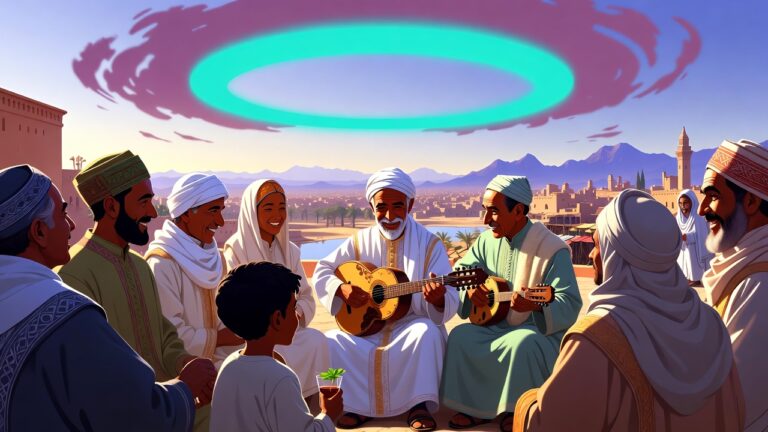
Through the Eyes of the Moroccan
The first sound you hear as morning arrives over Marrakesh is the soft, waving note of a guembri striking a single string in a nearby riad, mingled with the distant call of a muezzin and the scent of fresh mint tea and ras elhan out drifting from a market street. That string-sound carries our story back to a time of oases and medinas,when we lived as the peoples of Morocco: the Amazigh (Berbers), Arabs, Sahrawi, and others. Our ancestors built the medinas of Fès and Marrakesh with labyrinths of alleys and riads, the kasbahs in the Atlas that guarded the mountains, the caravans that brought salt and gold across the Sahara. The Almoravids and Almohads united our land, the Saadi and Alaouite dynasties built palaces and gardens. Every family knew the tales of the ancestors, the feasts of Achoura and Mouloud where everyone gathered, the bond stronger than the mountains.That was our golden time: a land of sea, mountains, and desert, where people lived in harmony with the Atlas as father and the Sahara as mother, connected by trade, music, and hospitality.
But then came the wave from outside, like a storm rising from the sea. The Portuguese, Spanish, and French colonized us in the 19th and 20th centuries, carved up our land, plundered our wealth, tried to break us. Every family knew the loss: an ancestor who fought in Abdelkrim’s Rif uprising, a child who learned freedom was forbidden, a culture held in secret. Independence in 1956 brought Mohammed V – hope that grew – but also the trials of a young nation: Sahara conflicts, tensions between tradition and modernity, emigration of youth toEurope.
From that depth rises a pride that is warm and welcoming. The guembri that still plays gnawa music, the tajine prepared with love, the souks where everything is traded. Our people laughing through hardship, our youth rising for a better land, our bond stronger than time. We have found our voice again: democracy growing, hope burning in the medinas.
Yet the truth colors magenta like a sunset over the Sahara. The scars remain: poverty in the villages, emigration of youth, tensions in the Sahara, pressure of a fast-changing world. The outside world buys our tourism and our argan oil, but often does not feel the depth of a people who never broke.
Still, we remember in silence: around the guembri where music is made, during Independence Day on 18November when we raise our flag, in the souks where the spirits still speak – never forgetting who we were. We tell our children of the Almoravids and of Mohammed V, of the mountains and the desert, so they know: we were connected and strong before we were challenged.
And yet… the guembri continues, soft and deep, like a promise drifting over the medina. That is our secret: we have suffered under colonization, unrest, and division, but first we were a land of souks and sea. For our children we build no walls, but a riad where everyone is welcome. How do we let that string-sound bring hope to everyone again? How does Morocco remain a home of hospitality and unity?
January 2026
Manna Ori
من عيون المغربي
أول صوت تسمعُه عندما يأتي الصباح على مراكش هو النغمة الناعمة المتماوجة للغمبري التي تعزف وتراً واحداً في رياض قريب، ممزوجة بنداء المؤذن البعيد ورائحة الشاي بالنعناع الطازج ورأس الحانوت التي تتسرب من شارع سوقي. هذا الصوت الوتري يحمل قصتنا إلى زمن الواحات والمدن، حين كنا نعيش كشعوب المغرب: الأمازيغ (البربر)، العرب، الصحراويون وغيرهم. أجدادنا بنوا مدن فاس ومراكش بمتاهات الأزقة والرياض، قصبات الأطلس التي تحرس الجبال، قوافل تحمل الملح والذهب عبر الصحراء. المرابطون والموحدون وحدوا أرضنا، السعديون والعلويون بنوا قصوراً وحدائق. كل عائلة كانت تعرف قصص الأجداد، أعياد عاشوراء ومولد النبي حيث يجتمع الجميع، الرابطة أقوى من الجبال. كان ذلك عصرنا الذهبي: أرض بحر وجبال وصحراء، يعيش الناس في انسجام مع الأطلس أباً والصحراء أماً، مترابطين بالتجارة والموسيقى والضيافة.
لكن ثم جاءت الموجة من الخارج، كعاصفة تنبعث من البحر. البرتغاليون والإسبان والفرنسيون استعمروا في القرنين التاسع عشر والعشرين، قطعوا أرضنا، نهبوا ثرواتنا، حاولوا كسرنا. كل عائلة عرفت الخسارة: جد قاتل في ثورة الريف مع عبد الكريم، طفل تعلم أن الحرية محظورة، ثقافة احتفظت بها سراً. الاستقلال في 1956 جلب محمد الخامس – أملاً ينمو – لكن أيضاً تحديات دولة شابة: نزاعات الصحراء، توتر بين التقليد والحداثة، هجرة الشباب إلى أوروبا.
من هذه العمق يرتفع فخر دافئ ومضياف. الغمبري الذي لا يزال يعزف موسيقى الغناء، الطاجين المُعد بحب، الأسواق حيث يُتبادل كل شيء. شعبنا الذي يضحك رغم الصعاب، شبابنا الذي ينهض لأرض أفضل، رابطتنا أقوى من الزمن. استعادنا صوتنا: الديمقراطية تنمو، الأمل يحترق في المدن.
لكن الحقيقة تتلون بالماجنتا كغروب شمس فوق الصحراء. الندوب تبقى: الفقر في القرى، هجرة الشباب، التوتر في الصحراء، ضغط عالم يتغير بسرعة. العالم الخارجي يشتري سياحتنا وزيت الأركان، لكنه غالباً لا يشعر بعمق شعب لم ينكسر أبداً.
مع ذلك نتذكر في صمت: حول الغمبري حيث تُعزف الموسيقى، في يوم الاستقلال 18 نوفمبر حين نرفع علمَنا، في الأسواق حيث تتحدث الأرواح – لا ننسى أبداً من كنا. نحكي لأطفالنا عن المرابطين ومحمد الخامس، عن الجبال والصحراء، ليعرفوا: كنا مترابطين وأقوياء قبل أن نُتحدى.
ومع ذلك… يستمر الغمبري، ناعماً وعمقاً، كوعد يطفو فوق المدينة. هذا سرنا: عانينا تحت الاستعمار والاضطراب والانقسام، لكن أولاً كنا أرض أسواق وبحر. لأطفالنا لا نبني جدراناً، بل رياضاً يرحب بالجميع. كيف نجعل هذا الصوت الوتري يعيد الأمل للجميع؟ كيف يبقى المغرب دار ضيافة ووحدة؟
يناير 2026
Manna Ori