
Through the Eyes of the Nigerian
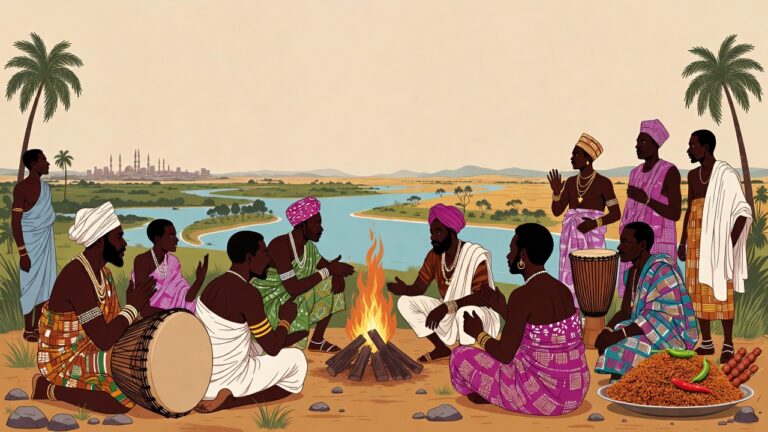
The first sound you hear as morning arrives over Lagos is the soft, rhythmic beat of a talking drum striking once, mingled with the distant call of a muezzin and the scent of fresh jollof rice and suya (grilled meat) drifting from a nearby home. That drum-sound carries our story back to a time of rivers and kingdoms, when we lived as the peoples of Nigeria: the Yoruba, Igbo, Hausa, Fulani, Tiv, Ibibio, and many others. Our ancestors built the ancient cities of Ife and Benin with bronze sculptures that amazed the world, Kano with its walls and trade, the Nok culture with terracotta thousands of years old. The Yoruba knew their orisha and their art, the Igbo their village democracy, the Hausa their trans-Saharan trade. Every family knew the tales of the ancestors, the feasts of Argungu and Durbar where everyone gathered, the bond stronger than differences. That was our golden time: a land of rivers, savanna, and coast, where people lived in harmony with the Niger as mother and the desert as father, connected by trade, art, and respect.
But then came the wave from outside, like a storm rising from the sea. The British colonized us in the 19th century, named us Nigeria, and turned us into a source of palm oil and raw materials. They carved our land with artificial borders that divided peoples. Every family knew the loss: an ancestor who worked for strangers, a child who learned freedom was forbidden, a culture that had to adapt. Independence in 1960 brought Azikiwe and Balewa – hope that grew – but also the Biafra War of 1967–1970 where millions died from hunger and violence. Coups, dictatorships, the oil boom that brought wealth but also corruption, Boko Haram terror in the north. Every family knew the pain, the disappearances, the emptiness in the streets of Maiduguri and Lagos.
From that depth rises a pride that is warm and rhythmic. The talking drum that still tells stories, the jollof rice shared with love, Nollywood that makes the world laugh. Our music of Afrobeat and Fuji filling the night, our people dancing through hardship, our youth rising for a better land. We have found our voice again: democracy growing, hope burning along the Niger.
Yet the truth colors magenta like a sunset over the Lagos Lagoon. The scars remain: the Biafra War still in memory, poverty in the slums, emigration of youth, terror in the north. The outside world buys our oil and our films, but often does not feel the depth of a people who never broke.
Still, we remember in silence: around the talking drum where stories are told, during Independence Day on 1 October when we raise our flag, in the villages where the spirits still speak – never forgetting who we were. We tell our children of the old kingdoms and of Azikiwe, of the river and the savanna, so they know: we were connected and strong before we were challenged.
And yet… the talking drum continues, deep and low, like a heartbeat that never falls silent. That is our secret: we have suffered under colonization, wars, and division, but first we were a land of kingdoms and rhythm. For our children we build no walls, but a market square where everyone may trade. How do we let that drum-sound bring unity to everyone again? How does Nigeria remain a home of strength and laughter?
January 2026
Manna Ori
Ta Hangen Mai Nigeria
Di first sound wey you go hear as morning reach Lagos na di soft, rhythmic beat of one talking drum wey hit one time, mix with di far call of muezzin and di sweet smell of fresh jollof rice and suya wey dey comot from near house. Dat drum beat carry our tori back to time of rivers and kingdoms, when we dey live as di people of Nigeria: Yoruba, Igbo, Hausa, Fulani, Tiv, Ibibio and plenty others. Our papa dem build old cities of Ife and Benin with bronze wey shock world, Kano with im wall and trade, Nok culture with terracotta wey old pass thousand years. Yoruba sabi dem orisha and dem art, Igbo sabi dem village democracy, Hausa sabi dem Sahara trade. Every family sabi di tori of ancestors, di feast of Argungu and Durbar where everybody gather, di bond wey strong pass difference. Dat na our golden time: land of rivers, savanna and coast, where people dey live with Niger as mama and desert as papa, connect by trade, art and respect.
But den di wave from outside come, like storm wey rise from sea. British colonize us for 19th century, call us Nigeria and turn us to source of palm oil and raw material. Dem cut our land with fake border wey divide people. Every family sabi di loss: ancestor wey work for stranger, pikin wey learn say freedom no dey allowed, culture wey must hide to survive. Independence for 1960 bring Azikiwe and Balewa – hope wey grow – but also Biafra War of 1967–1970 where million die from hunger and violence. Coup, dictator, oil money wey bring wealth but corruption, Boko Haram terror for north. Every family sabi di pain, di missing people, di quiet for street of Maiduguri and Lagos.
From dat deep place pride wey hot and strong dey rise. Talking drum wey still dey tell tori, jollof rice wey dem share with love, Nollywood wey make world laugh. Our Afrobeat and Fuji music wey fill night, our people wey dance through trouble, our youth wey stand up for better land. We don find our voice again: democracy wey dey grow, hope wey dey burn along Niger.
But truth dey color magenta like sunset for Lagos Lagoon. Di scar still dey: Biafra War memory, poverty for village, youth wey dey travel abroad, terror for north. Outside world dey buy our oil and film, but plenty time dem no feel di deep of people wey never break.
Still we dey remember for quiet: around talking drum where music dey happen, during Independence Day for 1 October when we raise our flag, for village where spirit still dey talk – we no go ever forget who we be. We dey tell our pikin of old kingdom and Azikiwe, of river and savanna, so dem go sabi: we dey connect and strong before dem challenge us.
And yet… talking drum dey continue, deep and low, like heartbeat wey no dey stop. Dat na our secret: we don suffer under colonization, war and division, but first we be land of kingdom and rhythm. For our pikin we no build wall, but market square where everybody fit trade. How we go make dat drum beat bring unity come back for everybody? How Nigeria go remain home of power and laugh?
January 2026
Manna Ori