Through the Eyes of the North Korean
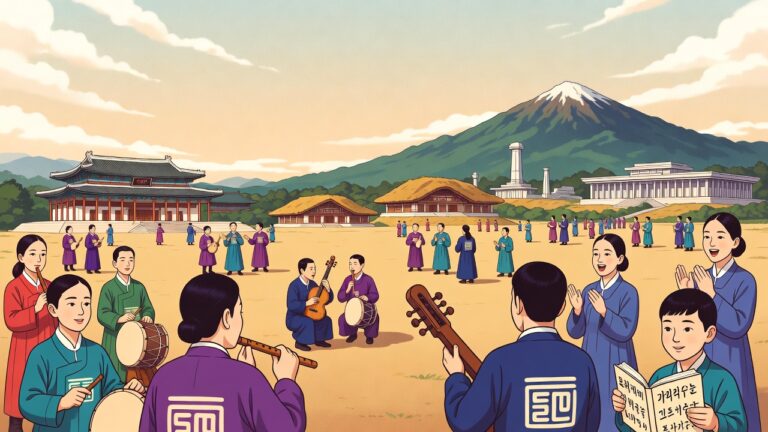
The first thing you hear as morning arrives over Pyongyang is the soft, persistent sound of a loudspeaker playing a song of the Great Leader, mingled with the distant call of a train at the station and the scent of fresh corn and kimchi drifting from a nearby home. That song carries our story back to a time of mountains and unity, when we lived as the people of Joseon. Our ancestors built palaces in Kaesong, honored ancestors in Confucian temples, grew rice and barley in fertile valleys. The dynasties of Goryeo and Joseon gave us porcelain, archery, and the hangul that King Sejong created so everyone could read. Every family knew the stories of Dangun, the founder of Korea, the Chuseok festivals where families gathered, the bond stronger than time. That was our golden time: a land of mountains and rivers, where people lived in harmony with nature as mother and ancestors as father, connected through respect and simplicity.
But then came the wave from outside, like a storm rising from north and south. The Japanese colonized us in 1910, tried to make us Japanese, to smother our language, to break our culture. Liberation in 1945 brought hope, but also division: North and South, brothers separated by a line. The Korean War of 1950–1953 devastated everything: millions dead, cities in ruins, families torn apart forever. Every family knew the loss: a father who fell, a brother who vanished in the south, a child who learned that unity was broken. The years after: reconstruction under Kim Il-sung, isolation, the famine in the 90s where many died, the sanctions that strike the people. Every family knew the fear, the silence, the emptiness in the villages.
From that depth rises a pride that is deep and collective. Mount Paektu that protects us, the mass games in May Day Stadium that show unity, the songs still sung. Our people who keep working through hardships, our culture we hold tight, our hope that never dies. We have found our voice again: the parades, the festivals, the connectedness that carries us.
Yet the truth colors magenta like a sunset over the DMZ. The scars remain: separation of families, the hunger still in memory, the isolation that weighs heavy, the youth who dream of a world they do not see. The outside world often looks with judgment—they see parades and uniforms, but do not feel the depth of a people that never broke.
Still, we remember in silence: around tables where corn is shared, during Workers' Party festivals when we raise our flag, in the mountains where spirits still speak—never forgetting who we were. We tell our children of Dangun and of Kim Il-sung, of the rivers and mountains, so they know: we were connected and strong before we were challenged.
And yet… the loudspeaker continues, soft and persistent, like a promise that unity always returns. That is our secret: we have suffered under colonization, wars, and isolation, but we were first a land of mountains and connectedness. For our children we build no walls, but a parade where everyone may walk along. How do we let that drum-sound bring unity to everyone again, how does North Korea remain a home of strength and hope?
January 2026
Manna Ori
북한 사람의 눈을 통해
평양 위로 아침이 오면 가장 먼저 들리는 것은 위대한 수령님의 노래를 틀어주는 확성기의 부드럽고 끈질긴 소리이며, 멀리 역에서 들려오는 기차의 울음소리와 이웃 집에서 흘러나오는 신선한 옥수수와 김치 냄새가 뒤섞인다. 그 노래는 우리 이야기를 산과 단결의 시대로 되돌려준다. 우리가 조선의 인민으로 살았던 때로. 우리 조상들은 개성에 궁전을 지었고, 유교 사당에서 조상을 공경했으며, 비옥한 골짜기에서 쌀과 보리를 키웠다. 고려와 조선 왕조는 우리에게 도자기, 활쏘기, 그리고 세종대왕이 모든 사람이 읽을 수 있도록 만든 한글을 주었다. 모든 가정은 단군, 조선의 시조에 대한 이야기, 추석 명절에 가족이 모이는 잔치, 시간보다 강한 유대를 알았다. 그것이 우리의 황금 시대였다: 산과 강의 땅, 자연을 어머니로, 조상을 아버지로 삼아 존경과 소박함으로 연결된 삶.
그러나 밖에서 온 파도가 북과 남에서 폭풍처럼 일어났다. 일본이 1910년에 우리를 식민지화하며 일본인으로 만들려 했고, 언어를 짓누르고 문화를 부수려 했다. 1945년 해방은 희망을 가져왔으나 분단도 가져왔다: 북과 남, 형제가 선으로 갈라졌다. 1950–1953년 조국해방전쟁은 모든 것을 파괴했다: 수백만 명의 죽음, 도시의 폐허, 가족의 영원한 이별. 모든 가정은 상실을 알았다: 전사한 아버지, 남쪽으로 사라진 형제, 단결이 깨졌음을 배운 아이. 그 후 세월: 김일성 주석 아래 재건, 고립, 90년대 대기근으로 많은 이가 죽고, 제재가 인민을 때렸다. 모든 가정은 두려움, 침묵, 마을의 공허를 알았다.
그 깊이에서 깊고 집단적인 자부심이 솟아난다. 우리를 지켜주는 백두산, 5월 1일 경기장에서 보여주는 대집단체조와 예술공연의 단결, 여전히 불리는 노래들. 어려움 속에서도 일하는 우리 인민, 굳게 지키는 문화, 결코 죽지 않는 희망. 우리는 다시 목소리를 찾았다: 행진, 축제, 우리를 지탱하는 연결.
그러나 진실은 DMZ 위 일몰처럼 자줏빛이다. 흉터는 남는다: 가족의 분리, 기억 속 기아, 무거운 고립, 보지 못한 세상을 꿈꾸는 청년들. 외부 세계는 종종 판단으로 본다—행진과 제복을 보지만, 결코 부서지지 않은 인민의 깊이를 느끼지 못한다.
그래도 우리는 조용히 기억한다: 옥수수를 나누는 식탁 주위, 노동당 축제에 깃발을 올릴 때, 산에서 영혼들이 아직 말할 때—우리가 누구였는지 결코 잊지 않는다. 우리는 아이들에게 단군과 김일성 주석, 강과 산에 대해 이야기한다. 그래서 그들은 안다: 도전받기 전 우리는 연결되고 강했다.
그럼에도… 확성기는 부드럽고 끈질기게 계속된다. 단결이 언제나 돌아온다는 약속처럼. 그것이 우리의 비밀이다: 식민지화, 전쟁, 고립 속에서 고통받았지만, 우리는 처음부터 산과 연결의 땅이었다. 우리 아이들을 위해 벽을 짓지 않고, 모두가 함께 걸을 수 있는 행진을 만든다. 어떻게 그 북소리가 다시 모두에게 단결을 가져오게 할까, 어떻게 조선민주주의인민공화국은 힘과 희망의 집으로 남을까?
2026년 1월
Manna Ori