
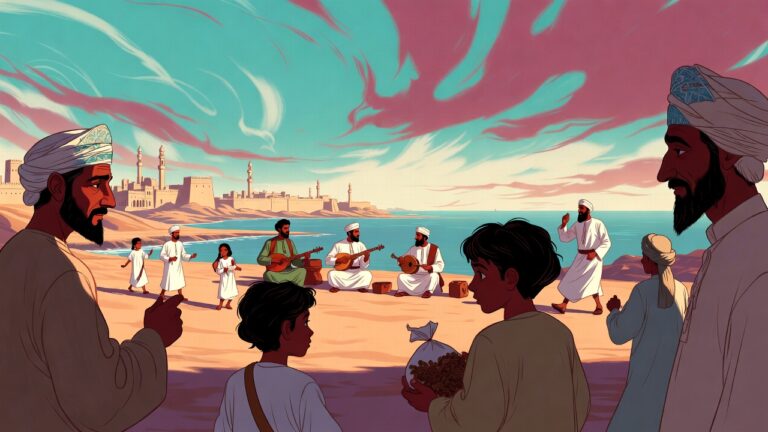
Through the Eyes of the Omani
The first sound you feel as morning arrives over Muscat is the soft, warm call of the adhan rising from the Sultan Qaboos Mosque, mingled with the distant cry of a seagull over the Gulf of Oman and the scent of fresh cardamom coffee and dates drifting from a nearby home. That call carries our story back to a time of sea and desert, when we lived as the people of Oman. Our ancestors built forts like Nizwa and Bahla from stone and mud, sailed dhows across the Indian Ocean to Zanzibar and India, grew dates and frankincense in fertile wadis. The Ibadi Imams ruled with justice, traders brought spices and pearls, communities lived in harmony with the desert as mother and the sea as father. Every family knew the tales of the old caravans, the feasts of Eid where everyone gathered, hospitality that was sacred and the bond stronger than the heat. That was our golden time: a land of mountains, desert, and coast, where people lived with the sea as road and the mountains as shield, free and connected by trade and faith.
But then came the wave from outside, like a storm rising from the desert. The Portuguese seized the coast in the 16th century, the Persians and Ottomans invaded, the British made us a protectorate in the 19th century. Every family knew the loss: an ancestor who fought the colonizers, a child who learned freedom is fragile, a culture that had to adapt to greater powers. The Dhofar uprising in the 1960s and 70s brought blood and struggle, modernization under Sultan Qaboos from 1970 brought oil wealth but also rapid change. Every family knew the pain of the uprising, the hope of the renaissance, the silence in the wadis.
From that depth rises a pride that is warm and welcoming. The coffee still served in three rounds, the frankincense that perfumes the world, the dhows that still sail the coast. Our people laughing through hardship, our youth dreaming of a better land, our bond stronger than oil. We have found our voice again: Qaboos's renaissance, hope growing in the mountains.
Yet the truth colors magenta like a sunset over the Wahiba Sands. The scars remain: memory of the uprising, pressure of modernization on tradition, emigration of youth, dependence on oil. The outside world buys our tourism and our frankincense, but often does not feel the depth of a people who never broke.
Still, we remember in silence: around the coffee where stories are shared, during National Day on 18 November when we raise our flag, in the desert where the spirits still speak – never forgetting who we were. We tell our children of the old Imams and of Qaboos, of the sea and the mountains, so they know: we were connected and strong before we were challenged.
And yet… the adhan continues, warm and persistent, like a call drifting over the desert. That is our secret: we have suffered under colonization, uprisings, and change, but first we were a land of trade and sea. For our children we build no walls, but a majlis where everyone is welcome. How do we let that adhan-sound bring unity to everyone again? How does Oman remain a home of hospitality and peace?
January 2026
Manna Ori
من عيون العماني
أول صوت تشعر به عندما يأتي الصباح على مسقط هو النداء الدافئ والناعم للأذان الذي يرتفع من جامع السلطان قابوس، ممزوجاً بصوت النورس البعيد فوق خليج عمان ورائحة القهوة بالهال الطازجة والتمر التي تتسرب من منزل قريب. هذا النداء يحمل قصتنا إلى زمن البحر والصحراء، عندما كنا نعيش كشعب عمان. أجدادنا بنوا حصوناً مثل نزوى وبحلاء من الحجر والطين، أبحروا بالداو إلى زنجبار والهند عبر المحيط الهندي، زرعوا التمر واللبان في الوديان الخصبة. أئمة الإباضية حكموا بالعدل، التجار جلبوا التوابل واللؤلؤ، العائلات عاشت في انسجام مع الصحراء أماً والبحر أباً. كل عائلة عرفت قصص القوافل القديمة، أعياد العيد حيث يجتمع الجميع، الضيافة المقدسة والرابطة أقوى من الحرارة. كان ذلك عصرنا الذهبي: أرض جبال وصحراء وساحل، يعيش الناس مع البحر طريقاً والجبال درعاً، أحراراً ومترابطين بالتجارة والإيمان.
لكن ثم جاءت الموجة من الخارج، كعاصفة تنبعث من الصحراء. البرتغاليون سيطروا على الساحل في القرن السادس عشر، الفرس والعثمانيون غزوا، البريطانيون جعلونا محمية في القرن التاسع عشر. كل عائلة عرفت الخسارة: جد قاتل المستعمرين، طفل تعلم أن الحرية هشة، ثقافة اضطرت للتكيف مع قوى أكبر. ثورة ظفار في الستينيات والسبعينيات جلب الدماء والنضال، التحديث تحت السلطان قابوس منذ 1970 جلب ثروة النفط لكنه أيضاً تغييراً سريعاً. كل عائلة عرفت ألم الثورة، أمل النهضة، الصمت في الوديان.
من هذه العمق يرتفع فخر دافئ ومضياف. القهوة التي لا تزال تُقدم في ثلاث جولات، اللبان الذي يعطر العالم، الداو التي لا تزال تبحر على الساحل. شعبنا الذي يضحك رغم الصعاب، شبابنا الذي يحلم بأرض أفضل، رابطتنا أقوى من النفط. استعادنا صوتنا: نهضة قابوس، الأمل الذي ينمو في الجبال.
لكن الحقيقة تتلون بالماجنتا كغروب شمس فوق رمال الوهيبة. الندوب تبقى: ذكرى الثورة، ضغط التحديث على التقاليد، هجرة الشباب، الاعتماد على النفط. العالم الخارجي يشتري سياحتنا ولباننا، لكنه غالباً لا يشعر بعمق شعب لم ينكسر أبداً.
مع ذلك نتذكر في صمت: حول القهوة حيث تُروى القصص، في اليوم الوطني 18 نوفمبر حين نرفع علمنا، في الصحراء حيث تتحدث الأرواح – لا ننسى أبداً من كنا. نحكي لأطفالنا عن الأئمة القدامى وقابوس، عن البحر والجبال، ليعرفوا: كنا مترابطين وأقوياء قبل أن نُتحدى.
ومع ذلك… يستمر الأذان، دافئاً ومستمراً، كنداء يطفو فوق الصحراء. هذا سرنا: عانينا تحت الاستعمار والثورات والتغيير، لكن أولاً كنا أرض تجارة وبحر. لأطفالنا لا نبني جدراناً، بل مجلساً يرحب بالجميع. كيف نجعل صوت الأذان هذا يعيد الأمل للجميع؟ كيف يبقى عمان دار ضيافة وسلام؟
يناير 2026
Manna Ori