
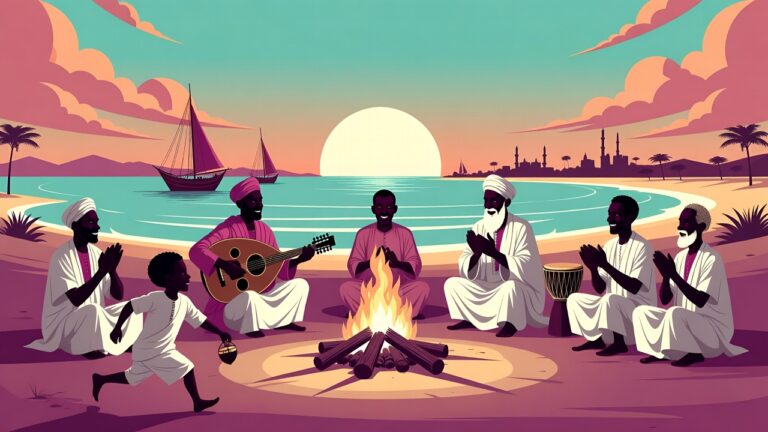
Through the Eyes of the Somali
The first sound you hear as morning arrives over Mogadishu is the soft, persistent rhythm of waves breaking against the coast, mingled with the distant call of a muezzin and the scent of fresh canjeero (pancake) and shaah(spiced tea) drifting from a nearby home. That wave-whisper carries our story back to a time of sea and savanna,when we lived as the people of Somalia. Our ancestors sailed dhows across the Indian Ocean to India andArabia, built cities like Mogadishu and Zeila with minarets and markets, herded camels through the dry plains.The clans lived in harmony with the sea as mother and the desert as father: nomads who followed the seasons,poets who sang gabay of love and honor, communities where xeer (traditional law) and hospitality were the law.Every family knew the tales of the ancestors, the feasts where tea was brewed in three rounds, the bond stronger than drought. That was our golden time: a land of coast, savanna, and mountains, where people lived with the sea as road and the stars as guide, free and connected by trade and poetry.
But then came the wave from outside, like a storm rising from the sea. The Italians and British colonized us in the19th and 20th centuries, carved our land with artificial borders. Independence in 1960 brought Aden AbdullahOsman and Siad Barre – hope that grew – but also Barre’s dictatorship that seized power in 1969 and fell in1991. Every family knew the loss: an ancestor who fought in the Ogaden War, a child who learned freedom was forbidden, a culture held in secret. The civil war after 1991 devastated everything: clans against clans, warlords,Al-Shabaab in the south, millions fleeing, hunger and piracy along the coast. Every family knew the fear, the disappearances, the emptiness in the streets of Mogadishu.
From that depth rises a pride that is deep and resilient. The gabay still sung in the villages, the canjeero prepared with love, the camels that cross the savanna. Our people laughing through hardship, our youth rising for a better land, our bond stronger than chaos. We have found our voice again: the federal government slowly growing, hope still burning along the coast.
Yet the truth colors magenta like a sunset over the Indian Ocean. The scars remain: the civil war still in memory,Al-Shabaab terror, poverty in the villages, emigration of youth. The outside world buys our fish and our tourism,but often does not feel the depth of a people who never broke.
Still, we remember in silence: around the campfires where stories are told, during Independence Day on 1 July when we raise our flag, in the desert where the spirits still speak – never forgetting who we were. We tell our children of the old traders and of independence, of the sea and the savanna, so they know: we were connected and strong before we were challenged.
And yet… the wave-whisper continues, calm and endless, like a promise that the sea always returns. That is our secret: we have suffered under colonization, civil war, and terror, but first we were a land of caravans and sea.For our children we build no walls, but a majlis where everyone is welcome. How do we let that wave-whisperbring hope to everyone again? How does Somalia remain a home of hospitality and resilience?
January 2026
Manna Ori
Indhaha Soomaaliga
Codka ugu horreeya ee aad maqasho marka subaxdu soo baxdo Muqdisho waa dhawaaqa jilicsan ee mowjadaha ee ku dhaca xeebta, isku dhafan dhawaaqa fog ee muezzin iyo urta canjeerada cusub iyo shaaha (shaah caraf udgoon) ee ka soo baxaya guri u dhow. Dhawaaqa mowjadda ayaa sheekadayada dib ugu celinaya waqti badaha iyo savannaha, markii aanu nahay dadka Soomaaliyeed. Awoowayaasheen waxay ku safrayeen doonyo badaha Hindiya iyo Carabta, waxay dhiseen magaalooyin sida Muqdisho iyo Saylac oo leh minaaradaha iyo suuqyada, waxay daaqeen geela dhulalka qalalan. Qabiiladu waxay ku noolaayeen is-waafajin badaha hooyadeed iyo saxaraha aabbaha: reer-guuraaga oo raacay xilliyada, gabayaaga oo gabayada jacaylka iyo sharafta ka qaaday, bulshooyinka xeerka iyo martigelinta ay ahaayeen sharciga. Qoys kasta wuu ogaa sheekooyinka awoowayaasha, ciidaha halkaas oo shaaha lagu shubay saddex wareeg, xiriirka ka xoog badnaa qalafsanaanta. Taasi waxay ahayd waqtigayaga dahabka ah: waddan xeebo, savanna iyo buuro leh, halkaas oo dadku ku noolaayeen is-waafajin dhulka hooyadeed iyo xiddigaha hage, xor oo ku xidhan ganacsiga iyo gabayada.
Laakiin markaa waxaa yimid mawjadda dibadda, sida duufaan ka soo kacday badda. Talyaaniga iyo Ingiriisku waxay na qabsadeen qarniyadii 19aad iyo 20aad, waxay na gooyeenn dhulkeenna xuduudo macmal ah. Madaxbannaanida 1960 waxay keentay Aden Abdullah Osman iyo Siad Barre – rajo kor u kacday – laakiin sidoo kale kaligii taliye Barre oo 1969 qabsaday awoodda oo 1991 dhacay. Qoys kasta wuxuu ogaa khasaaraha: awoowe ku dagaallamay dagaalkii Ogaden, ilmo bartay in xorriyaddu mamnuuc tahay, dhaqan si qarsoodi ah u badbaaday. Dagaalkii sokeeye ka dib 1991 wuxuu burburiyey wax walba: qabiilooyin qabiilooyin ka soo horjeeda, dagaal-ooge, Al-Shabaab koonfurta, malaayiin qaxooti ah, gaajo iyo budhcad-badeedda xeebaha. Qoys kasta wuxuu ogaa cabsida, dadka la waayey, madhan waddooyinka Muqdisho.
Qoto dheer ayaa ka soo baxda kibir qoto dheer oo adkaysi leh. Gabayga oo weli lagu heeso tuulooyinka, canjeerada oo jacayl lagu diyaariyo, geela oo savannada maraya. Dadkeennu way qoslaan dhibaatooyinka dhexdooda, dhallinyaradayadu way kacaan dhul wanaagsan, xiriirkayagu wuu ka xoog badan yahay jahwareerka. Waxaan dib u helnay codkayagii: dawladda federaalka ee si tartiib ah u koraysa, rajada weli ka shidaysa xeebaha.
Laakiin runtu waxay midabaysaa magenta sida qorrax dhaca badweynta Hindiya. Nabarradu way sii jiraan: xusuusta dagaalkii sokeeye, argagixisada Al-Shabaab, faqriga tuulooyinka, hijrada dhallinyarada. Dunida dibaddeedu waxay iibsataa kalluunkeena iyo dalxiiskeena, laakiin inta badan ma dareento qoto dheer ee dad aan waligood jabin.
Haddana waxaan xasuusnaa aamusnaan: agagaarka dabka kaamka halkaas oo sheekooyinka lagu wadaago, maalinta Madaxbannaanida 1da Luulyo markaan calankayaga kor u qaadno, saxaraha halkaas oo ruuxyadu weli hadlaan – waligeen ma ilaawi doonno cidda aan ahayn. Waxaan carruurteenna u sheegnaa ganacsatadii hore iyo madaxbannaanida, badda iyo savannada, si ay u ogaadaan: waxaan ahayn kuwo isku xidhan oo xoog badan ka hor intaan nala loolamin.
Hadana… mowjadda ayaa sii socota, deggan oo aan dhammaanayn, sida ballanqaad ah in baddu had iyo jeer soo noqoto. Taasi waa sirteenna: waxaan ku xanuunsannay gumaysi, dagaal sokeeye iyo argagixiso, laakiin markii hore waxaan ahayn dhul karavaanno iyo bad. Carruurteenna uma dhisno darbi, laakiin majlis qof walba loo furan yahay. Sidee aan uga dhigi karnaa dhawaaqa mowjadda inuu rajada u soo celiyo qof walba? Sidee Soomaaliya u noqon kartaa guri martigelin iyo adkaysi?
Janayo 2026
Manna Ori