Through the Eyes of the South Sudanese
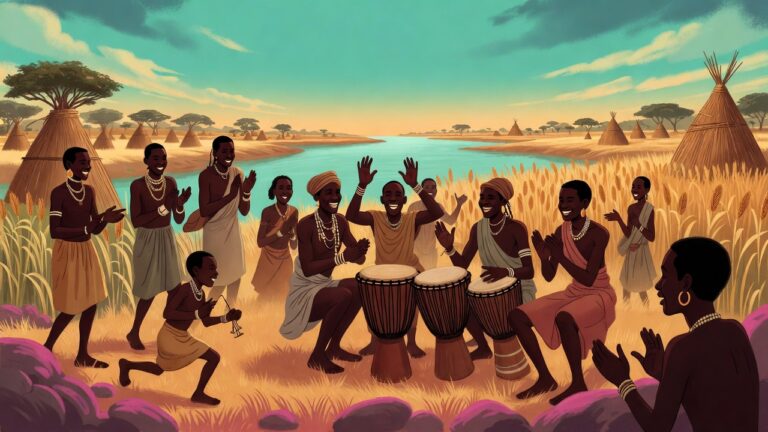
The first sound you hear as morning arrives over Juba is the soft, deep beat of a djembe drum striking once, mingled with the distant call of an ibis along the Nile and the scent of fresh kisra (thin flatbread) and ful (bean stew) drifting from a nearby home. That drum-sound carries our story back to a time of rivers and savanna, when we lived as the peoples of South Sudan: the Dinka, Nuer, Shilluk, Bari, Zande, Murle, and many others. Our ancestors herded cattle along the Nile and in Bahr el Ghazal, grew sorghum and peanuts in fertile soil, built villages of reed and mud where stories were shared by the fire. The Dinka knew their sacred cows and songs for the spirits, the Nuer their clans and cattle as life, the Shilluk their kings who ruled the river. Every family knew the initiation rites, the dances around the fire that filled the night with rhythm, the bond stronger than differences. That was our golden time: a land of savanna, swamps, and river, where people lived in harmony with the Nile as mother and the spirits as father, connected by cattle, song, and respect.
But then came the wave from outside, like a storm rising from the north. The British colonized us as part of Anglo-Egyptian Sudan, independence for Sudan in 1956 brought hope but also the first civil war (1955–1972) between north and south. The second civil war from 1983 to 2005 cost two million lives, millions fleeing, villages burned, children as soldiers. Every family knew the loss: a brother fallen in the SPLA, a mother who fled to camps in Ethiopia and Kenya, a child who grew up without home. Independence in 2011 brought Salva Kiir – hope that grew – but also the civil war from 2013–2018 with Dinka and Nuer against each other, genocide in Juba, hunger, and millions displaced.
From that depth rises a pride that is deep and resilient. The djembe that still beats in the villages, the kisra shared with love, the Nile that always feeds us. Our people laughing through hardship, our youth rising for a better land, our bond stronger than the pain. We have found our voice again: peace slowly growing, hope still burning along the river.
Yet the truth colors magenta like a sunset over the Nile. The scars remain: the civil war still in memory, hunger that returns, emigration of youth, tensions between tribes. The outside world buys our oil and our aid, but often does not feel the depth of a people who never broke.
Still, we remember in silence: around the djembe where music is made, during Independence Day on 9 July when we raise our flag, along the Nile where the spirits still speak – never forgetting who we were. We tell our children of the old clans and of independence, of the river and the savanna, so they know: we were connected and strong before we were challenged.
And yet… the djembe continues, deep and low, like a heartbeat that never falls silent. That is our secret: we have suffered under colonization, civil wars, and division, but first we were a land of river and rhythm. For our children we build no walls, but a village square where everyone may dance. How do we let that drum-sound bring hope to everyone again? How does South Sudan remain a home of unity and resilience?
January 2026
Manna Ori