
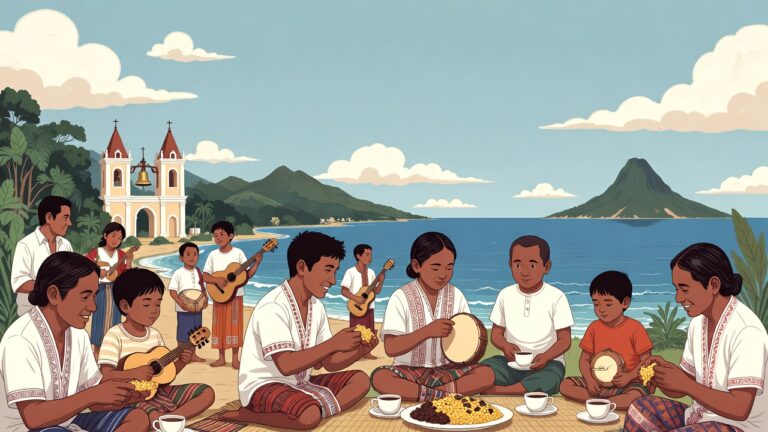
Through the Eyes of the East Timorese
The first sound you hear as morning arrives over Dili is the soft, persistent rhythm of waves breaking against the coast, mingled with the distant toll of a church bell from the Catedral de Dili and the scent of fresh batar da'an (corn with beans) and coffee drifting from a nearby home. That wave-whisper carries our story back to a time of mountains and sea, when we lived as the peoples of Timor-Leste: the Tetum, Mambai, Bunak, Makasae, and many others. Our ancestors built sacred houses (uma lulik) of wood and stone, grew rice and corn on mountain terraces, fished with canoes in the Timor Sea. They lived in harmony with nature as mother and the spirits as father: animist rituals honored the ancestors, tais weaving told stories of clans, communities where lisan (traditional law) and respect for elders were the law. Every family knew the tales of creation, the feasts where everyone danced the tebe, the bond stronger than the mountains. That was our golden time: a land of mountains, jungle, and sea, where people lived with nature as guide and family as home, free and connected by rhythm and tradition.
But then came the wave from outside, like a storm rising from the west. The Portuguese colonized us from the 16th century, made us a colony of coffee and sandalwood, forced many to Catholicism. Every family knew the loss: an ancestor who worked on plantations, a child who learned freedom was forbidden, a culture that blended to survive. The Indonesian invasion in 1975 brought 24 years of occupation: tens of thousands dead, mass graves, torture, genocide that cost a third of the population. Every family knew the pain: a brother who disappeared in the mountains with FALINTIL, a mother who fled to the jungle, a child who grew up in refugee camps.
From that depth rises a pride that is deep and resilient. The tais still woven by hand, the batar da'an shared with love, the independence we won in 2002 after the 1999 referendum. Our people laughing through hardship, our youth rising for a better land, our bond stronger than the pain. We have found our voice again: Xanana Gusmão and José Ramos-Horta who reached the world, the flag that flies again.
Yet the truth colors magenta like a sunset over Mount Tatamailau. The scars remain: memory of occupation and genocide, poverty in the mountain villages, emigration of youth, pressure of climate change on our coasts. The outside world buys our coffee and our tourism, but often does not feel the depth of a people who never broke.
Still, we remember in silence: around the drum where music is made, during Independence Day on 20 May when we raise our flag, in the mountains where the spirits still speak – never forgetting who we were. We tell our children of the old kingdoms and of Xanana, of the sea and the mountains, so they know: we were connected and strong before we were challenged.
And yet… the wave-whisper continues, calm and endless, like a promise that the sea always returns. That is our secret: we have suffered under colonization, genocide, and unrest, but first we were a land of mountains and sea. For our children we build no walls, but a village square where everyone may dance. How do we let that drum-sound bring hope to everyone again? How does East Timor remain a home of rhythm and resilience?
January 2026
Manna Ori
Liuliu Matan Timór Lorosa'e
Lian dahuluk ne'ebé ita rona bainhira loron boot to'o liu Dili mak lian malirin no la'o to'o husi onda ne'ebé haksolok ba tasi, halo hamutuk ho lian dook husi sinu igreja husi Catedral Dili no bau husi batar da'an fresku (milho ho fore) no kafe ne'ebé sai husi uma dook. Lian onda ne'e lori istória ita nian fila fali ba tempu foho no tasi, bainhira ita moris hanesan povu Timor-Leste: Tetum, Mambai, Bunak, Makasae no ema barak tan. Avó sira nian harii uma lulik husi ai no fatuk, kuda hare no milho iha terasu foho, fagot ho kanoa iha Tasi Timor. Sira moris iha harmonia ho natureza hanesan inan no lulik hanesan aman: rituál animista honra avó sira, tais ne'ebé konta istória klan sira nian, komunidade ne'ebé lisan (leis tradisionál) no respeitu ba katuas mak lei. Familia ida-idak hatene istória kriação nian, festa ne'ebé ema hotu dansa tebe, ligasaun ne'ebé forte liu duke foho. Ne'e tempu ouro ita nian: nasaun foho, matan dook no tasi, ema moris iha harmonia ho natureza hanesan guia no família hanesan uma, livre no ligadu ho ritmu no tradisaun.
Maibé depois onda mai husi liur, hanesan tufan ne'ebé hodi mai husi tasi. Portugés koloniza ita husi sékulu 16, halo ita kolónia kafe no sandálu, obriga ema barak konverte ba katolik. Familia ida-idak hatene lakon: avó ne'ebé servisu iha plantasaun, labarik ne'ebé aprende liberdade proibid, kultura ne'ebé misturadu atu moris nafatin. Invasaun Indonézia iha 1975 hodi okupasaun tinan 24: milier mate, valas komun, torturasaun, jenosídiu ne'ebé lakon tersu populasaun. Familia ida-idak hatene dor: maun ne'ebé lakon iha foho ho FALINTIL, inan ne'ebé halai ba matan dook, labarik ne'ebé kres iha kampu refujiadu.
Husi profundi ne'e sai orgulhu ne'ebé fundu no rezistente. Tais ne'ebé to'o tebes tein ho liman, batar da'an ne'ebé fahe ho amor, independénsia ne'ebé hetan iha 2002 depois referendum 1999. Ema ita nian ne'ebé ri iha susar, juventude ita nian ne'ebé hodi hamutuk ba nasaun di'ak liu, ligasaun ita nian ne'ebé forte liu duke moras. Ita hetan fali liafuan ita nian: Xanana Gusmão no José Ramos-Horta ne'ebé to'o mundu, bandeira ne'ebé fila hodi lori fali.
Maibé verdade kolor magenta hanesan tuku rai iha Tatamailau. Marka sira nafatin: lembransa okupasaun no jenosídiu, mativa iha aldeia foho, juventude sai ba rai seluk, presu mudansa klimátika ne'ebé ameasa ita nian tasi. Mundu liur sosa kafe no turizmu ita nian, maibé barak la sente profundi povu ne'ebé nunka quebra.
Maibé ita lembra iha silénsiu: iha roda tambor ne'ebé muzika halo, iha loron Independénsia 20 Maiu bainhira ita hodi bandeira ita nian, iha foho ne'ebé lulik sira nafatin ko'alia – la nunka haluha sapa mak ita tiha ona. Ita konta ba oan sira kona-ba reino uluk no Xanana, tasi no foho, atu sira hatene: ita ligadu no forte molok ita hetan desafiu.
No mesmo... onda ne'e kontinua, kalma no la'o to'o, hanesan promesa katak tasi sempre fila fali. Ne'e ita nian segred: ita sofre iha kolonizasaun, jenosídiu no susar, maibé uluk ita nasaun foho no tasi. Ba oan sira ita la harii parede, maibé praça aldeia ne'ebé ema hotu bele dansa. Ita halo oinsá atu halo som ida ne'e hodi lori esperansa fali ba ema hotu? Timor-Leste bele sai uma harmonia no rezisténsia oinsá?
Janeiru 2026
Manna Ori